 By Samuyl Joshi
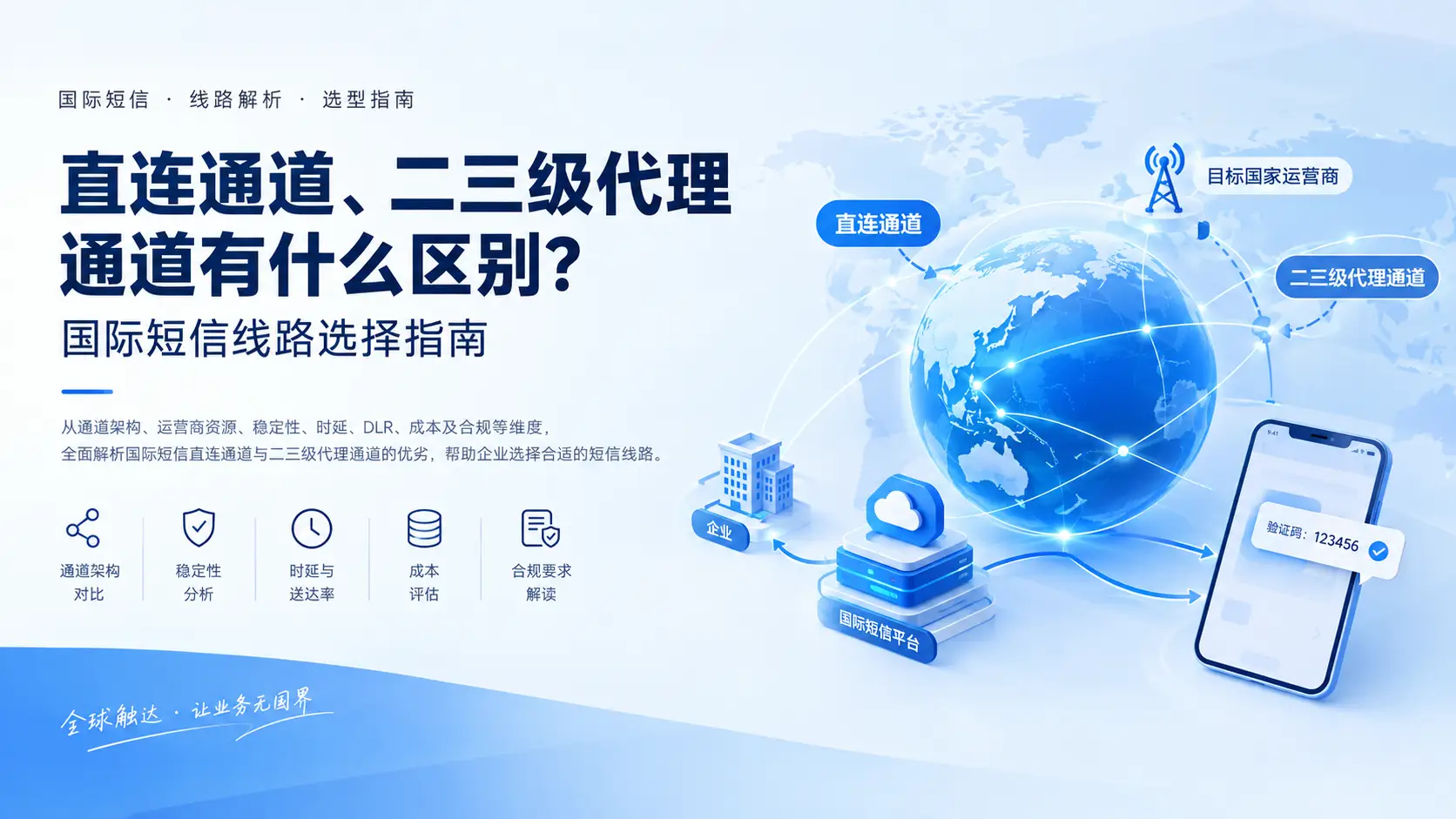
In international SMS services, enterprises often encounter concepts such as direct routes, tier-1 proxy routes, tier-2 proxy routes, and tier-3 proxy routes. The core differences between SMS routes mainly lie in link hierarchy, carrier resources, routing stability, SMS latency, delivery receipts, cost, and fault handling capability.
For OTP SMS, notification SMS, and international SMS marketing, line quality directly impacts message delivery efficiency and business experience. Therefore, when choosing an international SMS provider, enterprises should not only compare prices but also evaluate route architecture and actual line quality.
This article starts from the basic concepts of international SMS routes and systematically analyzes direct SMS routes versus tier-2/3 proxy routes to help enterprises evaluate SMS lines more accurately.
A direct route typically means the cloud communication platform has a direct or relatively direct connection with the carrier network of the target country. The SMS travels from the cloud platform to the target carrier network with fewer commercial intermediaries.
Enterprise -> International SMS Platform -> Target Country Carrier -> User MobileThe core value of a direct route lies in reducing intermediate commercial links, making SMS resources, routing, and delivery receipt management clearer.
First, relatively simple link structure.
With fewer intermediaries, the SMS transmission path is typically clearer. When SMS delays, delivery failures, or receipt anomalies occur, the provider can locate faults more easily.
Second, line stability is easier to control.
If the provider has stable carrier resources, it can manage lines and optimize routing for different countries and carriers.
Third, SMS status is easier to track.
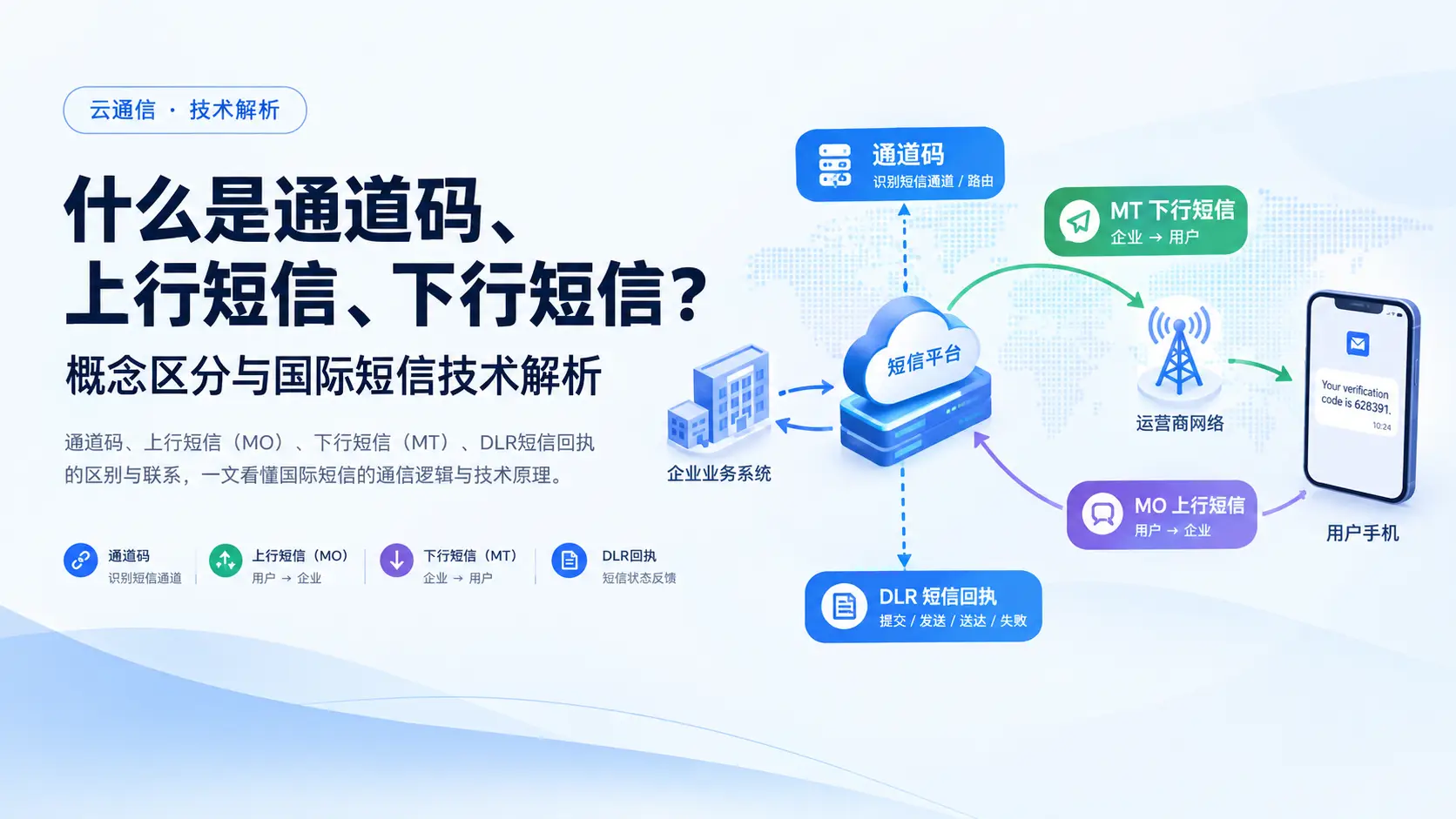
Mature international SMS platforms typically use DLR (Delivery Receipt) to monitor delivery status, providing enterprises with submitted, delivered, and failed status information.
Fourth, more suitable for core business.
OTP, account login, payment notifications, and order reminders require high SMS delivery speed and stability, so enterprises typically focus on core carrier lines and stable routing capabilities.
Note: "Direct" does not guarantee 100% SMS delivery. Whether an SMS is ultimately delivered is also affected by target country carrier policies, number status, Sender ID, content review, user device, and local regulatory rules.
Compared to direct routes, proxy SMS routes typically involve one or more intermediary providers.
Enterprise -> A SMS Platform -> B Supplier -> Target Carrier -> UserIf the link continues through other providers, it may form:
Enterprise -> A Platform -> B Supplier -> C Supplier -> Target Carrier -> UserThese types of routes are commonly referred to in the industry as tier-2 proxy, tier-3 proxy routes, etc.
Different providers may define "tier-1, tier-2, tier-3" differently, so enterprises should not judge quality by route name alone, but should further confirm the actual line architecture, underlying carrier resources, and routing methods.
From the perspective of enterprise SMS procurement, the two types of routes differ mainly in the following aspects:
| Dimension | Direct SMS Route | Tier-2/3 Proxy Route |
|---|---|---|
| Link Hierarchy | Fewer intermediate links | More intermediate providers |
| Resource Control | Stronger core resource control | More dependent on upstream providers |
| Route Management | Easier to manage precisely | Routing more affected by upstream |
| Latency | Easier to control | Multi-level links may add delay |
| Fault Location | Clearer fault path | Multi-level troubleshooting more complex |
| DLR Receipt | Easier to track | May have delays or info gaps |
| Cost | Higher resource cost | Some routes have price advantage |
| Stability | Easier for long-term line management | Depends on multi-level supply chain |
| Use Case | OTP, notifications, core business | Cost-sensitive, some batch business |
Proxy routes do not equal low quality, and direct routes do not equal absolute stability.
Final SMS line performance depends on actual carrier resources, routing strategy, content compliance, traffic volume, number quality, and the technical operations capability of the provider. Therefore, judging international SMS lines cannot simply use "direct = good, proxy = bad".
When an international SMS needs to pass through multiple intermediary providers, the number of participants in the entire link increases.
Enterprise -> Cloud Platform -> Tier-1 Supplier -> Tier-2 Supplier -> Tier-3 Supplier -> Carrier -> UserAny node adjustment in the link may affect actual delivery results. For example:
For enterprises, the biggest impact is not just SMS delivery failure, but may also manifest as:
Increased SMS latency, partial carrier delivery anomalies, receipt delays, repeated OTP requests, users repeatedly requesting verification codes, etc.
Especially for internet platforms, fintech, cross-border e-commerce, and overseas apps, whether a verification code SMS can be delivered on time directly affects user registration, login, and payment flows.
This is a question many enterprises focus on when purchasing international SMS.
Generally, the final price of SMS services is related to factors such as carrier resource cost, procurement volume, proxy tier, target country, SMS type, and market competition.
Under multi-level proxy models, different providers may form price advantages through resource integration and volume procurement, so some proxy routes may be priced lower than certain direct routes.
Low SMS unit price does not mean low overall cost.
For example, a route may have a lower unit price, but during actual use, the following may occur:
SMS Delay -> User Repeats OTP Request -> Repeat SMS Send -> SMS Cost IncreasesOr:
SMS Failure -> User Cannot Register -> User Churn -> Customer Acquisition Cost IncreasesThe actual cost borne by the enterprise may far exceed the SMS price difference. Therefore, when purchasing international SMS, enterprises should adopt:
SMS Price + Delivery Quality + Latency + Stability + Technical Service + Compliance Cost
as a comprehensive evaluation approach.
When choosing an international SMS provider, we recommend focusing on the following metrics.
Do not focus only on the theoretical delivery rate advertised by the provider.
It is more valuable to understand the actual business performance in target countries and target carriers, such as delivery results across different countries, carriers, and SMS types.
DLR is important status data in international SMS systems.
Through DLR, enterprises can understand the SMS status after it enters the carrier network, and combined with platform logs, determine whether the SMS was: submitted successfully, received by carrier, ultimately delivered, or failed.
For enterprises, trackable SMS status helps with business analysis and troubleshooting.
For OTP business, latency is often more important than SMS price alone.
Enterprises should focus on: average latency, P50 latency, P95 latency, and peak-hour latency.
Pay special attention to performance during overseas holidays, promotions, and business peak periods.
Long-term stable international SMS business requires the provider to have mature routing management capabilities.
Including: carrier route management, smart routing, line monitoring, failover, and anomaly alerting.
Whether a route can be quickly switched to a backup line when an anomaly occurs is an important factor in measuring SMS platform technical capability.
International SMS cannot use arbitrary Sender IDs for sending in all countries. Different countries and regions may impose different requirements on: Sender ID registration, SMS templates, marketing SMS, opt-out mechanisms, enterprise qualifications, and content review.
Therefore, when choosing an international SMS provider, confirm whether they can provide compliance support for target markets.
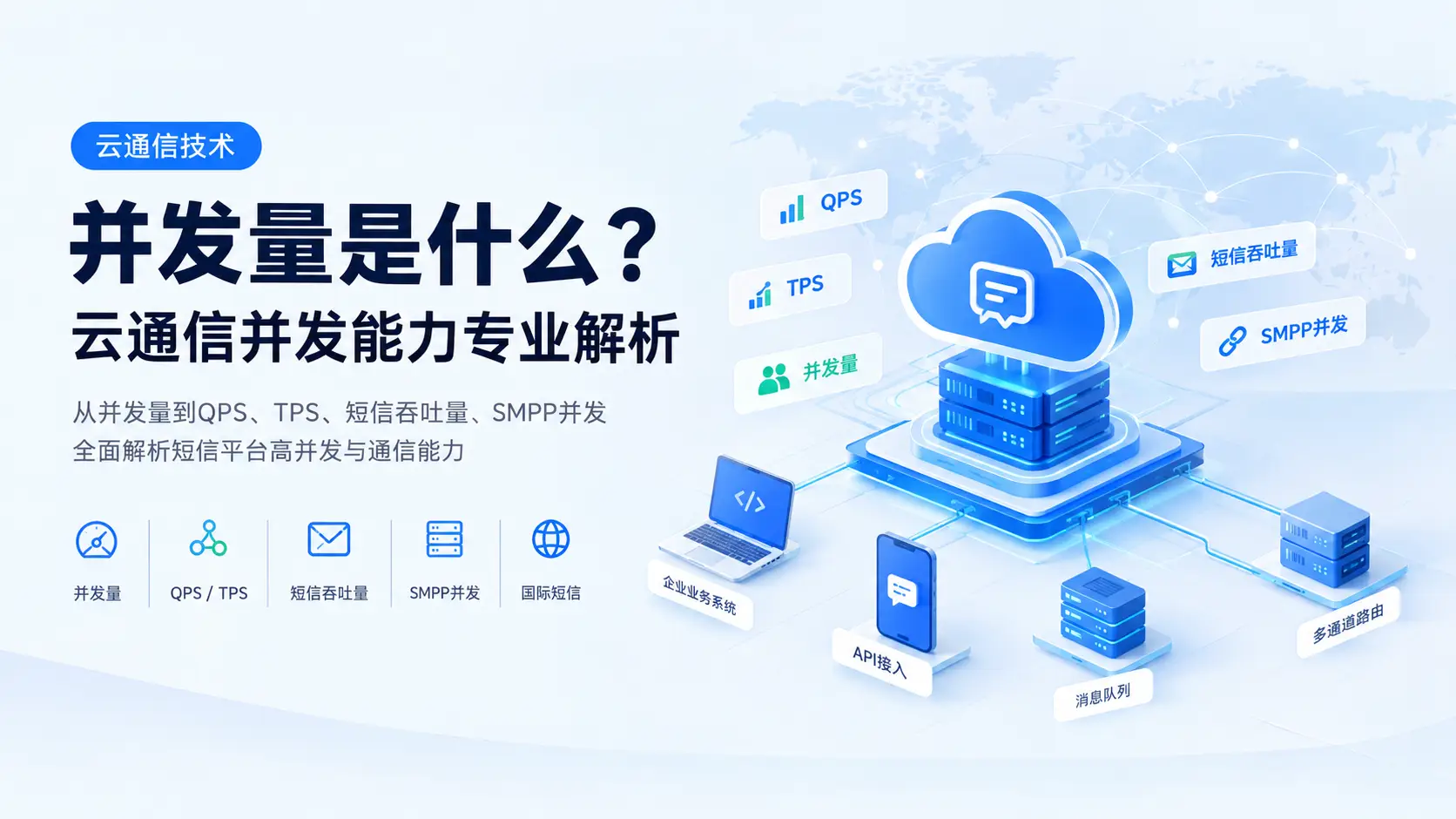
For enterprises that need to access SMS platforms via API, also focus on: HTTP API, SMPP interface, async callbacks, request concurrency, API authentication, error codes, retry mechanisms, and status callbacks.
Especially for high-concurrency business, confirm whether the platform has stable API processing and message queue capabilities.
Direct or core carrier resources are typically more suitable for enterprise business with high stability and latency requirements. For example:
Including:
OTP business is typically very sensitive to SMS latency.
Including:
These messages have strong business continuity requirements.
If an enterprise operates in multiple countries, it needs to cover multiple carriers and markets simultaneously. Stable international SMS resources and unified API interfaces can reduce long-term communication system maintenance costs.
Proxy routes are not without value.
For some price-sensitive, batch-type, and non-core communication business, enterprises can evaluate proxy routes after confirming line quality, compliance conditions, and actual delivery performance.
Actual carrier resources + DLR capability + line stability + delivery latency + failover capability.
For core business, it is recommended to focus on the above rather than choosing solely by SMS unit price.
In actual procurement, a common question arises:
"The provider says they are direct, how do I confirm?"
This is a very practical question.
"Direct" is a line description. What really matters is who controls the carrier resources, which links the SMS actually passes through, and who is responsible when problems occur.
Therefore, enterprises can ask the provider further:
Through these questions, enterprises can obtain more valuable information than simply asking "is it direct?".
We recommend enterprises evaluate using "testing + data + production monitoring".
Select key countries and core carriers for testing.
Observe: send speed, delivery speed, DLR status, and failure situations.
Do not switch all production traffic just because test SMS delivered successfully.
Start with small-scale business validation first.
After going live, continuously monitor:
Judge line quality through long-term data rather than a single test result.
From an enterprise communication architecture perspective, direct and proxy are not a simple "either-or". More mature international SMS platforms establish multi-route systems based on different countries, carriers, business types, and real-time line status.
Enterprise API -> Smart Routing -> Core Line -> Backup Line -> Carrier -> UserThrough real-time monitoring and dynamic routing, suitable SMS resources can be selected for different markets.
Whether SMS can be sent stably, delivered on time, tracked by status, and anomalies handled quickly.
Rather than simply pursuing a certain line label.
Direct routes typically feature clearer links, stronger resource control, and more direct line management, making them more suitable for OTP, transaction notifications, and other business with high stability and latency requirements.
Tier-2/3 proxy routes have certain cost and resource integration advantages, and also have application value in some price-sensitive businesses, but enterprises need to pay more attention to upstream supply chain, routing stability, and fault handling capability.
Carrier resources, actual delivery performance, SMS latency, DLR receipts, routing strategy, compliance capability, API stability, and after-sales technical support.
Only by evaluating line quality and overall business cost together can enterprises find the international SMS solution truly suitable for their business.
For cross-border e-commerce, overseas apps, fintech, gaming going global, online education, and international internet platforms, SMS is not just a message, but an important communication infrastructure connecting users, business systems, and overseas carrier networks.
YaningAI focuses on international communication services, providing enterprises with international SMS APIs and multiple communication access methods. Lines and routes can be configured based on different countries, carriers, and business scenarios, helping enterprises build stable and trackable global SMS reach capabilities.
Supports HTTP API, SMPP, and other integration methods, suitable for OTP, notification, and international SMS business.