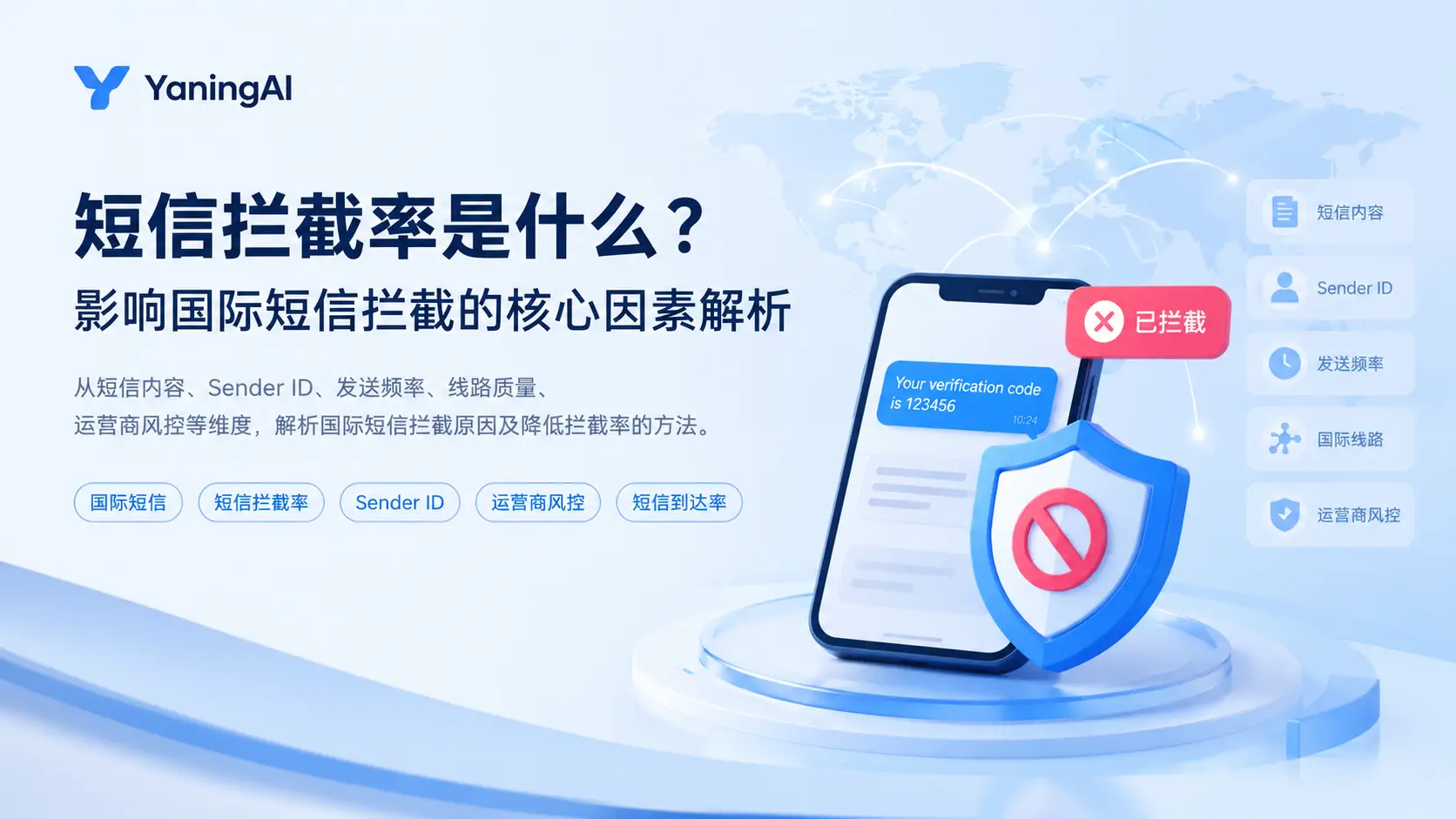
What Is SMS Interception Rate? Core Factors Affecting International SMS Interception
In international SMS business, enterprises typically focus on SMS sending volume, success rate, delivery rate, failure rate, and conversion rate. But for A2P (Application to Person) services such as verification codes, notification SMS, and marketing SMS, there is another very important metric: SMS interception rate.
When enterprises notice that the same API with similar sending volumes produces noticeably different delivery results across different countries or carrier networks, the issue is often not just "whether the channel is stable" but may also involve SMS content, Sender ID, sending frequency, number reputation, route type, and carrier risk control policies.
So, what is SMS interception rate? Why are international SMS intercepted? How can interception rate be reduced?
This article provides a systematic analysis from the perspective of actual international SMS business links.
I. What Is SMS Interception Rate?
SMS interception rate typically describes the proportion of SMS submitted by an enterprise that are identified and filtered by carrier networks, SMS centers, security systems, or terminal-side mechanisms.
From a business statistics perspective, it can be simply understood as:
SMS Interception Rate = Intercepted SMS Count / Actually Submitted SMS Count x 100%
For example, if an enterprise submits 100,000 international SMS to a country, and 8,000 of them fail to enter the normal user receiving link and are intercepted by relevant risk control or filtering mechanisms, the corresponding interception rate is approximately 8%.
However, it is important to note:
SMS interception rate is not the same as SMS failure rate, nor is it the same as SMS non-delivery rate.
SMS failures may be caused by invalid numbers, routing exceptions, network errors, timeouts, and other reasons; while SMS interception typically involves content review, anti-spam policies, sending identity, number reputation, and carrier risk control factors.
Therefore, when analyzing international SMS quality, enterprises should not only look at a single "success rate" metric, but need to combine DLR, failure status, carrier feedback, and analyze by country and number segment dimensions.
II. Why Are International SMS Intercepted?
The core purpose of SMS interception is to help carriers control spam, fraud, malicious marketing, and other high-risk communication behaviors.
For international SMS, a message typically needs to pass through multiple communication nodes to reach the end user.
A typical link can be understood as:
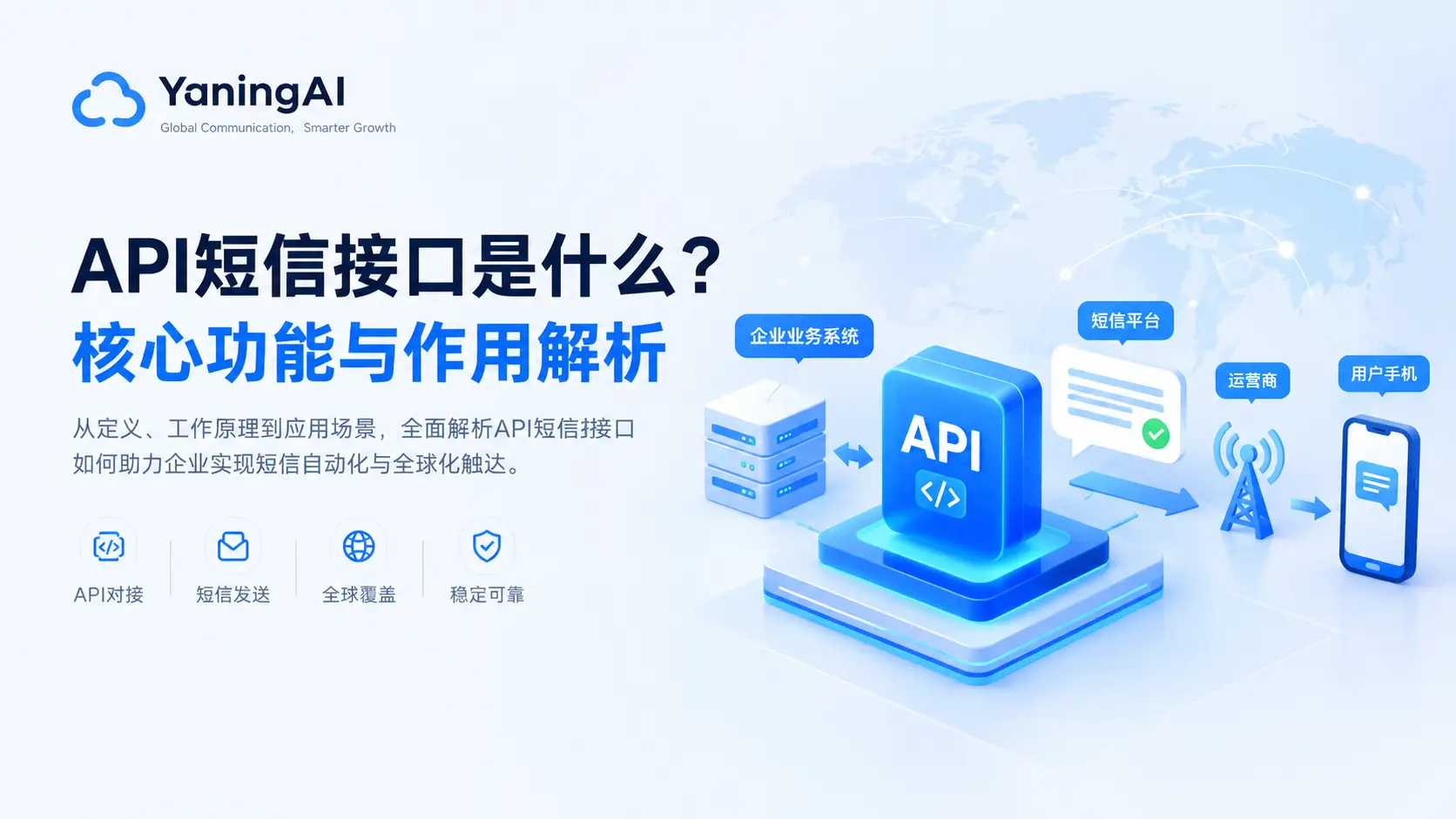
Enterprise Business System -> SMS API -> Cloud Communication Platform -> International SMS Routing -> Local Carrier -> SMS Center -> User Mobile
In this process, any node may have corresponding filtering or risk control mechanisms.
Therefore, factors affecting final SMS delivery typically include:
SMS Content + Sending Identity + Sender ID + Number Quality + Sending Frequency + Route Quality + Carrier Policy + Terminal Rules
This is also why SMS delivery performance may differ noticeably across different countries, carriers, and even number segments.
III. Core Factors Affecting SMS Interception Rate
1. SMS Content
SMS content is one of the key factors identified by carrier risk control systems.
The following types of content are more likely to trigger additional review or filtering:
- Highly homogeneous content sent repeatedly at scale
- Expressions with obvious marketing or inducement nature
- High-risk keywords
- Suspicious URLs or short links
- Content mismatched with enterprise business
- Frequent changes to SMS templates
- Abnormal content patterns in verification code business
Therefore, enterprises cannot simply assume that "no sensitive words means no interception".
Carriers typically combine multiple features for risk assessment, including sending identity, historical behavior, content characteristics, sending volume, sending frequency, and user complaints.
For international SMS business, a more reasonable approach is to design SMS templates according to the regulations and carrier requirements of the target country, and distinguish between verification codes, notifications, and marketing business types.
2. Sender ID and Sending Number Quality
Sender ID is an important component of international SMS.
Some countries or regions allow enterprises to use alphanumeric Sender ID directly, while other markets may require pre-registration or meeting specific qualification requirements.
If an enterprise consistently uses unregistered, abnormal, or low-reputation Sender ID, it may increase the probability of SMS being filtered.
Meanwhile, the historical behavior of the sending number may also affect carrier risk control assessment.
For example:
A number long used for order notifications versus a new number that suddenly sends a large volume of marketing SMS in a short time may present noticeably different risk profiles.
Therefore, when procuring international SMS services, enterprises need to confirm:
Does the Sender ID support local compliance requirements?
Is the sending number stable?
Is the historical communication reputation normal?
3. Sending Frequency and Traffic Model
Carrier risk control focuses not only on "what is sent" but also on "how it is sent".
For example:
If an enterprise normally sends 10,000 SMS per day, then suddenly increases to 1,000,000 on a particular day, sending concentrated to large numbers of recipients in a very short time, such abnormal traffic may trigger additional risk control.
Therefore, high-concurrency international SMS business typically needs to establish reasonable traffic control mechanisms, including:
User-level rate limiting, number-level rate limiting, Sender ID rate limiting, country-level traffic control, time window control, and abnormal traffic monitoring.
Especially for OTP verification code business, reasonable rate control can reduce abnormal traffic caused by malicious code requests.
IV. Do International SMS Routes Affect Interception Rate?
Yes.
This is an issue often overlooked by enterprises when procuring international SMS services.
International SMS is not simply "call the API and send directly to the phone"; the actual link involves different communication networks, SMS aggregators, and local mobile carriers.
Different routes have:
Carrier resources, link quality, compliance level, routing stability, and status receipt capability
These may differ significantly.
Direct Connection Routes
Direct connection routes typically mean SMS enters the target market through more stable and controllable carrier resources.
For enterprise business, the key value is:
Clearer links, more stable routing, and easier status tracking.
Aggregated Routes
Aggregated routes can help enterprises quickly cover multiple countries and regions, but actual quality heavily depends on the supplier resources and routing strategies.
So when choosing an international SMS service provider, enterprises should not only focus on "how many countries are covered" but also understand:
Actual carrier coverage in target countries, route types, DLR completeness, Sender ID support, and local compliance capabilities.
V. Why Does SMS Show Success but User Does Not Receive It?
This is a very typical problem in international SMS business.
Many enterprises see the API return:
success
and assume the SMS has been delivered to the user mobile phone.
In reality, the two are completely different.
A complete SMS link can typically be broken down into:
API Reception Success -> Platform Submission -> Route Sending -> Carrier Reception -> User Terminal Reception
API returning success typically only means the platform has successfully received the enterprise sending request, not that the user has finally received the SMS.
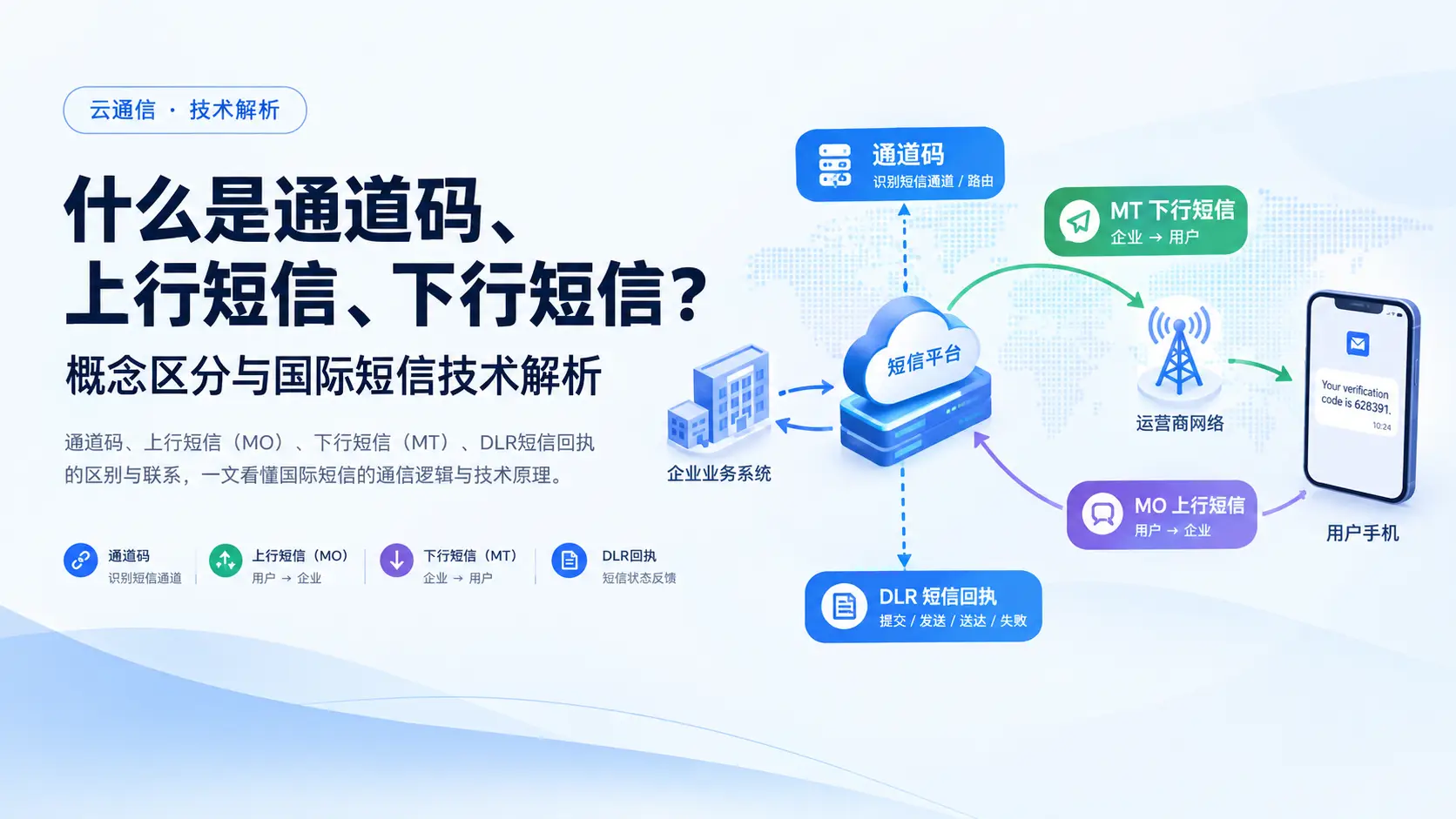
Therefore, enterprises need to focus on DLR (Delivery Report).
Through DLR, you can more accurately determine which stage the SMS is at:
Submitted, Sent, Carrier Received, Final Delivery, or Failed
and so on.
VI. Difference Between SMS Interception Rate and Delivery Rate?
SMS interception rate and delivery rate are related but not the same concept.
Simply put:
SMS Interception Rate: focuses on whether SMS is filtered by relevant systems.
SMS Delivery Rate: focuses on whether SMS is ultimately delivered to the target user.
For example:
An enterprise sends 100,000 international SMS, of which:
5,000 fail at the submission stage;
3,000 are filtered in subsequent stages;
92,000 are ultimately delivered.
Then, in this statistical model:
Submission Failure Rate = 5%
Final Delivery Rate = 92%
In practice, different service providers may have different statistical definitions for "interception", "failure", and "non-delivery", so enterprises should first confirm metric definitions when comparing SMS platforms.
VII. How to Reduce International SMS Interception Rate?
Reducing SMS interception rate is not simply about "switching to a different channel".
A truly stable international SMS system typically requires optimization from content, identity, traffic, and routing simultaneously.
1. Optimize SMS Templates
Adjust SMS content according to the regulatory requirements and carrier rules of the target country.
Verification codes, order notifications, logistics reminders, and marketing SMS should use different business templates.
Reduce unnecessary marketing vocabulary, abnormal URLs, and highly repetitive content.
2. Ensure Sender ID Compliance
For target markets that require Sender ID registration, complete enterprise entity, brand, and Sender ID related authentication or registration in advance.
Also avoid frequently changing Sender ID.
3. Establish Traffic Control Mechanisms
Develop separate sending strategies for OTP, notification, and marketing business.
You can establish:
User-level rate control + Number-level rate control + Country-level rate limiting + Abnormal traffic monitoring
Avoid completely abnormal sending behavior in short time periods.
4. Choose Stable International SMS Routes
Do not focus only on SMS price.
Enterprises should pay more attention to:
Carrier resources, actual routing, DLR, failure reasons, Sender ID, local compliance support, and backup route capabilities.
VIII. How to Evaluate International SMS Service Provider Stability?
During procurement and testing, evaluation can be done from five aspects.
Carrier Coverage
Do not only focus on "covering 200+ countries and regions"; confirm which mobile carriers are actually covered in the target country.
DLR Completeness
Confirm whether the platform can return relatively complete sending status and failure reasons.
Routing Transparency
Confirm whether SMS anomalies can be quickly traced to country, carrier, and routing issues.
Sender ID Capability
Confirm whether the service provider supports Sender ID rules and related registration requirements for target countries.
Long-term Data Performance
A single successful test does not necessarily mean the production environment will be stable.
Enterprises should continuously observe:
Delivery rate, failure rate, interception status, carrier-specific performance, and long-term trends across different countries.
IX. How to Monitor International SMS Interception Rate?
For enterprises with large SMS sending volumes, it is recommended to establish a complete SMS quality monitoring system.
Continuous statistics can be tracked along the following dimensions:
Submission Volume -> Successful Submission Rate -> Delivery Rate -> Failure Rate -> Interception Rate -> Country -> Carrier -> Sender ID -> Template
For example:
If only a certain country shows a delivery rate decline, focus on investigating local carriers or routes;
If multiple countries show anomalies simultaneously, check platform routing, sending identity, and overall traffic;
If only a certain template shows anomalies, prioritize checking SMS content and URLs.
Through this data analysis approach, international SMS anomaly causes can be more accurately identified.
X. Why Should International SMS Not Focus Only on Price?
For verification codes, payment notifications, account verification, logistics notifications, and other business, SMS is essentially critical infrastructure in the business link.
If SMS is not delivered in time, it may directly cause:
Registration failure, verification code timeout, order conversion decline, user churn, and increased customer service costs.
Therefore, when procuring international SMS services, enterprises should not only compare per-SMS prices, but also comprehensively consider:
Route quality, carrier coverage, delivery rate, DLR, Sender ID, compliance capability, API stability, and technical support.
Cheaper SMS prices do not necessarily mean lower overall business costs.
XI. Summary: What Are the Core Factors of SMS Interception Rate?
SMS interception rate is not the result of a single factor, but the combined effect of SMS content, Sender ID, sending numbers, sending frequency, route quality, and carrier risk control.
For international SMS enterprises, what truly needs to be established is a complete SMS quality system:
- Compliant sending identity
- Standardized SMS content
- Compliant Sender ID
- Reasonable sending frequency
- Stable international SMS routing
- Complete DLR data
- Continuous quality monitoring
Ultimately forming a traceable and optimizable international SMS communication link.
For enterprises, judging whether an international SMS platform is stable should not be based on a single test result, but should be comprehensively evaluated from long-term delivery performance, route quality, carrier coverage, and technical monitoring capabilities.
Reduce SMS Interception Risk with Stable International SMS Routes
If your enterprise is expanding into overseas markets and needs international SMS services for verification codes, registration login, order notifications, logistics notifications, or user reach, route stability, carrier coverage, Sender ID, DLR, and local compliance capabilities are all worth close attention.
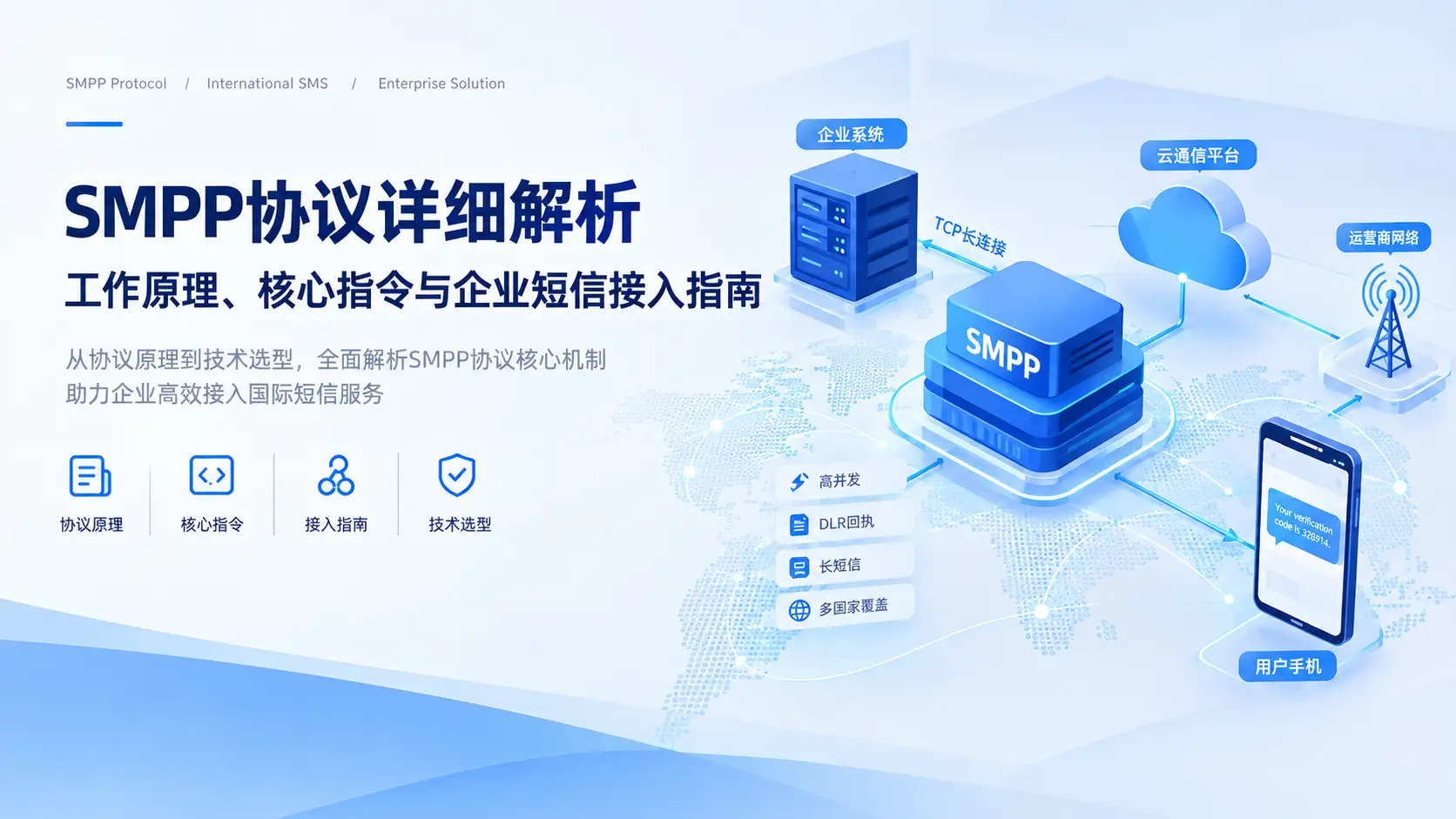
YaningAI provides enterprise-grade international SMS communication services, supporting HTTP, SMPP, and other interface integrations, and offers corresponding communication capabilities around carrier resources, SMS routing, and business scenarios across different countries and regions.
Learn about International SMS Services ->
Get Test Routes ->
Contact Technical Consultant ->