SMS vs WhatsApp Business API Comparison | Global Communication Solution Guide for Overseas Enterprises
1. Introduction: Global Communication is Evolving from "Reach" to "Operations"
In the growth of overseas business, enterprise communication is no longer just about sending verification codes or notifications, but has evolved into an important infrastructure for user lifecycle operations.
Currently, the two most mainstream capabilities are:
- International SMS
- WhatsApp Business API (Meta official enterprise communication capability)
Both occupy core positions in the global user engagement system, but their capability focuses are completely different.
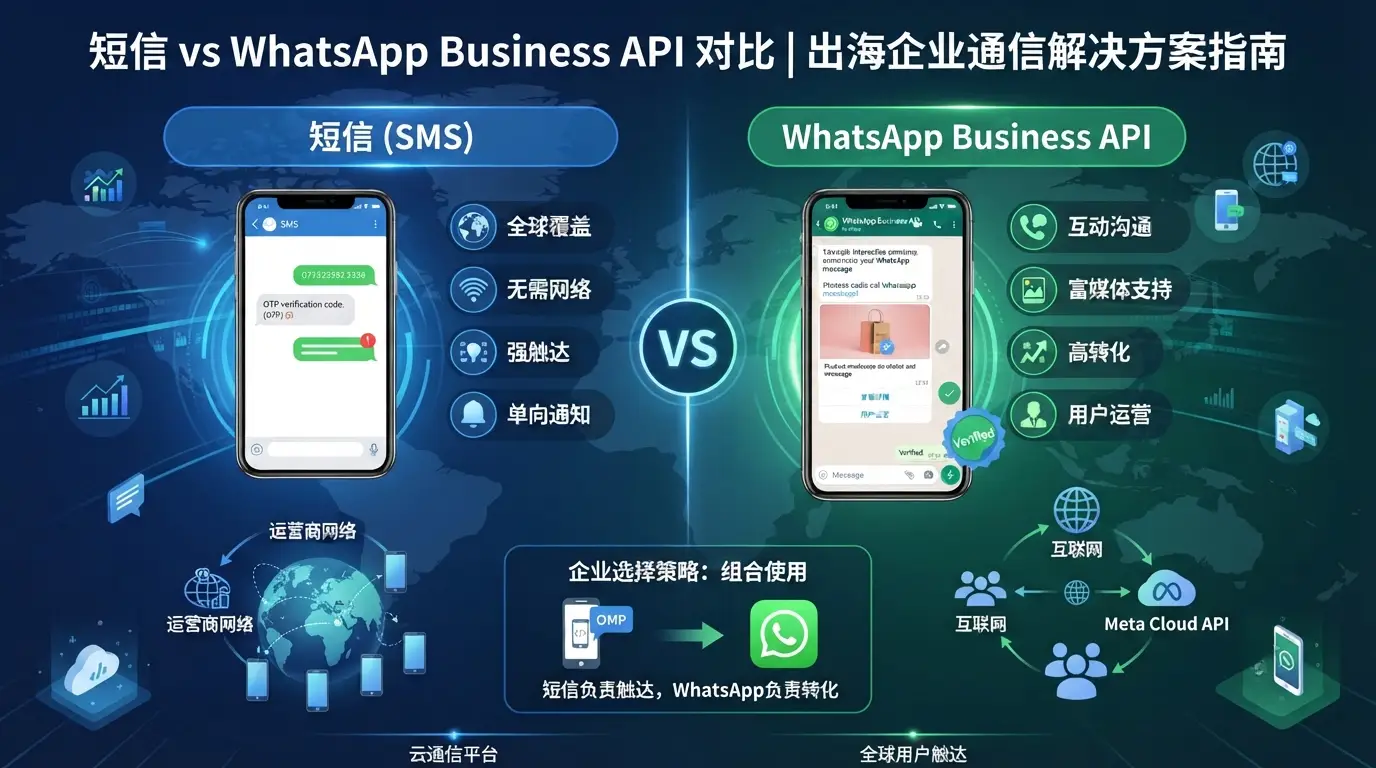
2. Core Definitions: SMS vs WhatsApp Business API
1. International SMS
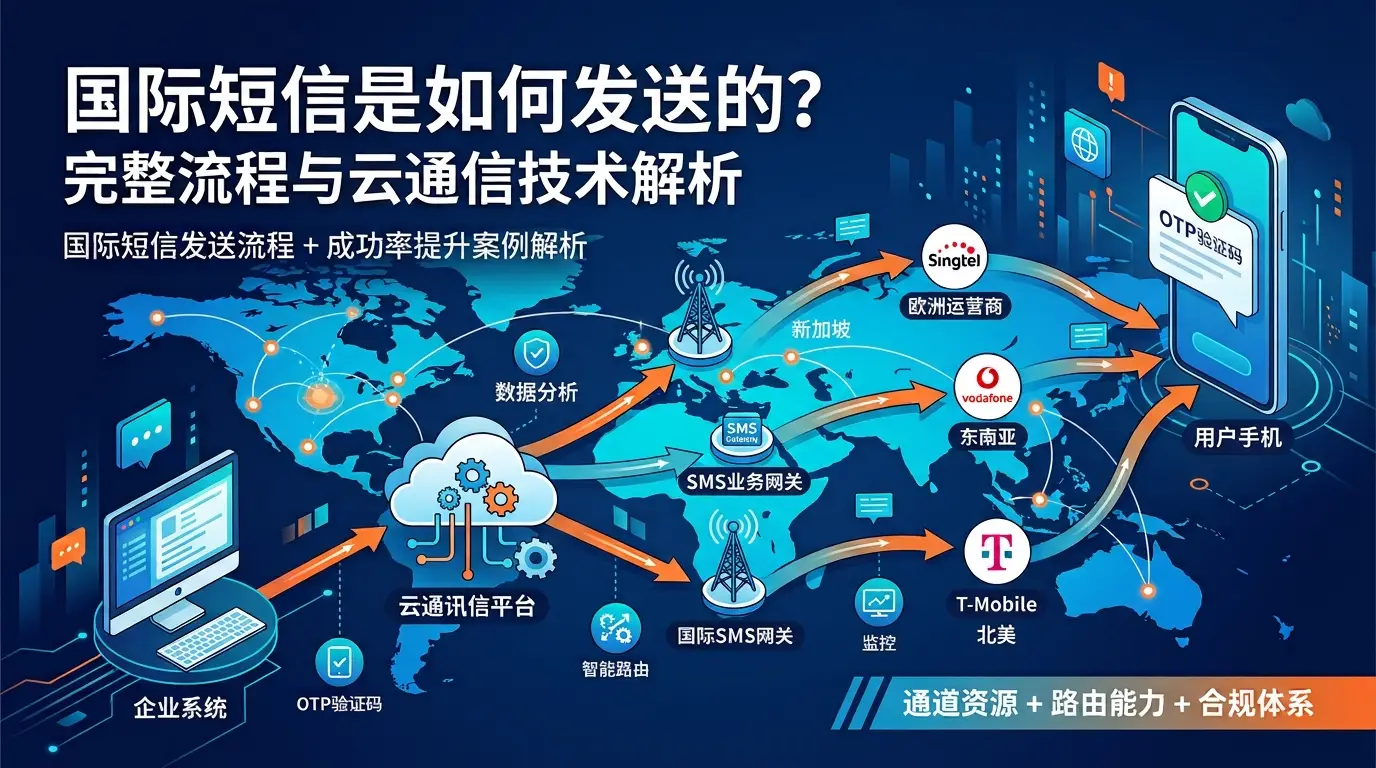
SMS achieves global sending capability based on carrier networks (SMSC), making it the most basic and widely covered communication method.
No app installation required
Covers all mobile phone users worldwide
Supports verification codes and notification messages
Depends on carrier channel quality
2. WhatsApp Business API
WhatsApp Business API is an enterprise communication interface based on the WhatsApp ecosystem, supporting structured and interactive message communication between enterprises and users.
Based on users already having WhatsApp installed
Supports two-way conversations
Supports template messages and rich media
Strong user engagement capability
3. Core Capability Comparison: SMS vs WhatsApp Business API
1. Reachability
SMS
- Almost 100% mobile coverage
- No app installation dependency
- Deliverable in weak network environments
WhatsApp Business API
- Depends on users having WhatsApp installed
- Strong internet environment dependency
- High penetration rate in Latin America, Southeast Asia, and Europe
2. User Engagement
International SMS
- One-way notifications primarily
- Weak engagement capability
- Short conversion path
WhatsApp Business API
- Supports two-way conversations
- Supports buttons, cards, and template messages
- Can build complete conversion funnels
3. Cost Structure
International SMS
- Per-message billing (varies by country/carrier)
- Clear and stable cost structure
- Controllable costs for large-scale sending
WhatsApp Business API
- Per-conversation or per-template billing
- Different pricing for marketing/service types
- Better long-term ROI (high conversion offsets costs)
4. Compliance & Risk Control
SMS Compliance System
- Different carrier rules per country
- Sender ID restrictions
- Content risk control depends on channel providers
WhatsApp Business API Compliance System
- Mandatory user Opt-in required
- Template approval mechanism
- Strong platform risk control mechanism
4. Application Scenario Comparison (Most Concerned by Enterprises)
| Verification Code (OTP) |
International SMS |
WhatsApp Business API |
| Verification Code (OTP) |
✔ Best |
△ Alternative |
| Login Security Notifications |
✔ Strong reach |
✔ Supplementary |
| E-commerce Order Notifications |
✔ Basic |
✔ Enhanced experience |
| Marketing Promotion |
△ Low conversion |
✔ High conversion |
| Customer Support |
❌ Not suitable |
✔ Core capability |
| User Operations |
△ Weak |
✔ Strong |
5. Enterprise Selection Strategy: Not Replacement, But Combination
In mature overseas communication architectures, SMS and WhatsApp Business API are typically used in combination:
1. SMS is responsible for "Strong Reach"
- Verification code sending
- Risk notifications
- Emergency alerts
2. WhatsApp is responsible for "High Conversion"
- User inquiries
- Marketing conversion
- Customer service
- User lifecycle operations
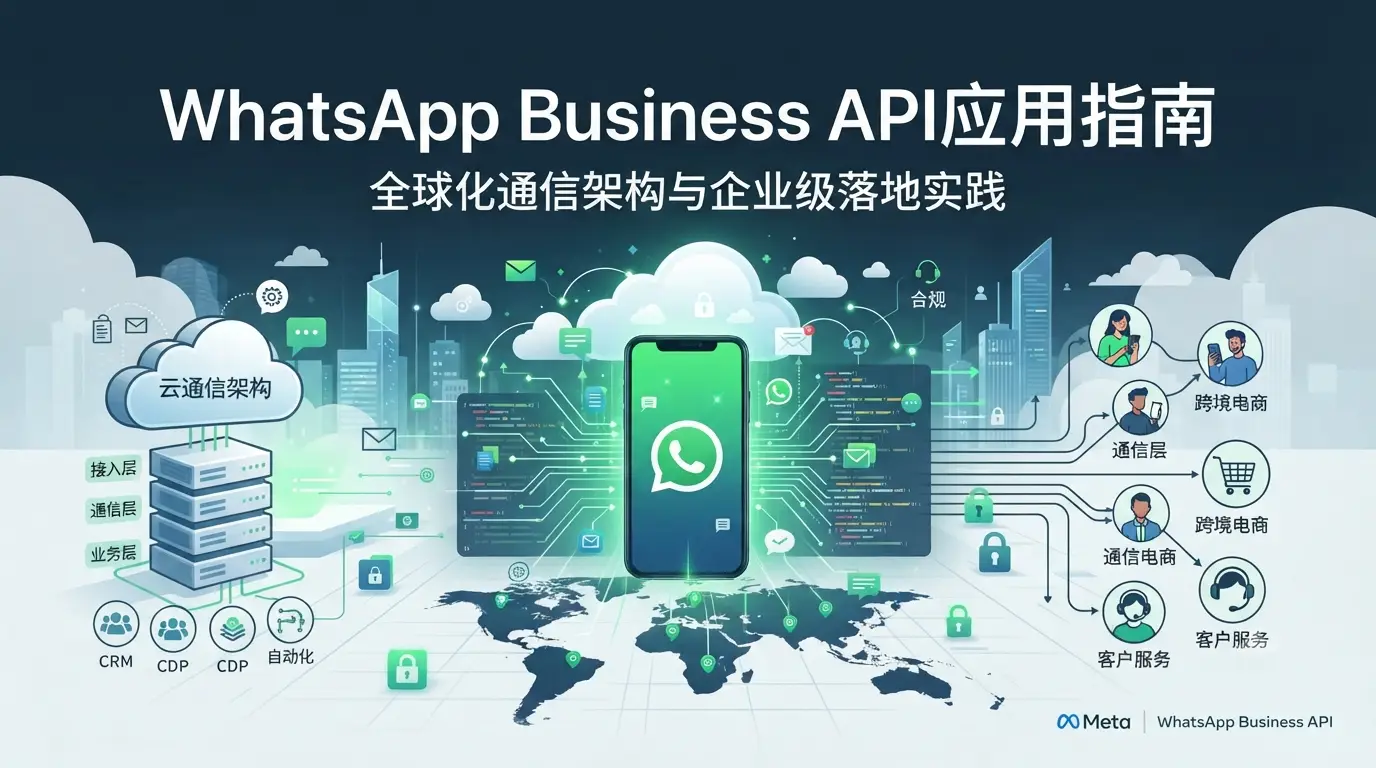
6. Recommended Architecture: Enterprise Multi-channel Communication System
It is recommended that enterprises build a unified cloud communication architecture:
1. Unified Channel Access
- SMS
- WhatsApp Business API
- Email / Voice (Extendable)
2. Intelligent Routing Strategy
- Select channels by country
- Select priority by scenario
- Auto downgrade (WhatsApp failure → SMS)
3. Data Closed Loop
- Delivery rate monitoring
- Open rate analysis
- Conversion rate tracking
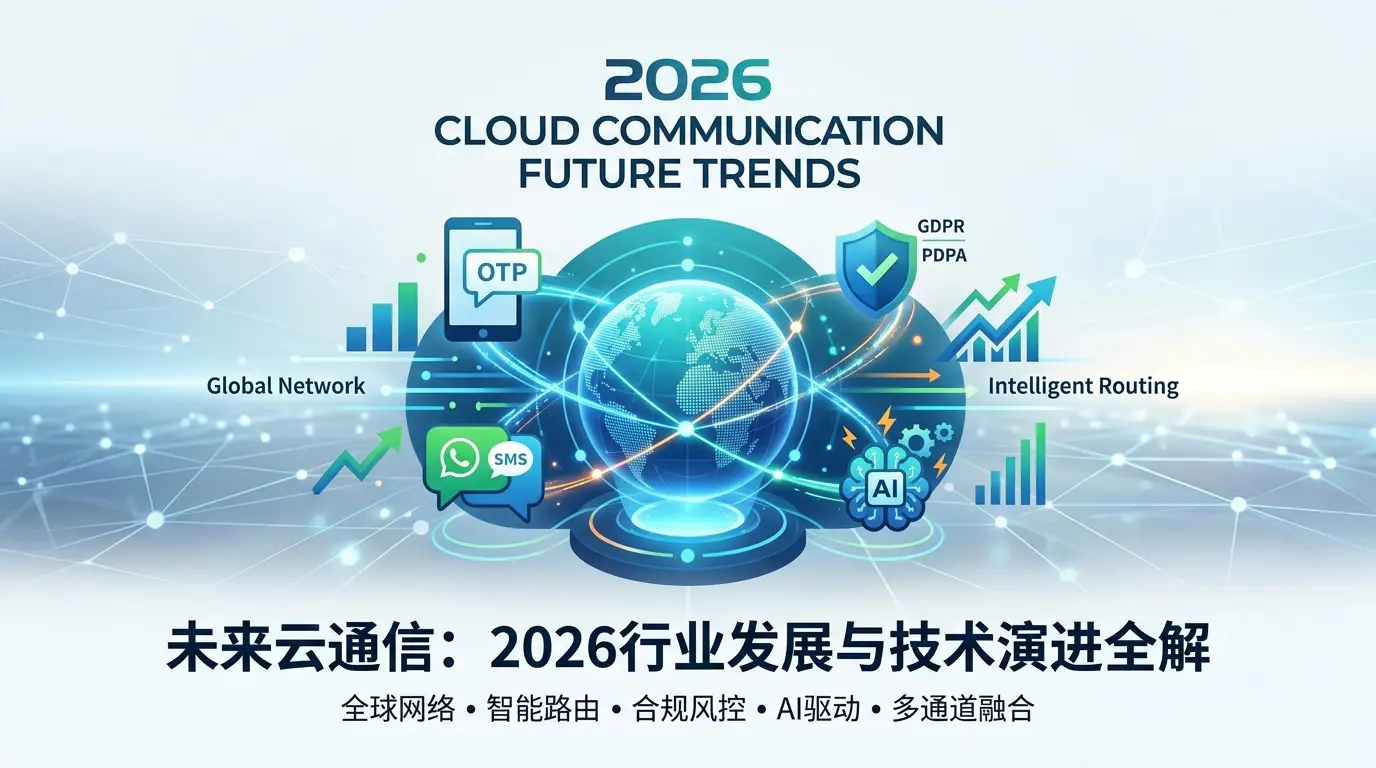
7. Industry Trends: Communication Capabilities are Becoming "Operational"
Future enterprise communication will present three trends:
- From "sending tool" to "user operation system"
- From "single channel" to "multi-channel collaboration"
- From "reach rate" to "conversion rate optimization"
8. Conclusion: How to Choose Between SMS and WhatsApp Business API?
If your business focuses on:
- Global coverage → Choose SMS
- User engagement & conversion → Choose WhatsApp Business API
- Best solution → Use both in combination