How Intelligent Routing Systems Optimize Cost and Success Rate? Analysis of International SMS Dynamic Routing Architecture
In international SMS, OTP verification code, voice notification and email communication scenarios, "successful sending" is not just about successful interface calls. The same SMS may experience price fluctuations, delivery delays, carrier rate limits, DLR receipt exceptions, channel blockages, and success rate declines in different countries, with different operators, and at different times. If the communication platform still uses fixed channels or manual switching modes, not only will communication costs continue to increase, but the final delivery rate will also be difficult to stabilize. Therefore, more and more enterprises are building Intelligent Routing Systems, which have become the core scheduling capability in modern cloud communication platforms.
I. What is Intelligent Routing System?
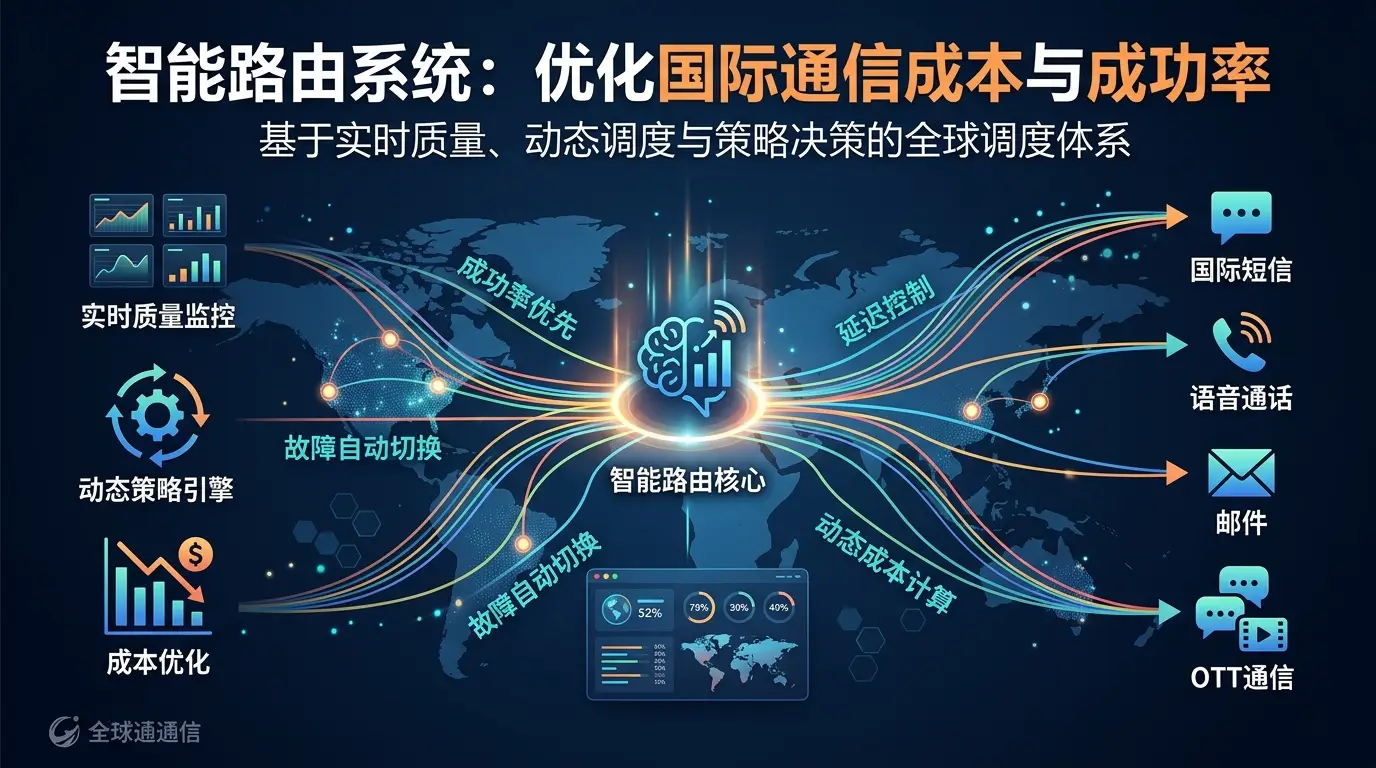
Intelligent routing system is essentially a communication routing system based on real-time quality data, dynamic policy engine and automatic scheduling algorithm. Its core goals include improving SMS delivery rate, reducing international SMS costs, optimizing OTP verification success rate, automatically avoiding abnormal channels, improving global communication stability, and dynamically selecting optimal routes. In international SMS platforms, when a user triggers an OTP verification code request, the system will real-time analyze the current country, current operator, channel success rate, DLR receipt status, average delay, channel price, real-time congestion, and historical stability, and then automatically select the optimal sending path. This is also the biggest difference between modern international SMS routing systems and traditional static routing.
II. Why Traditional SMS Routing Mode Can No Longer Meet Global Communication Needs?
Traditional communication platforms mostly adopt fixed priority, single-supplier routing, manual line switching, and static routing configuration. This approach has no obvious problems in low-concurrency scenarios, but as enterprises expand globally, the defects become more and more obvious. 1. Highly dynamic international operator environment: International SMS links themselves are highly unstable. For example, some operators are severely congested during evening peak hours, some countries temporarily strengthen A2P SMS supervision, some Aggregators experience TPS rate limits, and some lines experience sudden delivery rate drops due to gray routes. If fixed SMS routing is still used, high-priced channels will continue to consume budgets, low-quality lines will swallow a large number of verification codes, and channel failures cannot be automatically recovered, ultimately affecting user registration, login and payment conversion. 2. Pure low-price strategy will increase overall customer acquisition costs: Many enterprises only focus on "whether SMS unit price is cheap" when choosing international SMS service providers, but what really affects ROI is not the unit price, but effective delivery cost. Mature cloud communication platforms optimize not the lowest unit price, but the lowest effective delivery cost.
III. Core Architecture of Intelligent Routing System
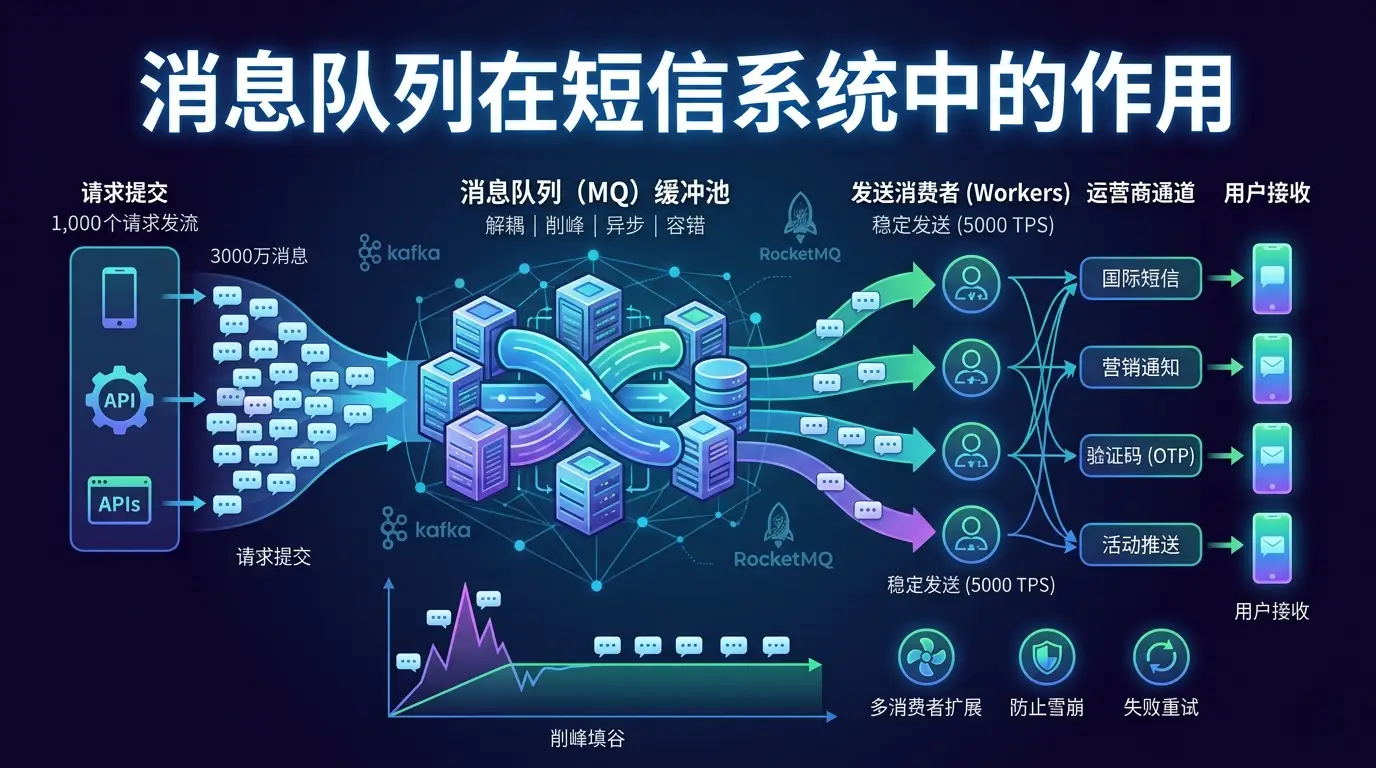
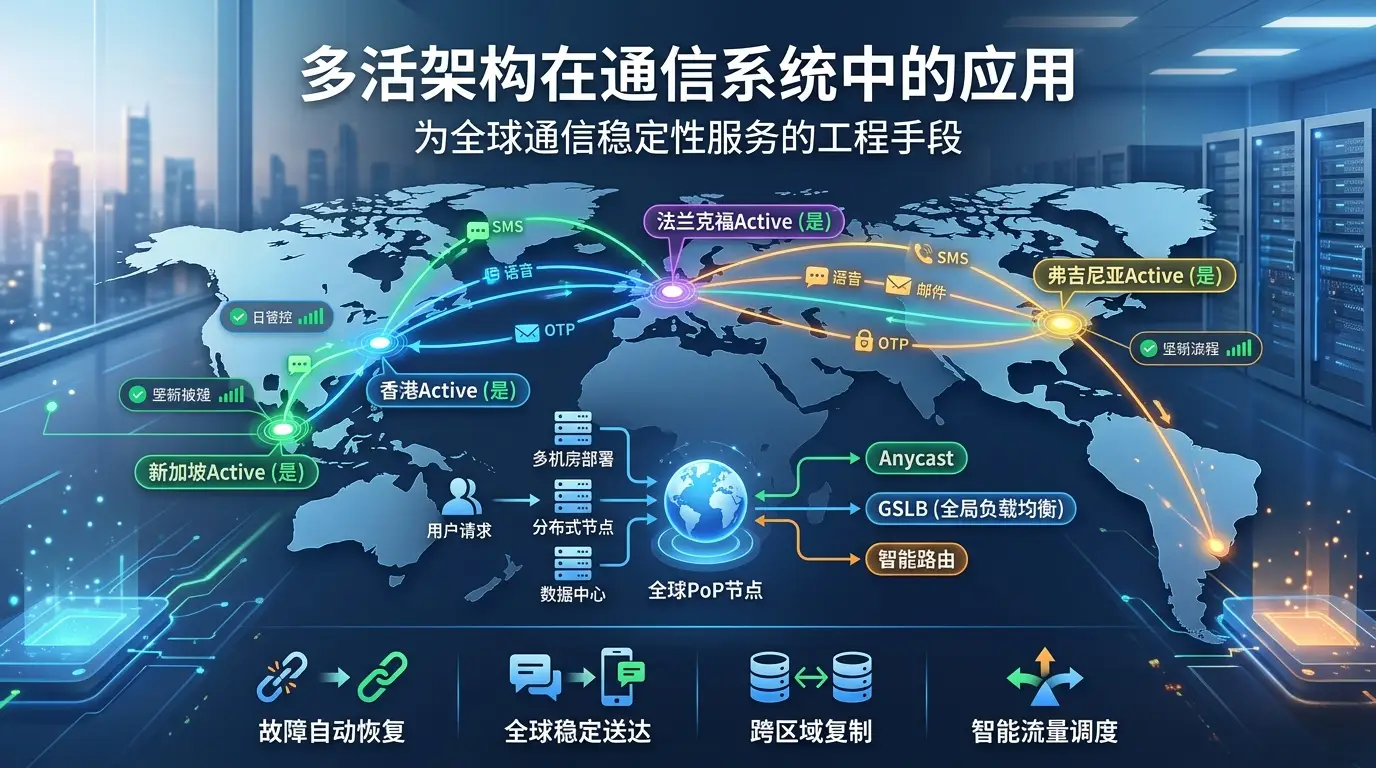
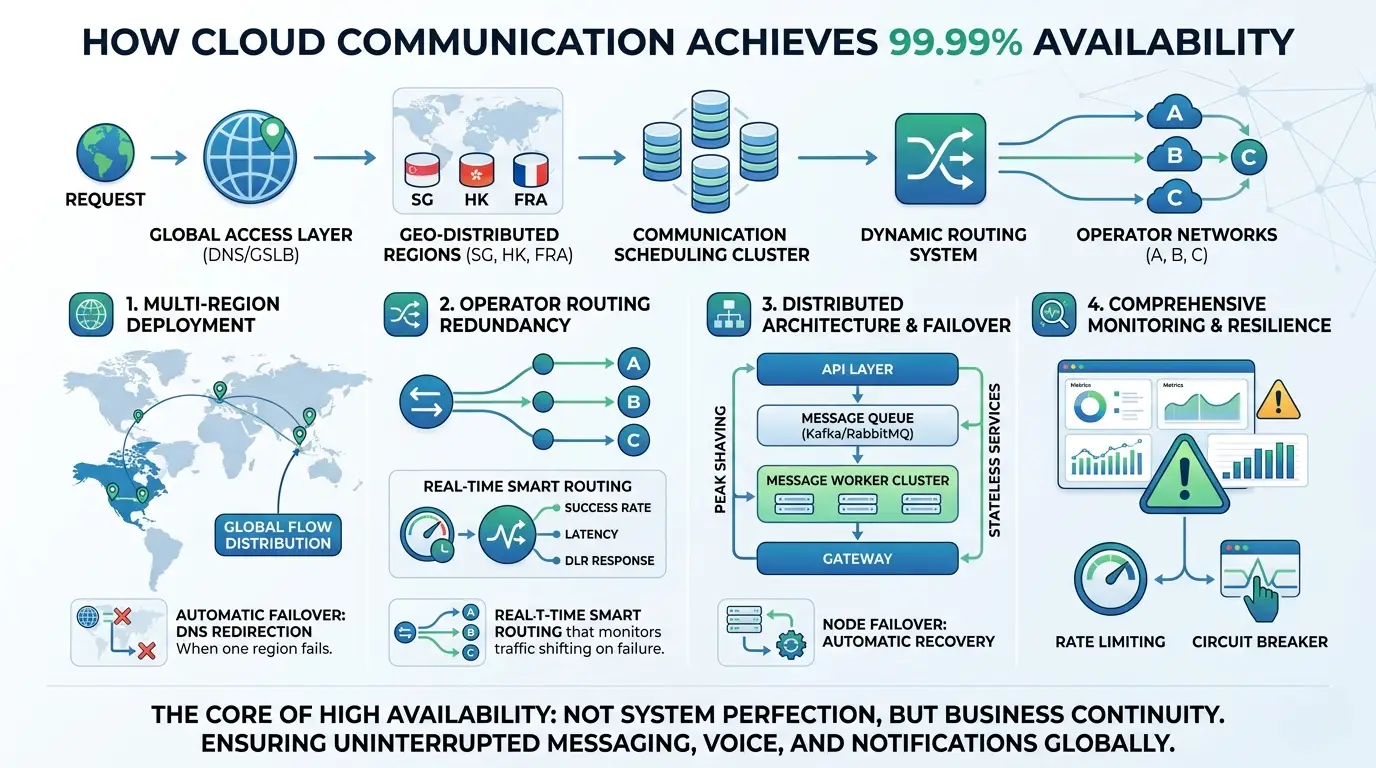
A mature international SMS intelligent routing system usually consists of the following modules: 1. Real-time quality monitoring system: The system needs to continuously collect DLR receipts, submission success rate, final delivery rate, average delay, TPS fluctuations, error codes, operator rejection rate, and national-level quality changes, and then generate national quality portraits, operator quality scores, and channel routing ratings. The system will dynamically adjust routing weights based on real-time data. 2. Dynamic routing policy engine: It is the core of the entire SMS scheduling system, responsible for automatically selecting the optimal sending path. Common strategies include cost-priority routing, success-rate-priority routing, low-latency-priority routing, and AI intelligent hybrid routing. 3. Failover automatic switching mechanism: High-availability cloud communication platforms must have automatic failover capabilities. The system will automatically fuse abnormal lines, switch to backup channels, dynamically reduce abnormal weights, and automatically restore healthy links, thus ensuring global SMS service stability. 4. Gray-scale traffic and AB Routing: Mature platforms adopt gray-scale release, small-traffic verification, AB Routing, and regional testing strategies to effectively avoid global communication accidents.
IV. AI Routing: Next-Generation Intelligent SMS Scheduling Trend
In recent years, AI Routing has become an important trend in the international cloud communication industry. Traditional routing systems can only "handle problems after they occur", while AI routing can predict risks in advance. For example, if the system detects that a certain operator is congested every evening peak, a certain country has a decline in success rate on weekends, or a certain line fluctuates severely during marketing periods, the system will proactively reduce the weight of that line, automatically switch to backup channels, and dynamically adjust scheduling strategies. This mode is called Predictive Routing, which is also an important capability of next-generation global SMS platforms.
V. How Does Intelligent Routing System Actually Reduce International SMS Costs?
Many enterprises mistakenly believe that intelligent routing only improves success rates. In fact, one of its greatest values is optimizing the overall communication cost structure. 1. Improve first-time delivery rate: Failed SMS usually leads to users repeatedly requesting verification codes, automatic resending, customer service intervention, and user churn. Improving OTP first-time delivery rate essentially reduces overall customer acquisition costs. 2. Dynamically select optimal price windows: Prices of different international SMS suppliers change dynamically. Intelligent routing systems can automatically select low-priced lines, balance price and quality, and dynamically switch suppliers to achieve real-time cost optimization. 3. Filter invalid numbers: The system can combine HLR queries, blacklist detection, risk control models, and number status recognition to filter invalid numbers in advance and reduce meaningless SMS sending.
VI. Intelligent Routing Has Become Core Competitiveness of International Cloud Communication Platforms
Today, competition in the international SMS industry is no longer just about "who has more channels", but about "who can more intelligently schedule global links". Truly mature cloud communication platforms compete on intelligent scheduling capabilities, real-time data capabilities, AI decision-making capabilities, global routing capabilities, and automatic recovery capabilities. Intelligent routing systems not only determine SMS delivery rates, but also determine enterprise communication costs, user registration conversion rates, global user experience, platform stability, and overseas business growth efficiency. For global enterprises, a mature intelligent routing system often means lower customer acquisition costs, higher OTP success rates, and more stable global communication capabilities.
VII. Why Do Enterprises Need Professional Cloud Communication Platforms?
If enterprises are developing overseas APPs, global e-commerce, fintech, game exports, social platforms, or SaaS services, then stable international SMS and OTP routing capabilities will directly affect user growth and business conversion. Professional cloud communication platforms can usually provide global operator direct connections, intelligent SMS routing, OTP high-delivery solutions, AI Routing scheduling, real-time DLR monitoring, multi-channel Failover, global number coverage, and high-concurrency sending capabilities to help enterprises truly achieve global stable communication.
VIII. FAQ
1. What is the difference between intelligent routing system and ordinary SMS routing? Ordinary SMS routing usually uses fixed lines, while intelligent routing system dynamically selects the optimal path based on success rate, delay, cost, and real-time quality. 2. Is intelligent routing suitable for OTP verification code scenarios? Very suitable. OTP scenarios have extremely high requirements for delivery rate, latency, and stability. Intelligent routing can significantly improve verification code success rates. 3. Is AI Routing mature? Currently, large international cloud communication platforms have begun to widely use AI Routing. Especially in global SMS, voice communication, and email delivery scenarios, predictive scheduling is becoming the mainstream trend.
IX. Optimize Your Global Communication Links Now
If your enterprise is facing high international SMS costs, declining OTP delivery rates, unstable channels, failed overseas user registrations, or fluctuating global communication quality, then an intelligent routing system will be an important infrastructure to improve communication efficiency. By building dynamic routing, AI scheduling, and real-time quality monitoring systems, enterprises can truly achieve "lower cost + higher success rate" global communication capabilities.
X. Want to Build a High-Availability Intelligent Routing System?
We provide international SMS API, OTP verification code system, global operator direct connection, intelligent routing scheduling, AI Routing engine, and enterprise-level cloud communication solutions. Supporting SMS, WhatsApp, Email, Voice, and RCS, covering global business scenarios, helping enterprises build stable, secure, and high-delivery-rate communication capabilities.