How Does a Cloud Communication System Achieve 99.99% Availability? High Availability Architecture Design and Stability Practice Analysis
For cloud communication platforms, "stability" is never an additional capability but a core competitive advantage. Especially in scenarios like international SMS, OTP verification codes, email notifications, and voice calls, system unavailability not only affects technical metrics but may directly lead to: failed user registrations, login verification code timeouts, interrupted payment verification, inability to reach overseas business, and decreased user conversion rates. Therefore, more and more enterprises when selecting cloud communication services are no longer asking "Can it send messages?" but "Is the system stable enough?" This is why the industry keeps emphasizing 99.99% availability (High Availability). This article will deeply analyze the high-availability system behind cloud communication platforms from several aspects: communication architecture, scheduling mechanisms, disaster recovery design, and system stability engineering.
I. What is 99.99% Availability?
In the technical field, 99.99% availability means annual downtime of no more than approximately 52 minutes. This means: monthly allowed interruption of approximately 4.3 minutes, daily allowed anomaly of approximately 8.6 seconds. For ordinary internet systems, this is already a relatively high standard. But for international SMS platforms, OTP verification code systems, and voice platforms, this is only the basic requirement. Because communication business has obvious characteristics: extremely high real-time requirements, extremely low user tolerance, complex links, and huge differences in global carrier environments. So, truly high availability is not just servers being online, but messages being delivered stably.
II. Global Multi-Region Deployment
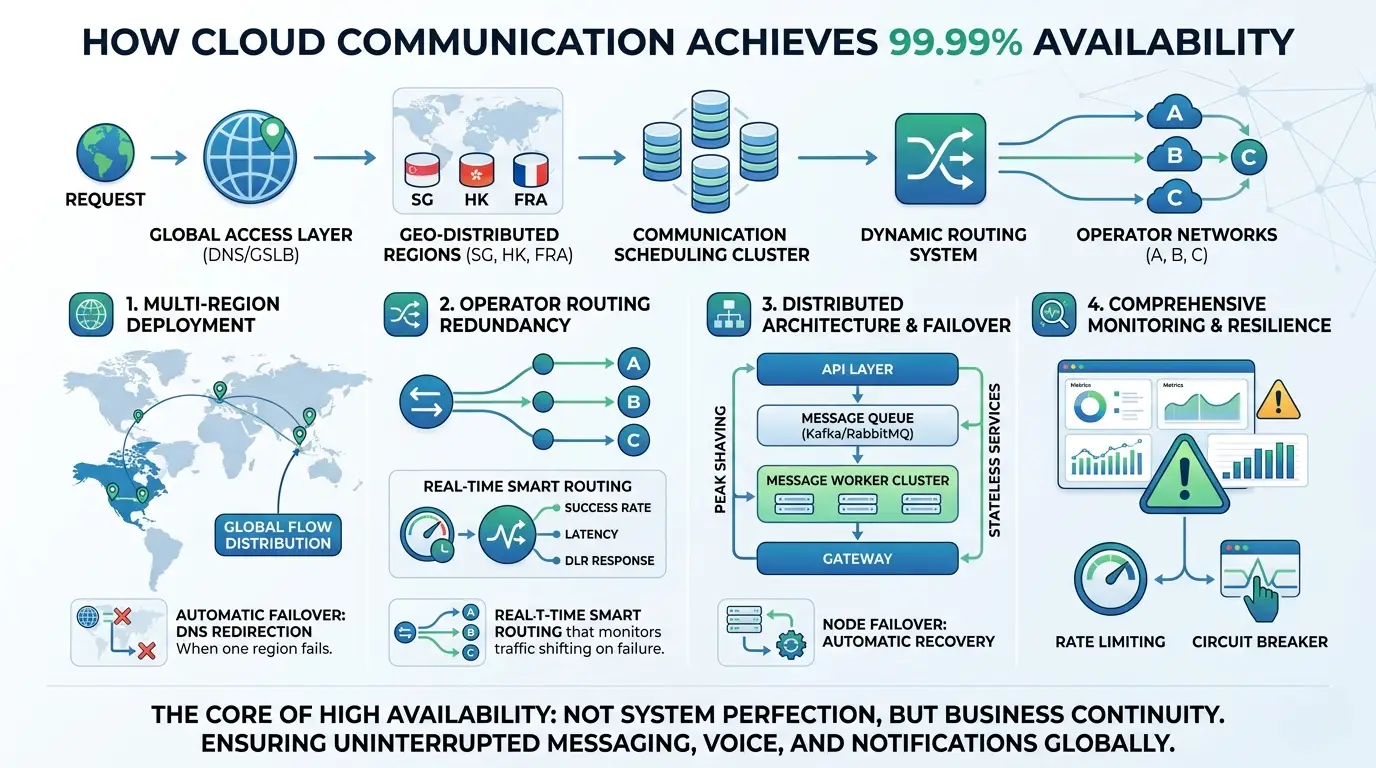
One of the biggest challenges for international communication systems is unstable global network environments. Therefore, high-availability platforms typically adopt multi-region deployment architecture: Singapore + Hong Kong + Europe + USA. Typical link: User Request → Global DNS Scheduling → Nearest Access Node → Communication Scheduling Cluster. Advantages include: avoiding single data center failures, reducing regional network fluctuations, improving overseas access speed, and enhancing global message stability. For example, Southeast Asian users priority enter Singapore nodes, European users enter Frankfurt nodes. When a region fails, the system automatically completes traffic switching with users barely noticing.
III. Smart Routing System
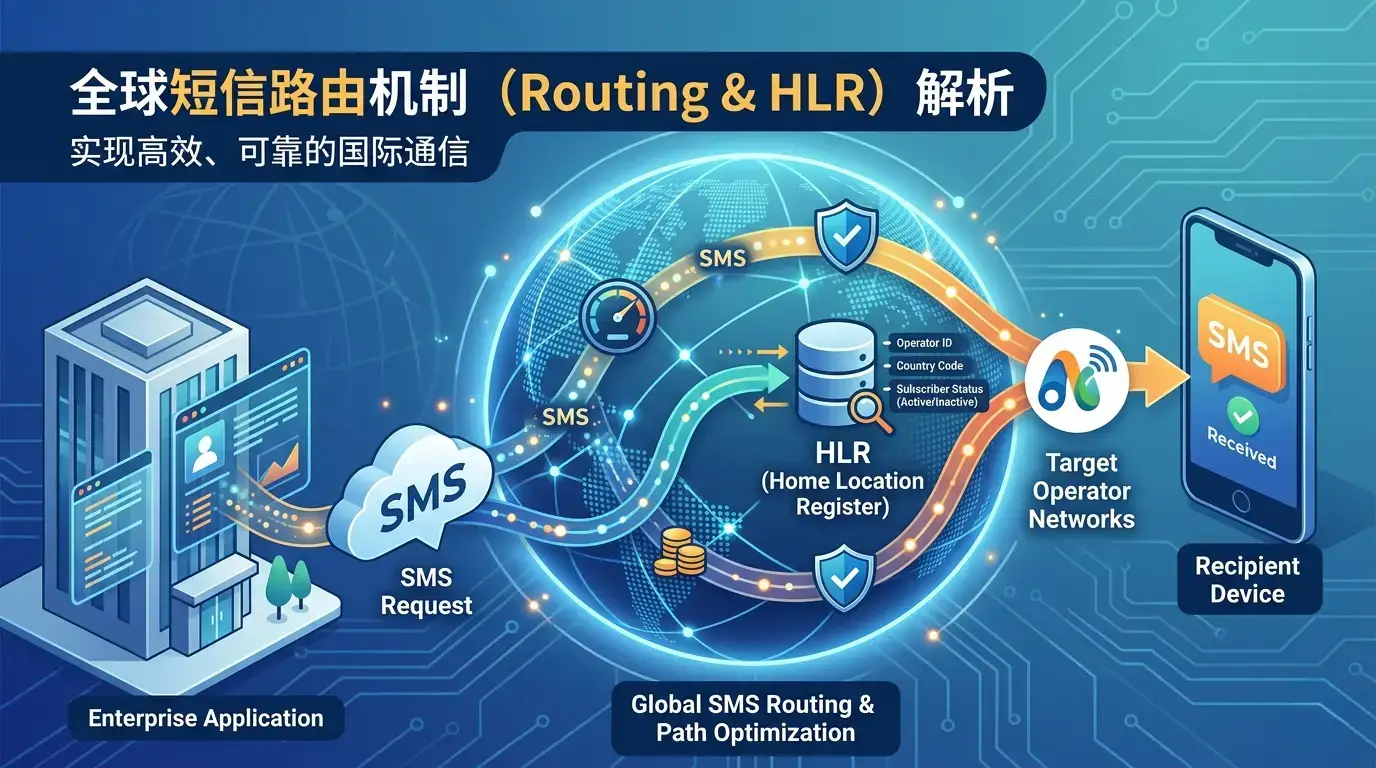
In international SMS systems, what truly tends to go wrong is often not the platform itself but the carrier links. For example: channel congestion, local carrier rate limiting, gray route anomalies, DLR receipt delays, national-level network fluctuations. Therefore, mature cloud communication platforms do not rely on a single carrier but simultaneously connect to multiple carriers. The system dynamically selects the optimal link based on delivery rate, delay, TPS, error codes, and receipt success rate. This is also the core of international SMS platform stability.
IV. Automatic Failover
A truly mature high-availability system is not "never failing" but capable of rapid recovery after failure. For example, when an SMS channel experiences timeouts, massive failures, or receipt anomalies, the system automatically executes Primary Route → Secondary Route → Backup Route, achieving second-level switching. High-availability cloud communication platforms typically have: automatic circuit breaking, automatic removal of abnormal lines, dynamic weight adjustment, automatic recovery detection, and gray recovery mechanisms to avoid failure propagation.
V. Message Queue and Asynchronous Architecture
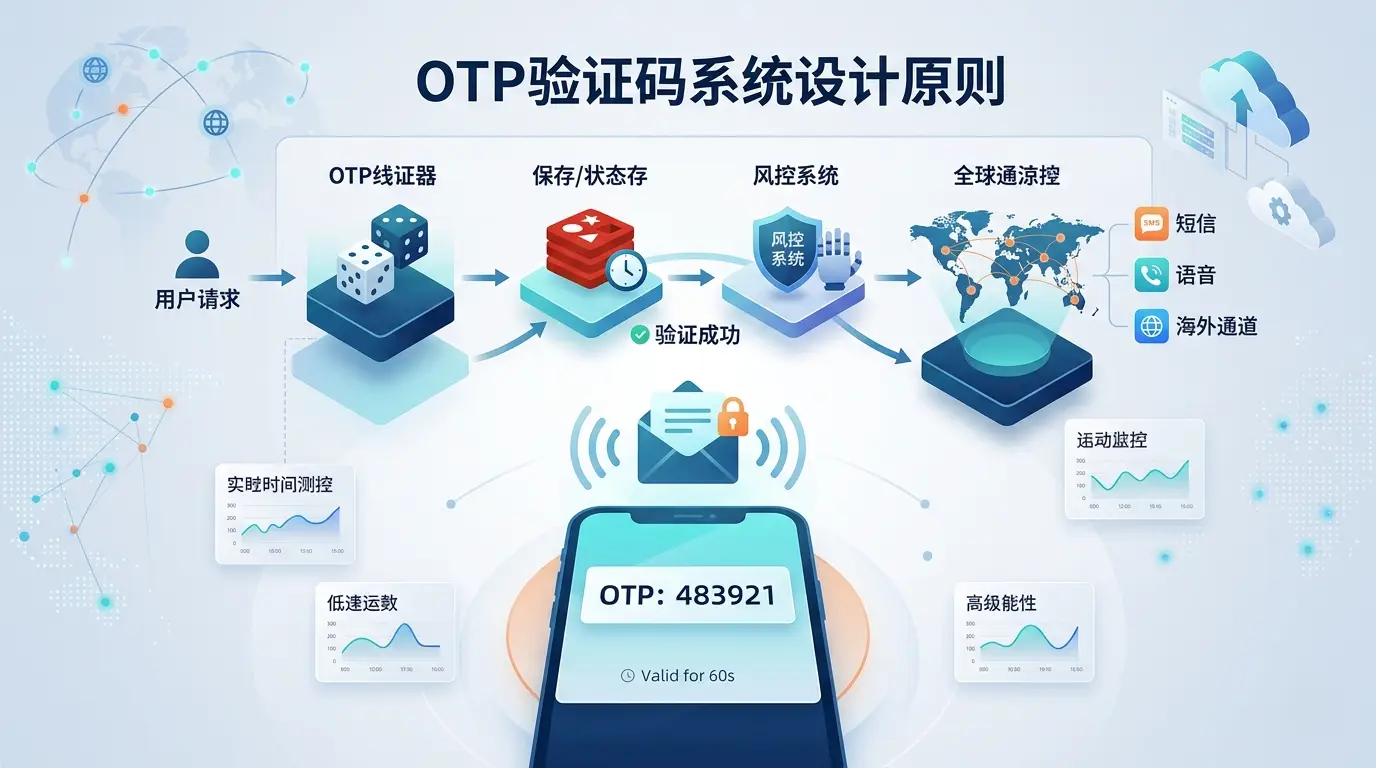
One of the biggest risks for verification code systems is instantaneous traffic. Large events, seckill sales, and login peaks can cause verification code requests to surge. If synchronous sending is used, the system can easily be overwhelmed. Therefore, mature OTP verification code platforms typically adopt API Layer → Kafka/RabbitMQ → Sending Worker → Carrier Gateway architecture. The core value of message queues includes: peak shaving and valley filling, asynchronous decoupling, preventing system avalanches, improving concurrency capability, and ensuring messages are not lost. This is an important foundation for communication system high availability.
VI. Distributed and Rate Limiting/Circuit Breaker Mechanisms
Modern cloud communication platforms typically adopt stateless services where any node can independently process requests. This means node exceptions do not affect the overall system, supporting rapid scaling, better suited for Kubernetes, and supporting elastic scaling. The real problem for many communication systems is not large traffic but abnormal traffic (such as verification code attacks, API scraping, carrier timeouts, callback storms). Therefore, mature cloud communication platforms definitely add rate limiting (Rate Limiting, e.g., maximum 3 OTP messages per 60 seconds) and circuit breakers (Circuit Breaker). When a carrier is abnormal, the system automatically pauses requests to avoid thread resources being exhausted.
VII. Full-Link Monitoring System
The core of high-availability systems is not "post-failure handling" but early anomaly detection. Mature platforms typically monitor in real-time: system metrics (CPU, memory, network, disk), communication metrics (Submit Success Rate, Delivery Rate, DLR Delay, Queue Backlog), and business metrics (OTP success rate, registration success rate, payment verification success rate). Once the system detects anomalies, it automatically triggers alerts, traffic switching, degradation, and circuit breaking.
VIII. How to Choose a High-Availability Cloud Communication Platform?
It is recommended to focus on: global coverage (whether multi-region nodes are supported), channel capability (whether multi-carrier access is supported), scheduling system (whether intelligent routing is supported), disaster recovery capability (whether automatic failover is supported), system architecture (whether distributed deployment is supported), monitoring system (whether real-time alerts are supported), SLA (whether 99.99% commitment is provided), and API stability (whether high concurrency is supported). The 99.99% availability of cloud communication systems is never simply "server stability". It involves global network scheduling, intelligent carrier routing, distributed architecture, message queue systems, automatic failover, real-time monitoring, and disaster recovery mechanisms. It is essentially a complete stability engineering capability.