OTP Verification Code System Design Principles: From SMS Verification to Global OTP Authentication Architecture
For internet products, OTP verification codes have become the infrastructure for user identity verification. Whether it is App registration, login verification, payment confirmation, password recovery, or two-factor authentication (2FA), almost all rely on OTP (One-Time Password) systems. However, many enterprises encounter several practical problems after integrating SMS verification codes: severe verification code delays, overseas numbers cannot receive OTP, sending failures during peak periods, verification code attacks by black hat hackers, increasing international SMS costs, and users not receiving verification codes leading to conversion decline. These problems are not essentially "SMS sending" issues, but OTP verification code system architecture issues. A truly mature OTP system is essentially a real-time authentication system + global message scheduling system + risk control system. This article will systematically analyze the design principles of OTP verification code systems from a technical architecture perspective.
I. What is an OTP Verification Code System?
OTP (One-Time Password) is a dynamic one-time password mechanism. When a user triggers a verification request, the system dynamically generates a verification code and sends it to the user via SMS, voice call, email, WhatsApp, Push, or other channels to complete identity verification within a limited time. Compared to ordinary messaging systems, OTP systems have several distinct characteristics: high real-time performance (delay directly affects login conversion), high concurrency (peak TPS is extremely high), strong security (belongs to identity authentication systems), strong risk control (vulnerable to black hat attacks), and globalization (involves international carrier routing). Therefore, the core challenge of OTP platforms lies not in "sending", but in stable delivery + real-time verification + risk control.
II. OTP Verification Code System Architecture Design
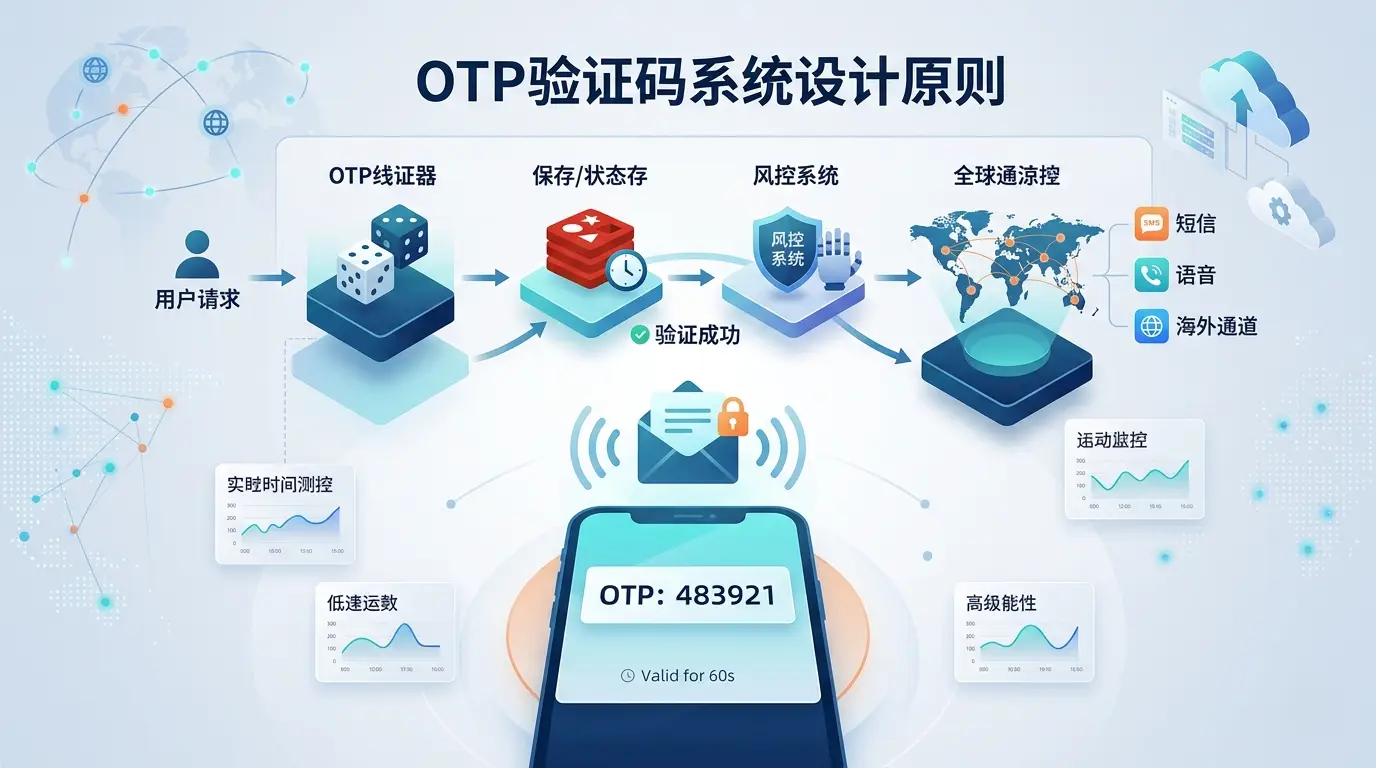
A mature OTP verification code platform typically includes the following modules: User Request → API Gateway → OTP Generation Service → Redis Cache Layer → Risk Control System → Message Queue MQ → Intelligent Scheduling System → SMS/Voice Gateway → Carrier Network → User Terminal. In the entire OTP link, any node failure may cause verification code failure. Therefore, the core goals of OTP system design are high availability, low latency, high delivery rate, and high security.
III. OTP Verification Code Generation Principles
The core of OTP is "dynamic generation". Current mainstream OTP generation schemes include: 1. Random digital verification codes: The most common 6-digit digital verification codes, with advantages of simple input, good user experience, and mobile-friendly, but limited entropy and vulnerable to brute force attacks, suitable for ordinary registration and login scenarios; 2. TOTP (Time-based OTP): Dynamically generates verification codes based on time windows, with core principles of HMAC + timestamp, widely used in Google Authenticator, MFA multi-factor authentication, and financial security verification, with advantages of no need to store verification codes, automatic expiration, and higher security; 3. HOTP (Counter-based OTP): Generates dynamic passwords based on counters, suitable for bank dynamic passwords and hardware tokens, but gradually replaced by TOTP in mobile internet scenarios.
IV. Why Must OTP Systems Use Redis?
OTP verification code systems essentially belong to high-concurrency + high-frequency expiration scenarios, so most OTP platforms in the industry use Redis. Reasons include: EXPIRE for automatic verification code expiration, INCR for request rate limiting, SETNX for idempotency control, atomic operations to prevent verification code overwriting, and high QPS to support peak traffic. For example, "SET phone:otp 483921 EX 60 NX" can implement writing verification codes, setting expiration time, and preventing duplicate generation, which is a classic design in OTP systems.
V. OTP SMS Verification Code Sending Process
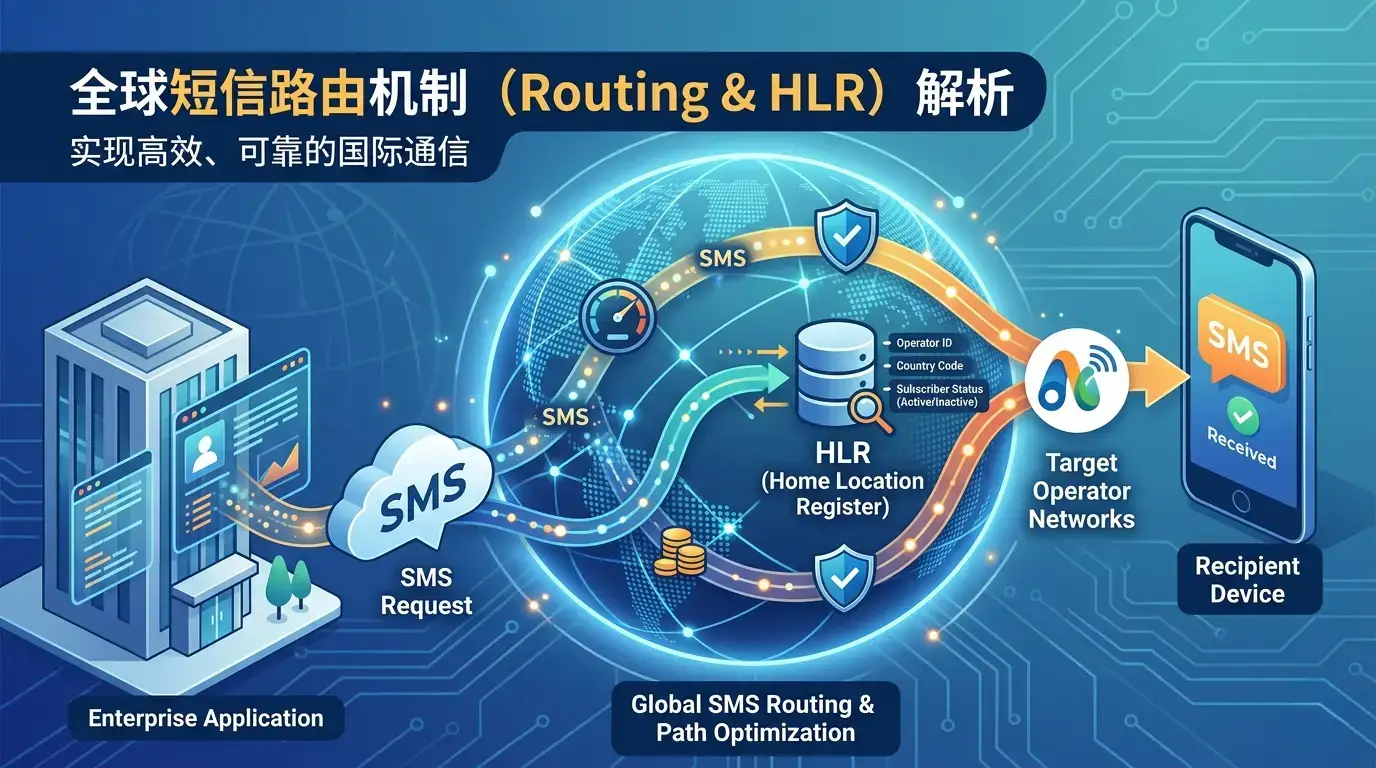
After verification code generation, it is not directly sent to the carrier. The actual process is typically: OTP Service → MQ Message Queue → Intelligent Routing System → Channel Gateway → International Carrier → User Phone. The core here is the OTP intelligent scheduling system. Because different carriers have different delivery rates, delays, costs, and risk control rules, mature OTP platforms establish dynamic routing systems that automatically switch to the best sending route based on country, MCC/MNC, real-time delay, historical delivery rate, channel quality, and current failure rate.
VI. Why is International SMS OTP More Complex?
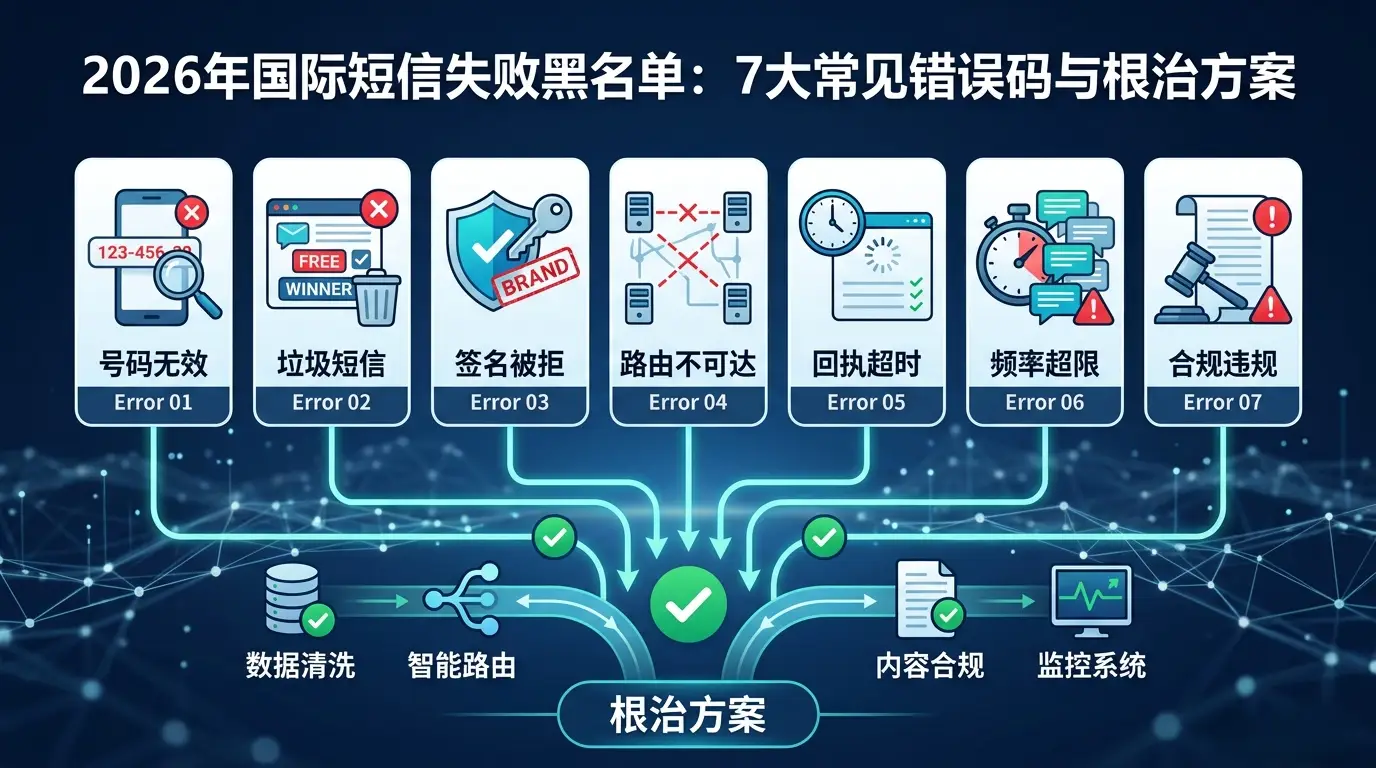
Many enterprises discover after going global that international SMS OTP is far more complex than domestic SMS. Core reasons include: multi-carrier environment leading to complex routing, different national regulations leading to template restrictions, Sender ID differences leading to brand recognition issues, gray routes leading to unstable delivery rates, and international delays leading to poor user experience. Especially India, Indonesia, Brazil, and the Middle East have strict regulations on OTP verification codes. Therefore, global OTP platforms typically require local carrier direct connections, intelligent route switching, multi-channel redundancy, and real-time quality monitoring to ensure international verification code delivery rates.
VII. High-Concurrency Design of OTP Verification Code Systems
OTP belongs to a typical burst traffic system. E-commerce promotions, game launches, large-scale App logins, and overseas marketing activities can instantly generate hundreds of thousands of TPS. Therefore, OTP platforms must have: 1. MQ asynchronous architecture: Request → MQ → Asynchronous sending to avoid SMS interface blocking and peak traffic avalanche; 2. OTP interface rate limiting: Restrictions on phone numbers, IPs, Device IDs, countries, users, etc., to prevent SMS bombing and API scraping; 3. Idempotency control: Reuse the same verification code within 60 seconds to avoid users receiving multiple OTPs leading to verification failures.
VIII. Risk Control Design of OTP Verification Code Systems
For cloud communication platforms, the core competitiveness of OTP is actually risk control capability, because verification code systems are key targets for black hat attacks. Common OTP attack types include SMS bombing, OTP brute force attacks, SIM Swap attacks, and virtual number registration. Mature OTP platforms typically include risk control modules such as device fingerprinting (identifying abnormal devices), IP risk database (blocking proxies/VPNs), behavior analysis (detecting bot traffic), number profiling (detecting virtual numbers), frequency control (preventing SMS bombing), and blacklist systems (real-time blocking). Advanced OTP risk control even integrates HLR queries, SIM activity detection, and human behavior analysis to enhance verification security.
IX. Core Monitoring Indicators for OTP Systems
Mature OTP verification code platforms focus on monitoring: Delivery Rate, DLR Delay, Verify Rate, Retry Rate, and Route Health Score. The truly important metric is not "sending success", but whether the user completes verification, which is the core business indicator of OTP systems.
X. Future Trends of OTP Verification Code Systems
Future OTP systems are evolving in several directions: Passwordless Login (OTP is replacing traditional password login), Multi-channel OTP (WhatsApp OTP, RCS OTP, Email OTP, Push OTP, Voice OTP are rapidly gaining popularity), AI Risk Control (using AI to real-time identify bot registrations, abnormal behaviors, and batch attacks), and Silent Verification (completing identity verification automatically without user input through SIM authentication, Device Attestation, and network authentication).