Email Deliverability Optimization Guide: Dedicated IP Warm-up, Domain Reputation Management and Inbox Rate Improvement
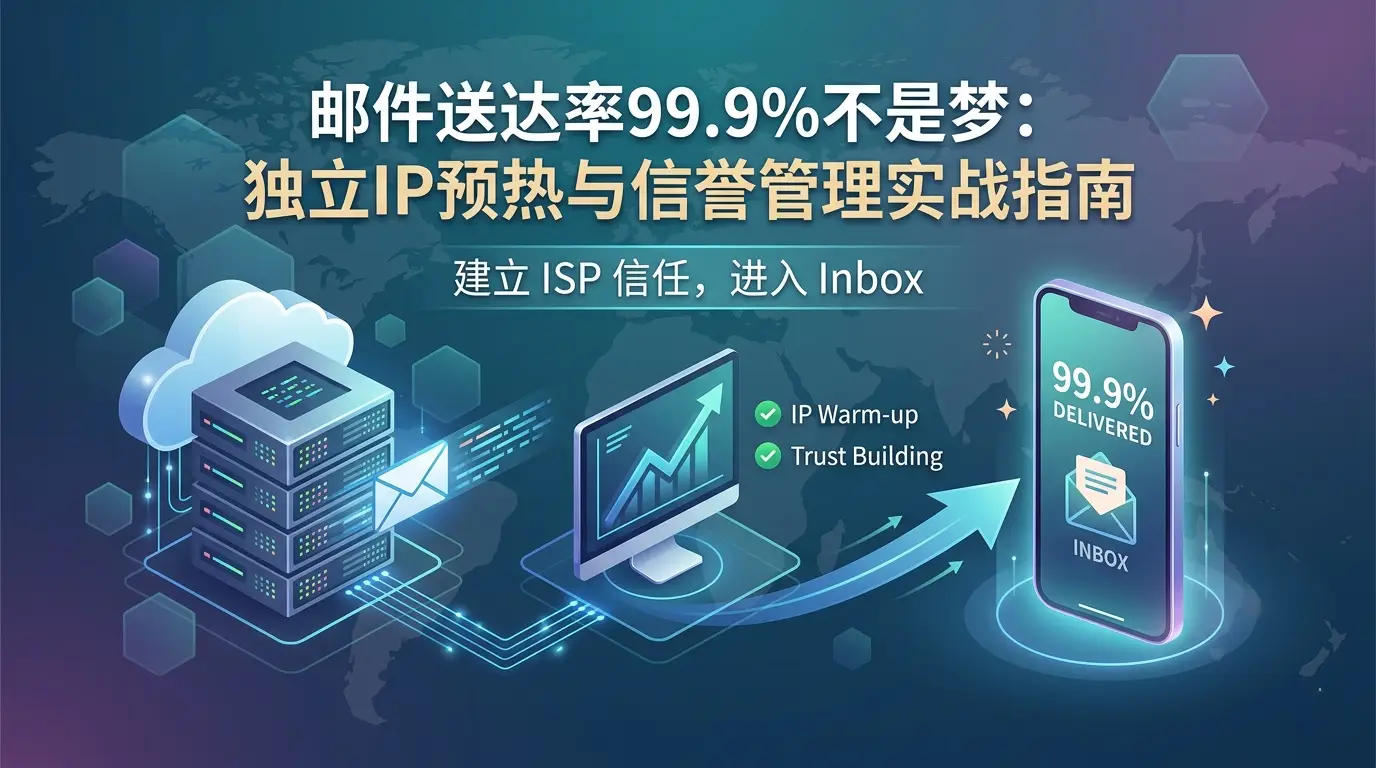
Many enterprises encounter a problem in the early stages of email system construction: SMTP shows successful sending, but users cannot receive emails at all. Especially in overseas email scenarios: Gmail goes to Spam, Outlook is rate-limited, Yahoo bounces, enterprise mailboxes reject, and marketing email open rates are extremely low. This is not a "sending failure", but a problem with email deliverability. For enterprises, email deliverability directly affects user registration activation, OTP verification code success rate, SaaS retention, marketing conversion, user recall, and ticket notification delivery. This article will provide an in-depth explanation from an enterprise-level email system perspective: what is email deliverability, why dedicated IP must be warmed up, how to manage email IP reputation, how to correctly configure SPF/DKIM/DMARC, and how enterprises can steadily improve Inbox rates in the long term.
I. What is Email Deliverability?
Many enterprises mistake SMTP Success or API success as "email has been delivered". In fact, SMTP Accepted only means the ISP (email service provider) accepted the connection, not that it entered the Inbox, the user can see it, or it did not go to Spam. The core indicators of true email deliverability include Delivery Rate (whether delivered successfully), Inbox Rate (whether entered inbox), Open Rate (whether opened by user), Complaint Rate (whether complained by user), and Bounce Rate (whether bounced). In modern email systems, Inbox Rate is the true deliverability rate.
II. Why do new dedicated IPs easily go to spam?
Many enterprises find that after purchasing a dedicated IP, Gmail continues to defer, Outlook frequently returns 421, Yahoo directly marks as Spam, and new domains are rate-limited. The reason is simple: the new IP has no reputation. For ISPs like Gmail, Microsoft, and Yahoo, a brand new IP essentially belongs to unknown traffic, has no historical behavior, and no user interaction records. ISPs will default to increasing risk control levels. Therefore, if an enterprise starts sending large volumes of emails immediately after enabling a dedicated IP, it is very likely to trigger spam models, causing IP reputation to decline rapidly, and even entering email blacklists. Therefore, dedicated IPs must undergo IP warm-up.
III. What is Dedicated IP Warm-up?
Dedicated IP warm-up essentially means gradually building the ISP's trust in the sending IP. ISPs continuously observe user open rate, click-through rate, reply rate, unsubscribe rate, complaint rate, bounce rate, sending frequency, and sending behavior stability. These behaviors form the email IP reputation, which directly determines whether emails enter the Inbox, are rate-limited, go to Spam, or are rejected.
IV. Enterprise-level IP Warm-up Standard Process
Phase 1: Cold Start (1-3 days) - Goal: Establish basic sending reputation, daily volume 500-2000 emails, prioritize transactional emails (registration verification, OTP codes, login reminders, order notifications, ticket notifications); Phase 2: Steady Growth (4-14 days) - Gradually expand sending scale, +20%~+30% increase every 24 hours, strictly control complaint rate <0.1%, Hard Bounce <2%; Phase 3: Reputation Stabilization (after 15 days) - ISP has established IP behavior profile, focus shifts to user cleansing, blacklist monitoring, engagement maintenance, complaint control, sending frequency control, and domain reputation maintenance.
V. Why must SPF, DKIM, and DMARC be configured?
Email authentication is the infrastructure of modern email systems. SPF (Sender Policy Framework) is used to declare which servers are allowed to send on behalf of your domain, preventing sender spoofing; DKIM (DomainKeys Identified Mail) is used to verify whether emails have been tampered with, improving email credibility; DMARC specifies how ISPs should handle emails when SPF/DKIM fails. Common policies include p=none (monitor only), p=quarantine (go to spam), and p=reject (reject directly).
VI. Why do emails go to Spam?
Emails going to spam is not just a content issue. Modern ISP risk control models comprehensively analyze: 1. IP reputation (historical complaint rate, historical bounce, blacklist records, sending stability); 2. Domain reputation (even if IP is changed, poor domain reputation can still cause spam); 3. User engagement rate (Open, Click, Reply, Forward, Star behaviors); 4. Content risk (Spam keywords, phishing characteristics, short links, blacklisted URLs, abnormal image ratios).
VII. Why do enterprise email systems prefer dedicated IPs?
In the past, many platforms used shared IP pools, but now the problems with shared IPs are becoming more apparent. The core risk of shared IPs is the "guilt by association" effect: if some customers in the shared IP pool send spam, have high complaint rates, or are blacklisted, the reputation of the entire IP pool will decline, ultimately affecting all tenants' email deliverability. Therefore, more and more enterprises are choosing dedicated IP + independent domain reputation systems, especially for overseas marketing, SaaS platforms, OTP verification codes, large-scale transactional notifications, and global businesses.
VIII. Enterprise-level Email Deliverability Optimization Solution
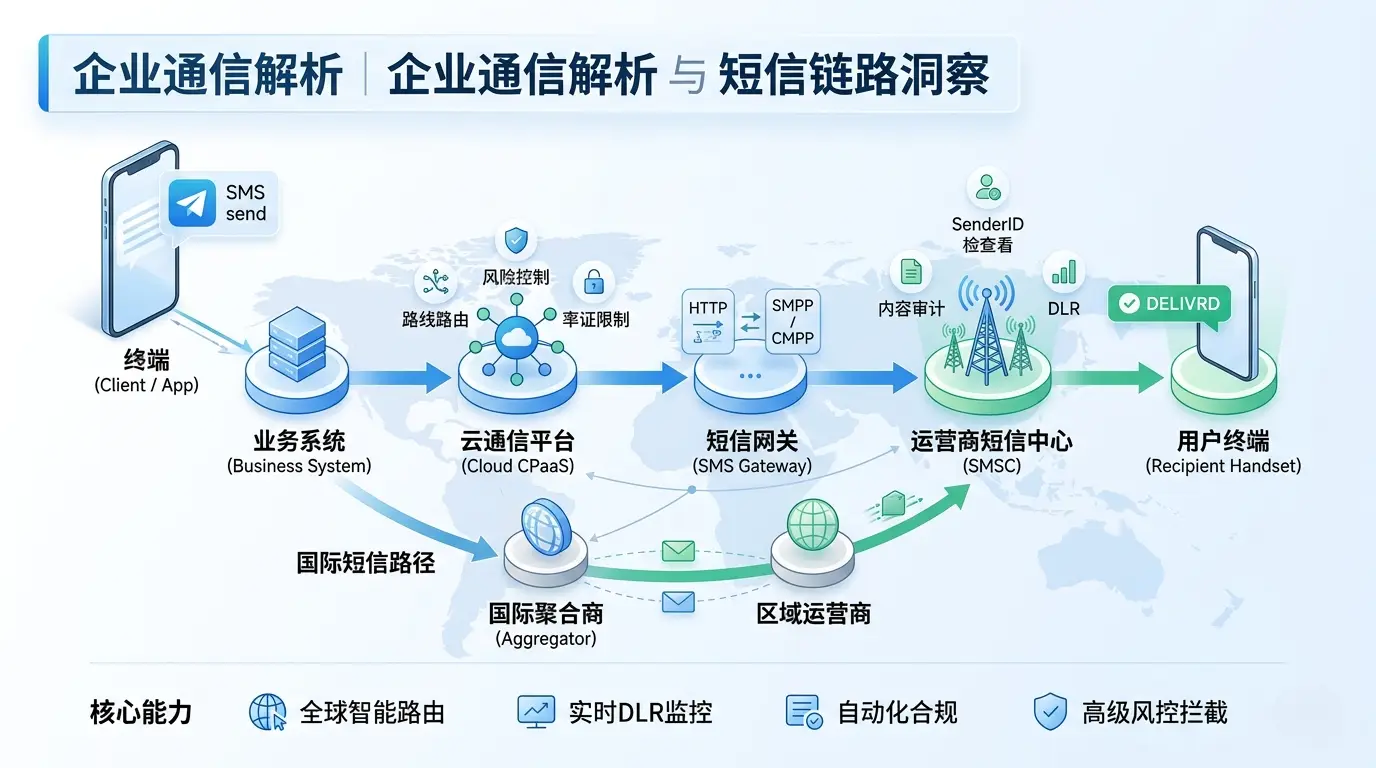
Truly mature email systems typically include: 1. Email sending layer (SMTP cluster, API sending service, message queue, retry mechanism, multi-region deployment); 2. ISP intelligent routing layer (dynamically switch sending IPs, exit nodes, and sending rhythm based on country, ISP, real-time reputation, and bounce status); 3. Email risk control layer (real-time monitoring of complaints, bounces, spam traps, blacklists, user unsubscribes, and engagement); 4. Data analysis layer (continuous user cleansing, activity analysis, sending frequency control, user profiling, and engagement scoring).
IX. What is the core of email deliverability optimization?
Many teams focus excessively on SMTP TPS, API concurrency, and queue throughput, but the core that truly determines Inbox rate is email reputation management capability. Even if millions of emails are sent per second, if the complaint rate is too high, users don't open them, bounces are severe, and IP reputation is low, they will all end up in the spam folder.
X. How to maintain high email deliverability long-term?
Enterprises need to establish a long-term reputation management system, including dedicated IP warm-up, domain reputation management, blacklist monitoring, user cleansing mechanisms, engagement optimization, ISP feedback loops, spam detection, and dynamic frequency control. Email systems are no longer just "message sending systems", but "global ISP reputation coordination systems". The future competition in email systems is essentially not about "who can send emails", but "who can stably enter users' inboxes".