Global SMS Routing Mechanism and HLR Analysis | Improve International SMS Delivery Rate
In international communications, one of the core challenges enterprises face is achieving high delivery rates and low latency for cross-border SMS. Global SMS Routing and HLR (Home Location Register) are key technologies for achieving this goal. This article will detail their principles, processes, and enterprise application value to help enterprises optimize SMS strategies and improve user experience.
I. What is Global SMS Routing?
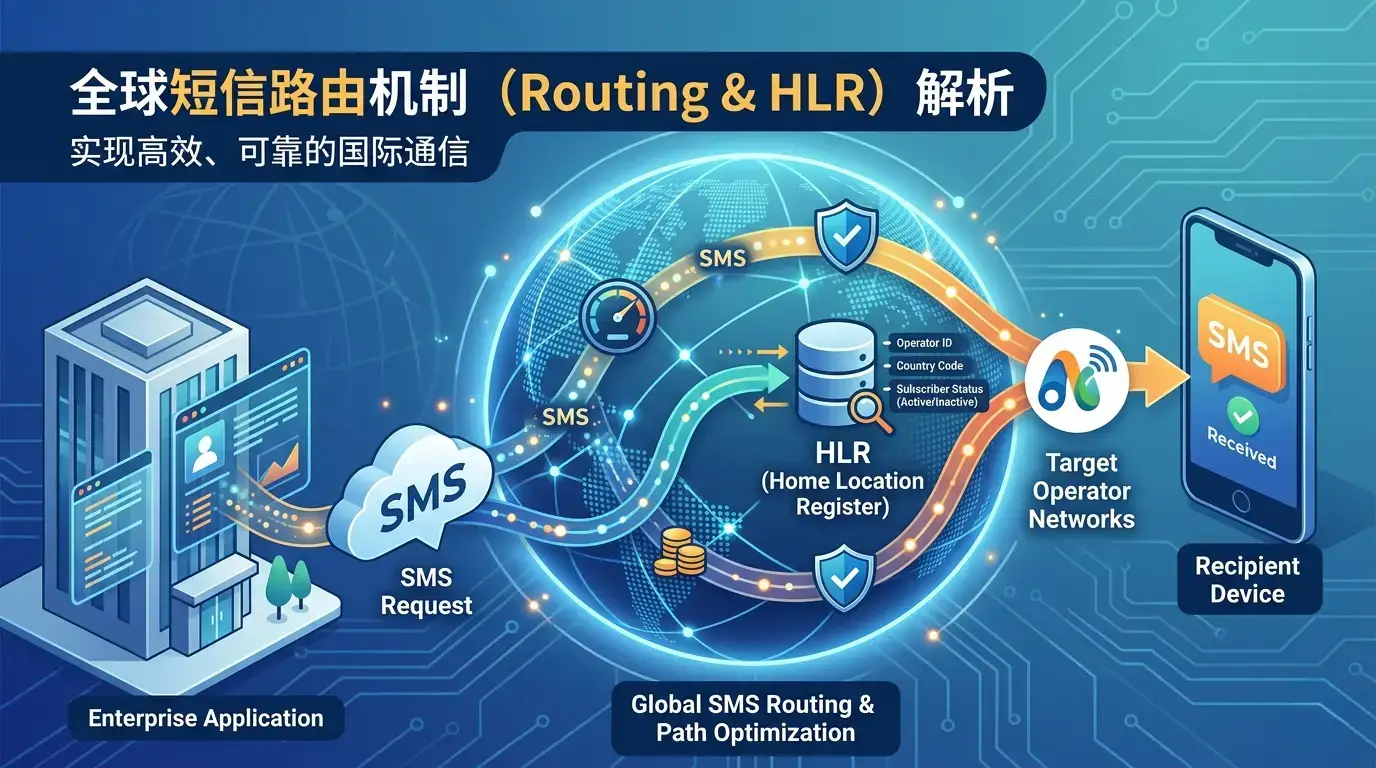
SMS routing refers to the transmission path selection mechanism from sender to receiver. In global communication networks, SMS may pass through multiple carrier networks, international relay channels, or third-party service providers. Key optimization points include: carrier coverage and priority - intelligently selecting the best route based on target country/region coverage; channel health monitoring - real-time monitoring of channel congestion and failure rates, dynamically switching lines; business type differentiation - marketing SMS, verification codes, and notification SMS can have different routing strategies to optimize delivery efficiency.
II. The Role of HLR in International SMS
HLR (Home Location Register) is the core mobile communication database, recording user number ownership, status, and carrier information. Main functions of HLR include: number ownership query - determining the carrier and country of the target number to ensure correct SMS sending path; online status judgment - checking if the number is on-network to avoid invalid sending; dynamic routing optimization - real-time decision-making combined with routing systems to improve SMS delivery rate.
III. International SMS Sending Process
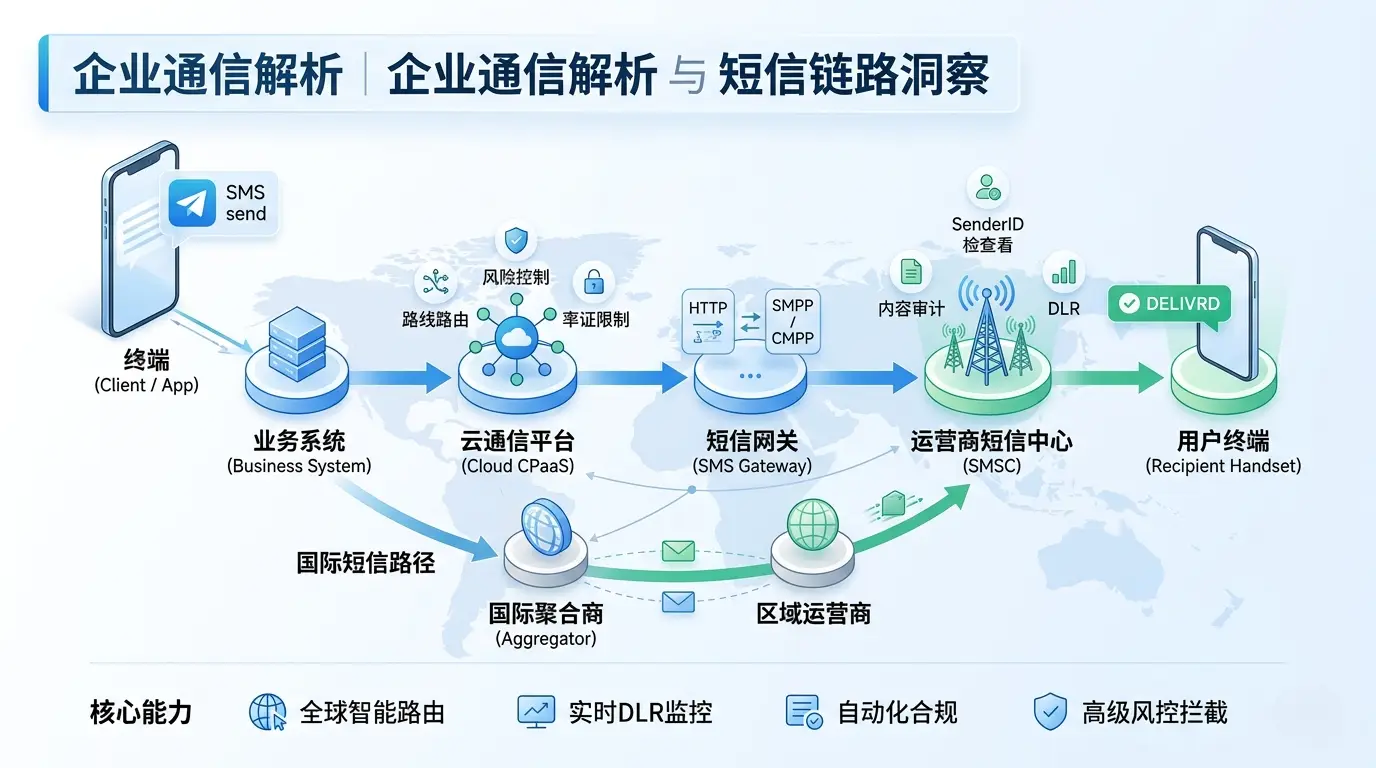
Enterprise international SMS sending can be summarized in five steps: 1. SMS sending request - initiated by enterprise application or platform; 2. Routing system selects channel - determining the best path based on target number, business type, and channel status; 3. HLR query - confirming number ownership and status; 4. Transmission via international gateway - direct connection to carrier or via relay carrier; 5. Terminal delivery and status callback - sending status feedback to enterprise platform for strategy optimization.
IV. Enterprise Application Value and Conversion Points
By mastering global SMS routing and HLR mechanisms, enterprises can achieve: improved SMS delivery rate - reducing failure and resend costs; optimized cross-border communication costs - selecting the most cost-effective channel; real-time strategy optimization - monitoring channel status and dynamically adjusting sending strategies; improved user experience - ensuring marketing and notification SMS are delivered to user terminals in a timely manner.
V. Cross-border SMS Routing Optimization Strategy
To achieve efficient cross-border SMS delivery, enterprises need to comprehensively apply routing and HLR technology. The intelligent routing system automatically selects the optimal path based on HLR query results of target numbers, combined with channel health status, cost, delivery rate and other multi-dimensional factors. At the same time, enterprises should establish a comprehensive channel monitoring system to track delivery rates, latency and failure reasons in real-time, and continuously optimize routing strategies.