Multi-Active Architecture in Communication Systems | Cloud Communication High Availability Architecture Design Analysis
In global cloud communication systems, stability has become a core competitive advantage. For international SMS, OTP verification codes, voice notifications, email APIs, and instant messaging platforms, a regional-level failure can directly lead to: verification code delivery failures, user registration failures, payment notification interruptions, overseas business disruptions, and increased user churn rates. Therefore, more and more cloud communication platforms are adopting Multi-Active Architecture, which not only solves "system disaster recovery" issues but also determines whether the communication platform has global-level high availability capabilities.
I. What is Multi-Active Architecture?
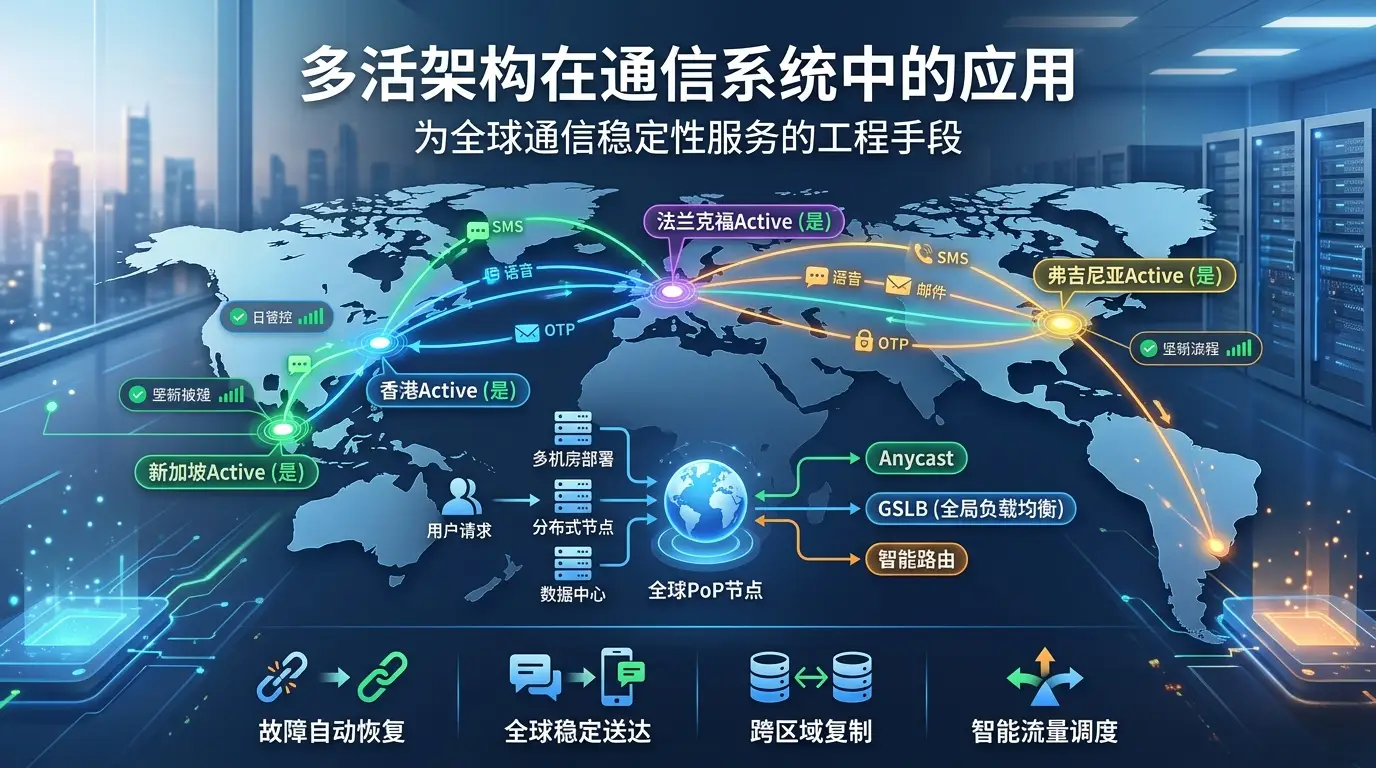
Multi-active architecture means multiple data centers or multiple regions are online simultaneously and provide production services at the same time. Different from traditional active-standby mode: Active-standby architecture has the primary node working while the standby node waits; Active-active architecture has two nodes providing services simultaneously; Multi-active architecture has multiple regions carrying real traffic simultaneously. In modern cloud communication platforms, common global multi-active deployments include Singapore node, Hong Kong node, Frankfurt node, and Virginia node. All nodes run in real-time and dynamically share global communication traffic.
II. Why Must Cloud Communication Systems Adopt Multi-Active Architecture?
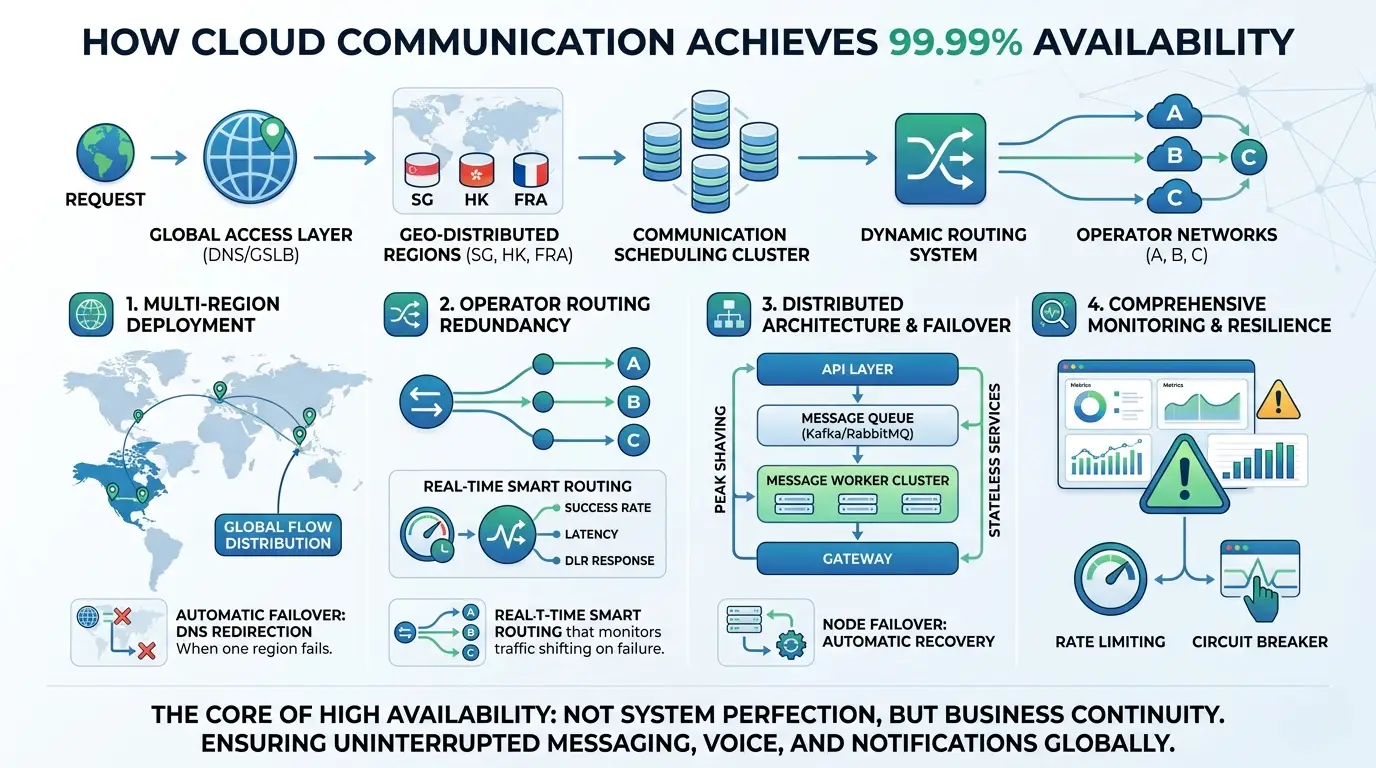
The biggest difference between communication systems and ordinary internet services is: they rely not only on their own servers but also on global carrier networks. Therefore, communication platforms face a lot of external uncertainties: international carrier fluctuations, submarine cable failures, regional network jitter, carrier blockages, SMS Hub anomalies, and global network latency changes. If single-region deployment is adopted, any node anomaly may cause OTP verification code delays, international SMS failures, voice call interruptions, and API request timeouts. Multi-active architecture can achieve global fault isolation, automatic regional switching, intelligent routing scheduling, automatic traffic migration, and global highly available communication. This is also the core infrastructure of modern CPaaS platforms.
III. Application of Multi-Active Architecture in SMS Systems
1. Global Access Layer Multi-Active: In international SMS platforms, user requests usually enter the system through global access nodes. For example: Asian users access Singapore, European users access Germany, American users access the United States. The system achieves nearest node access through GSLB (Global Server Load Balancing), Anycast, intelligent DNS, and edge gateways. This can significantly reduce: network RTT, TCP handshake time, TLS establishment time, and OTP sending delay. For verification code systems, millisecond-level optimization often directly affects conversion rates. 2. Message Queue Multi-Active: Communication systems typically adopt the architecture of API → MQ → Scheduling System → Routing Engine → Carrier. If the message queue experiences a single point of failure, the entire SMS system will immediately be interrupted. Therefore, mature cloud communication platforms usually adopt Kafka cross-region replication, Pulsar Geo-Replication, multi-region topics, and partition isolation mechanisms to achieve message high availability, cross-region synchronization, automatic failure recovery, and ensure continuous availability of communication links.
IV. Data Consistency Issues in Multi-Active Architecture
The biggest technical challenge of multi-active deployment is not the deployment itself, but data consistency after multi-region simultaneous writes. For example: When a user requests an OTP verification code in Singapore, the US node may receive a retry request at the same time. If not handled properly, it may cause duplicate sending, token conflicts, status overwrites, and idempotency failures. Therefore, modern communication systems usually adopt Eventual Consistency. In international SMS systems, many data allows short-time delayed synchronization, such as DLR status, delivery reports, log flows, and statistical data. Because communication platforms focus more on high throughput, high availability, and real-time sending capabilities rather than absolute strong consistency. However, for core services such as OTP verification, user balances, billing systems, and idempotency control, strong consistency must be guaranteed. Therefore, systems usually use distributed locks, globally unique IDs, single-region writes, and Paxos/Raft protocols to ensure core business security.
V. Intelligent Scheduling System in Multi-Active Architecture
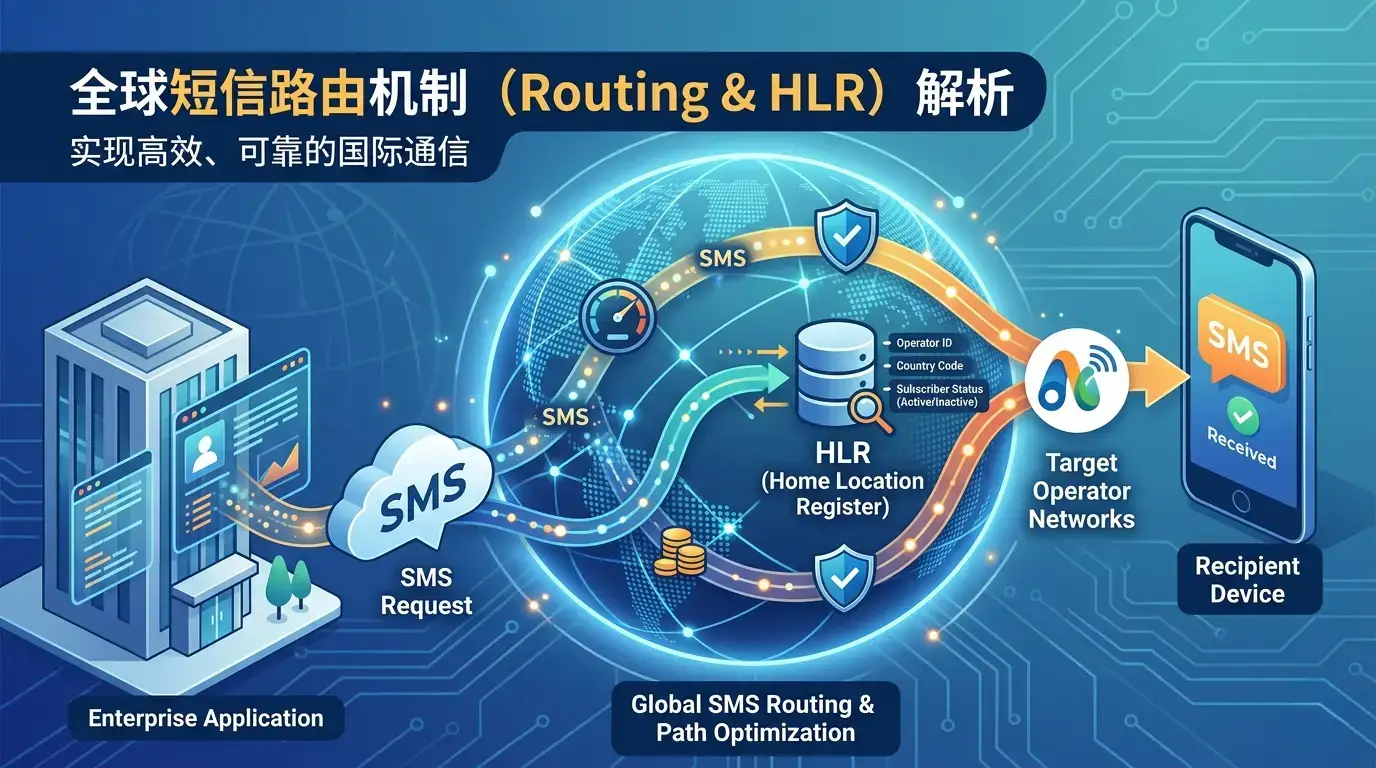
True global multi-active is not "deploying more computer rooms", but the core lies in intelligent traffic scheduling. Modern cloud communication platforms monitor in real-time: Deliver Rate, RTT, Error Rate, Carrier Quality, TPS Capacity, and DLR Delay. The scheduling system dynamically decides: which region to use for sending, which carrier route to use, whether to switch lines, whether to automatically circuit break, and whether to perform traffic migration. This is also the core capability of international SMS platform high availability.
VI. Disaster Recovery Capability in Multi-Active Architecture
Active-Active in Same City: Suitable for single-city low-latency deployment and localized communication services. Advantages: fast data synchronization, lower cost. Disadvantages: cannot resist regional-level disasters. Active-Active in Different Cities: For example, Singapore + Tokyo, Frankfurt + London. Can solve: regional network failures, submarine cable interruptions, and carrier regional anomalies. Global Multi-Active: Global communication platforms typically adopt multi-continental deployment across APAC, EMEA, NA, and LATAM. This is the mainstream architectural direction for international cloud communication platforms.
VII. Database Multi-Active Design in Cloud Communication Platforms
Databases are often the most complex part of communication systems because real-time cross-continental synchronization brings extremely high latency. Therefore, mature communication platforms usually adopt data layering design: user configurations use primary region storage, log flows use localized writes, DLR status uses asynchronous synchronization, real-time routing uses memory caching, and billing systems use independent accounting databases. Through CQRS, Event Sourcing, asynchronous replication, and partitioned design, the global consistency pressure is reduced.
VIII. Fault Governance Mechanisms in Multi-Active Architecture
Mature communication platforms do not pursue "never failing". What really matters is: after a failure occurs, whether the system can automatically recover. Therefore, modern cloud communication systems typically have: automatic circuit breaking (automatic switching when carriers are abnormal), automatic degradation (prioritizing OTP verification codes, payment notifications, and core APIs, reducing non-core business consumption), automatic rate limiting (avoiding peak traffic from overwhelming the system), and gray traffic switching (gradually migrating traffic to reduce switching risks).
IX. Why Will Future Cloud Communication Platforms Definitely Be Global Multi-Active?
With the growth of global real-time communication demand: OTP requires second-level delivery, AI customer service requires real-time online, international SMS requires high delivery rates, and voice systems require low latency. Traditional single-region architecture can no longer meet business needs. The future development direction of cloud communication systems will include: global edge nodes, intelligent dynamic routing, AI scheduling engines, Serverless communication capabilities, global message grids, and multi-cloud fusion deployment. Multi-active architecture will become the underlying standard capability of cloud communication platforms.
X. Why Are More and More Enterprises Choosing Professional Cloud Communication Platforms?
Enterprises building global communication architectures usually face: complex overseas node deployment, difficult global carrier integration, extremely high disaster recovery costs, long scheduling system development cycles, and continuously rising operation and maintenance costs. Professional cloud communication platforms can provide: global multi-active deployment, high availability for international SMS, second-level OTP verification code delivery, intelligent carrier routing, global API access capabilities, automatic disaster recovery and failover, helping enterprises quickly build global communication capabilities. If your business involves overseas APPs, global e-commerce, fintech, AI applications, game overseas expansion, or international SaaS, then multi-active architecture is no longer an "advanced capability" but the infrastructure for global communication stability.