What is International Voice? International Voice Platform, VoIP and Global Voice Communication Detailed Explanation
In the process of enterprise globalization and global operations, "international voice" has become an increasingly important communication infrastructure. Whether it is overseas verification codes, international customer service, cross-border e-commerce notifications, or global marketing outbound calls, they all rely on international voice systems to complete real-time communication.
I. What is International Voice?
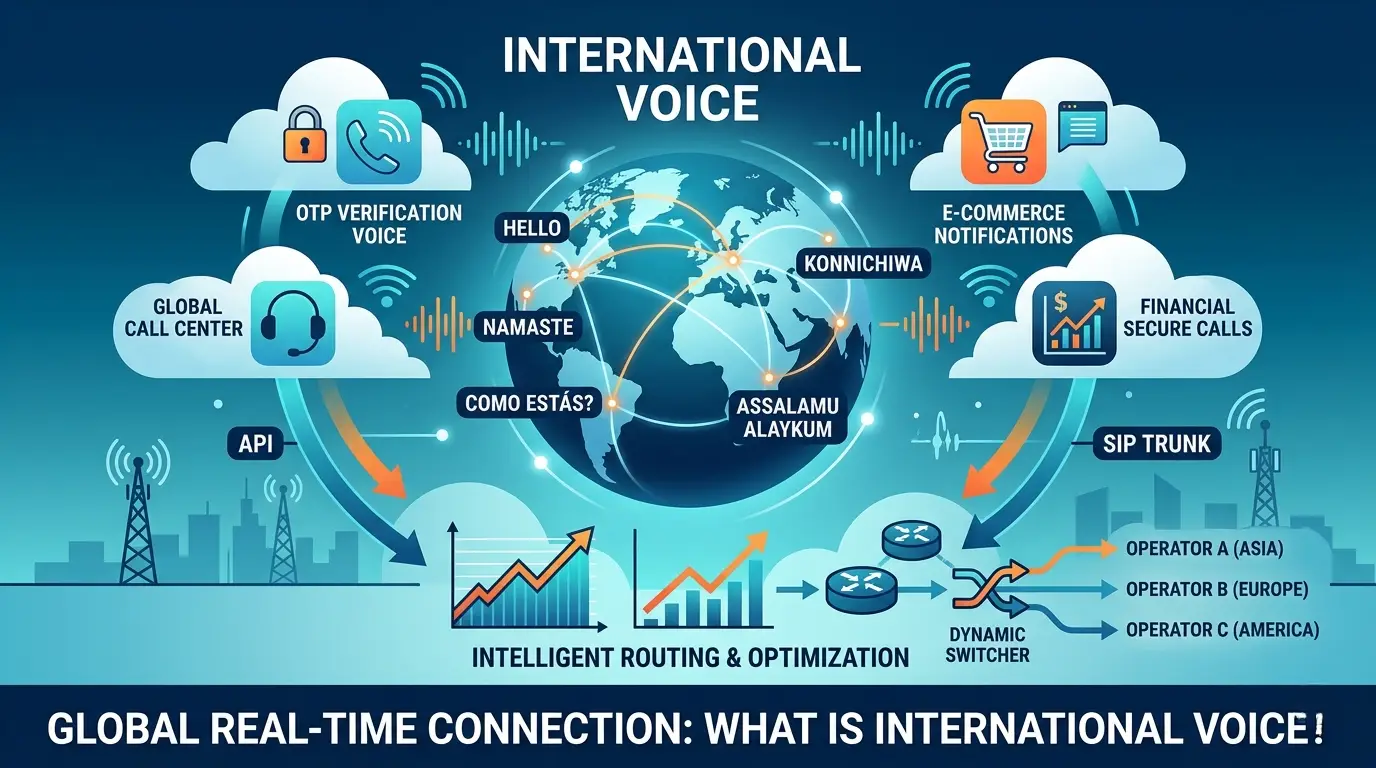
International Voice is a communication capability that enables global voice calls and voice notifications through cloud communication platforms, operator networks, or VoIP technology. It is not just "international phone calls". Modern international voice is more like a set of global voice networks, real-time communication systems, cloud-based scheduling platforms, and API communication capabilities. Through international voice platforms, enterprises can achieve global voice verification codes, international phone calls, overseas customer service systems, AI voice notifications, international marketing outbound calls, SIP voice communication, and global number access.
Core Capabilities
International voice platforms provide various communication capabilities, including voice verification codes, voice notifications, call centers, marketing outbound calls, etc., supporting enterprise globalization business needs.
II. Core Components of International Voice
International voice systems are not a single line. They are composed of multiple communication modules.
1. API Access Layer
Enterprises typically access international voice platforms through Voice API, SIP Trunk, WebRTC, SDK, and call center systems. For example: when a user clicks "Contact Customer Service" in the APP, the backend initiates an international voice call through Voice API. This is the most basic layer of the international voice system.
2. Global Voice Routing System
This is the most core part of international voice platforms. The system needs to decide in real-time which country exit to use, which operator to connect to, how to reduce voice latency, how to improve answer rates, and how to optimize line costs. Large international voice service providers typically deploy multi-operator routing pools, Least Cost Routing (LCR), Quality Based Routing (QBR), and intelligent dynamic switching systems. The true technical barrier of international voice is essentially global communication scheduling capability.
3. International Operator Interconnection Network
International voice ultimately still needs to access local operators, PSTN networks, SIP operators, and international voice switching networks. The complete chain is typically as follows: Enterprise System → Voice API / SIP → International Voice Platform → Global Operator Network → Target Country Operator → User Answers. The entire process involves SIP signaling, RTP media streams, codec conversion, QoS control, NAT traversal, and global routing scheduling. Therefore, international voice essentially belongs to real-time communication network engineering.
III. What is the Difference Between International Voice and VoIP?
Many enterprises understand international voice and VoIP voice as the same concept. Actually, VoIP is just an underlying technology of international voice.
What is VoIP?
VoIP (Voice over IP): transmitting voice data through the Internet. For example: WhatsApp voice, Skype, SIP voice, WebRTC calls all belong to the VoIP system.
What is International Voice?
International voice is a complete set of global operator connections, international number communication, voice routing systems, cloud communication platforms, and global scheduling capabilities. Large international voice platforms typically adopt VoIP + PSTN + SIP hybrid architecture.
IV. What are the Application Scenarios of International Voice?
1. International Voice Verification Code (OTP Voice)
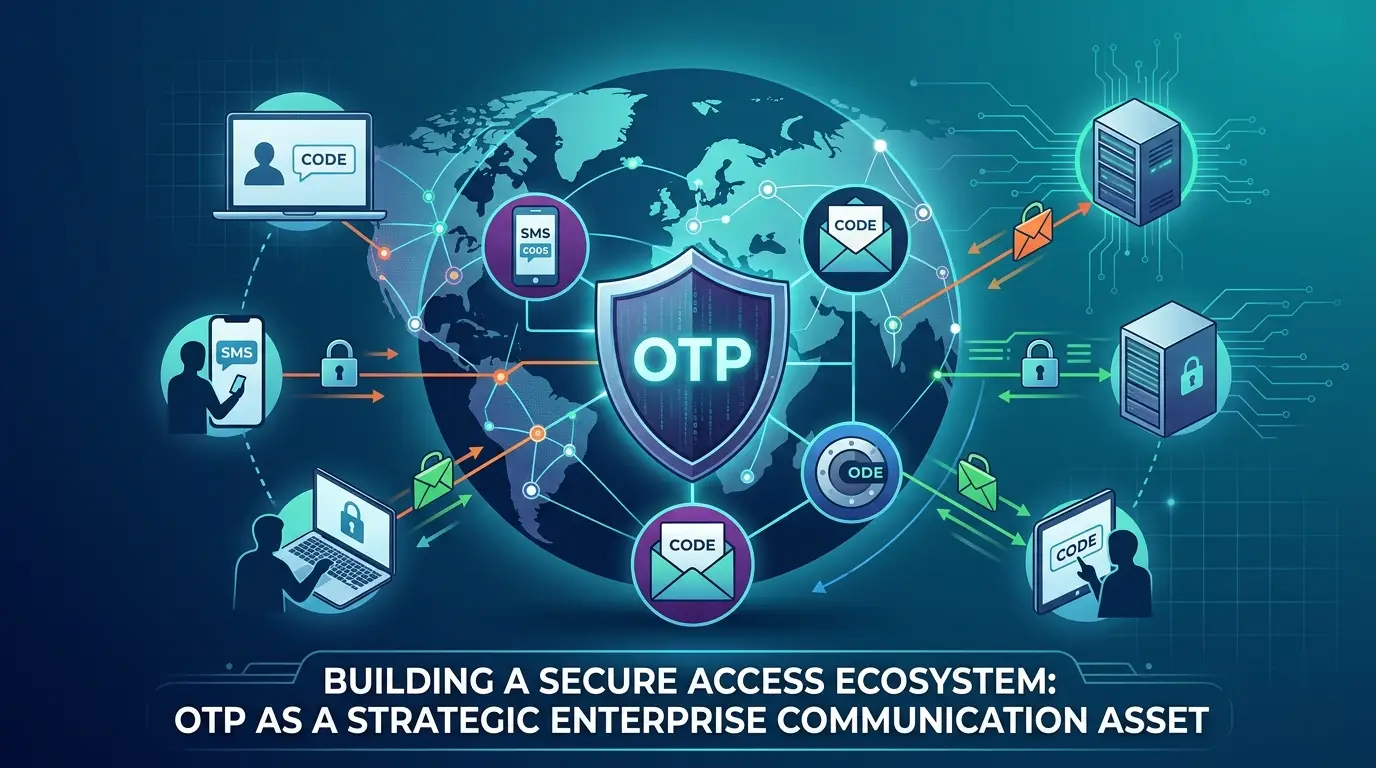
This is one of the fastest-growing international voice scenarios. Mainly used for registration verification, login verification, payment confirmation, risk verification. When SMS verification codes cannot be delivered, the system automatically switches to international voice verification codes. For example: "Your verification code is: 482731". International voice verification codes typically require second-level delivery, high answer rates, global coverage, TTS stability, and anti-bot attacks.
2. International Voice Notifications
Common in flight notifications, logistics reminders, medical reminders, risk alerts, payment notifications. This scenario emphasizes stability, high concurrency, and automatic broadcasting capabilities.
3. International Customer Service Systems
International customer service voice is widely used in cross-border e-commerce, overseas SaaS, international games, and financial platforms. Usually combined with IVR voice navigation, AI customer service, CRM systems, call recording, and ticket systems to form a complete customer service system.
4. International Marketing Outbound Calls
Enterprises use international voice platforms to conduct activity notifications, user recall, sales promotion, and renewal reminders to overseas users. However, international outbound calls are also one of the most strictly regulated areas. Many countries have strict restrictions on Caller ID, user authorization, call frequency, and marketing content.
V. Core Indicators of International Voice Platforms
1. Answer Seizure Ratio (ASR)
ASR (Answer Seizure Ratio): represents the proportion of voice calls that are actually answered. The answer rate of international voice platforms directly affects user experience, verification success rate, and customer service efficiency.
2. Post Dial Delay (PDD)
PDD (Post Dial Delay): refers to how long it takes for the user to hear ringing. The lower the PDD, the more stable the international voice line.
3. Voice Quality (MOS)
MOS is used to measure stuttering, echo, noise, and delay. The higher the MOS, the better the voice experience.
4. Calls Per Second (CPS)
CPS (Calls Per Second): determines whether the international voice platform supports large-scale voice notifications, high-concurrency outbound calls, and global business peaks.
VI. Why are International Voice Platforms Becoming Increasingly Important?
With the development of enterprise globalization, traditional phone systems can no longer meet global deployment, automated operations, API integration, and multi-country coverage. Modern enterprises need global unified voice capabilities, cloud-based communication platforms, real-time scheduling systems, and high-availability international lines. Especially for overseas apps, cross-border e-commerce, overseas finance, and global SaaS, international voice has become part of the business infrastructure.
VII. How Do Enterprises Choose International Voice Service Providers?
1. Global Coverage Capability
Whether it supports multi-country access, direct local operator connection, and global number resources.
2. Routing and Stability
Whether it has intelligent routing, dynamic switching, and multi-line disaster recovery.
3. API and Integration Capabilities
Whether it supports Voice API, SIP Trunk, WebRTC, and SDK access.
4. Compliance and Risk Control Capabilities
Whether it supports STIR/SHAKEN, GDPR, DLT, and local regulatory requirements.
5. Technical Support Capabilities
Whether it has global operation teams, 7×24 monitoring, and real-time fault switching.
VIII. Why Choose Our International Voice Platform?
Compared with traditional operator solutions, cloud communication international voice has advantages such as global coverage, API access, automation, high concurrency, intelligent dynamic routing, real-time visual monitoring, and rapid deployment. The future development direction of international voice is also very clear: AI voice, intelligent outbound calls, real-time translation, WebRTC converged communication, global number cloudification, and omnichannel unified communication. International voice is gradually evolving from traditional phone services to global real-time communication infrastructure. We provide global international voice line coverage, high answer rate international voice verification codes, enterprise-level Voice API, SIP Trunk access, intelligent voice routing systems, global high-availability scheduling architecture, and multi-country local operator direct connection. Suitable for overseas apps, cross-border e-commerce, overseas finance, international customer service centers, and global SaaS platforms. If you are looking for stable, secure, and high-availability international voice service solutions, welcome to contact us to obtain test lines and technical solutions.