What is Cloud Communication? Enterprise Cloud Communication Platform Architecture, Core Capabilities and Application Scenarios
In the past, if enterprises needed to send SMS, voice notifications or build customer service systems, they usually had to purchase communication equipment, deploy data centers, and directly connect to operator lines. This traditional model had several obvious problems: long construction cycle, complex technical maintenance, high global deployment costs, limited scalability, and difficulties in international business expansion. The emergence of Cloud Communications has essentially platformized and API-enabled traditional communication capabilities.
I. What is Cloud Communication?
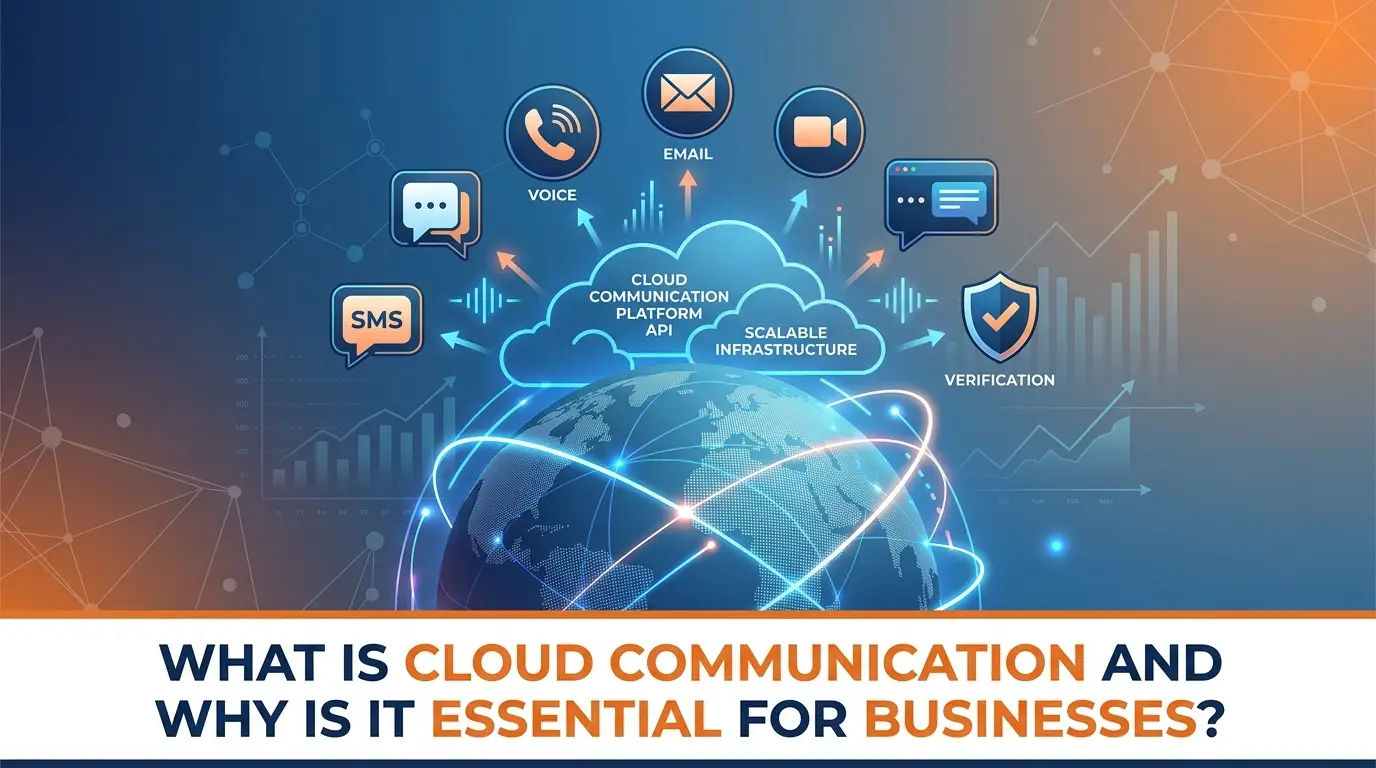
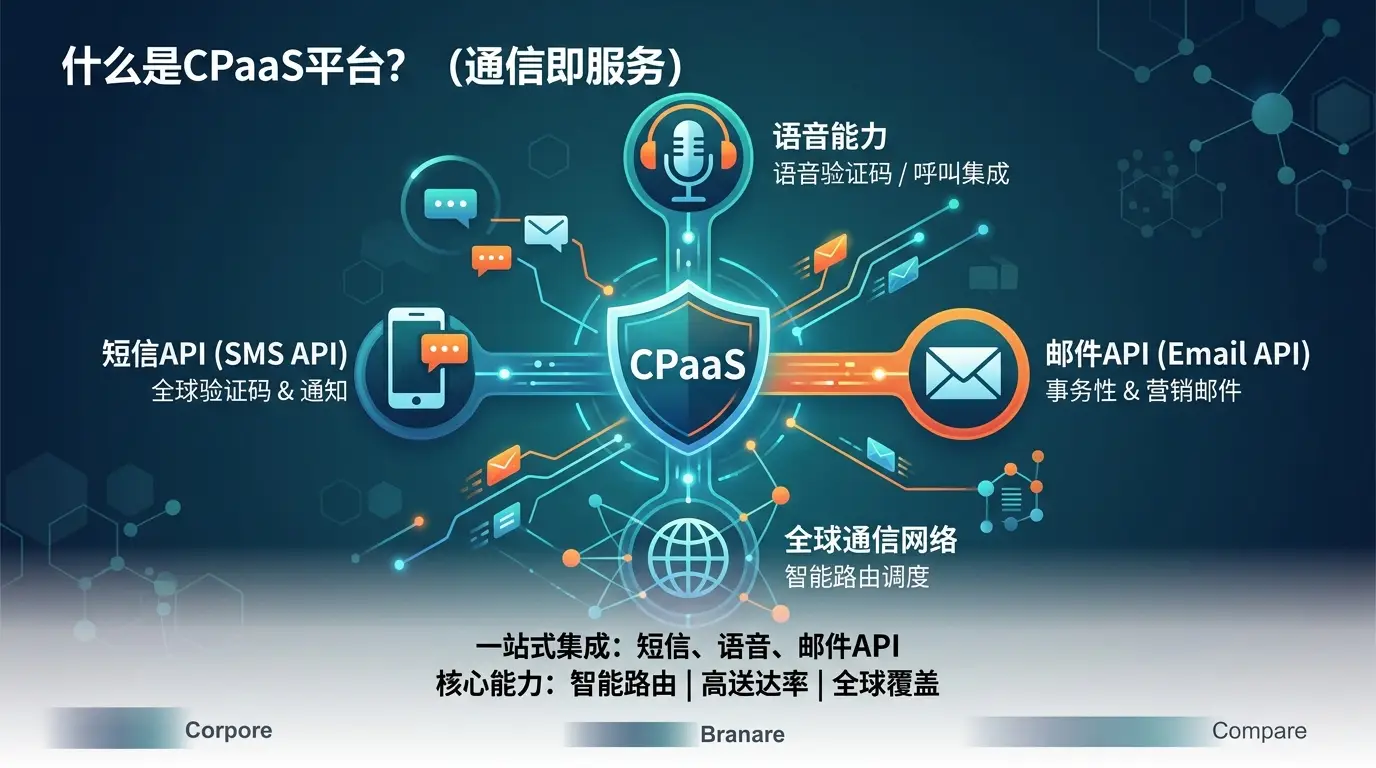
Cloud Communication is an enterprise communication service system built on cloud computing architecture. It encapsulates capabilities such as SMS, voice, and email from traditional operator networks through cloud platforms and provides services externally via API or SaaS. Simply put: traditional communication sells "lines", while cloud communication sells "capabilities".
1. Why do enterprises need cloud communication?
Enterprises no longer need to build underlying communication networks. They can quickly access international SMS, OTP verification codes, voice calls, email notifications, instant messaging, and global user reach capabilities through standardized API interfaces. Today, cloud communication has become an important infrastructure for cross-border e-commerce, financial payments, social apps, SaaS platforms, and internet product expansion.
2. Core Value of Cloud Communication
Enterprises can call communication capabilities like calling cloud servers, such as SendSMS(), SendOTP(), CreateVoiceCall(), SendEmail(). This is why more and more enterprises are adopting cloud communication platforms, CPaaS platforms, international SMS APIs, and global voice services to replace traditional communication systems.
II. Core Architecture of Cloud Communication Platform
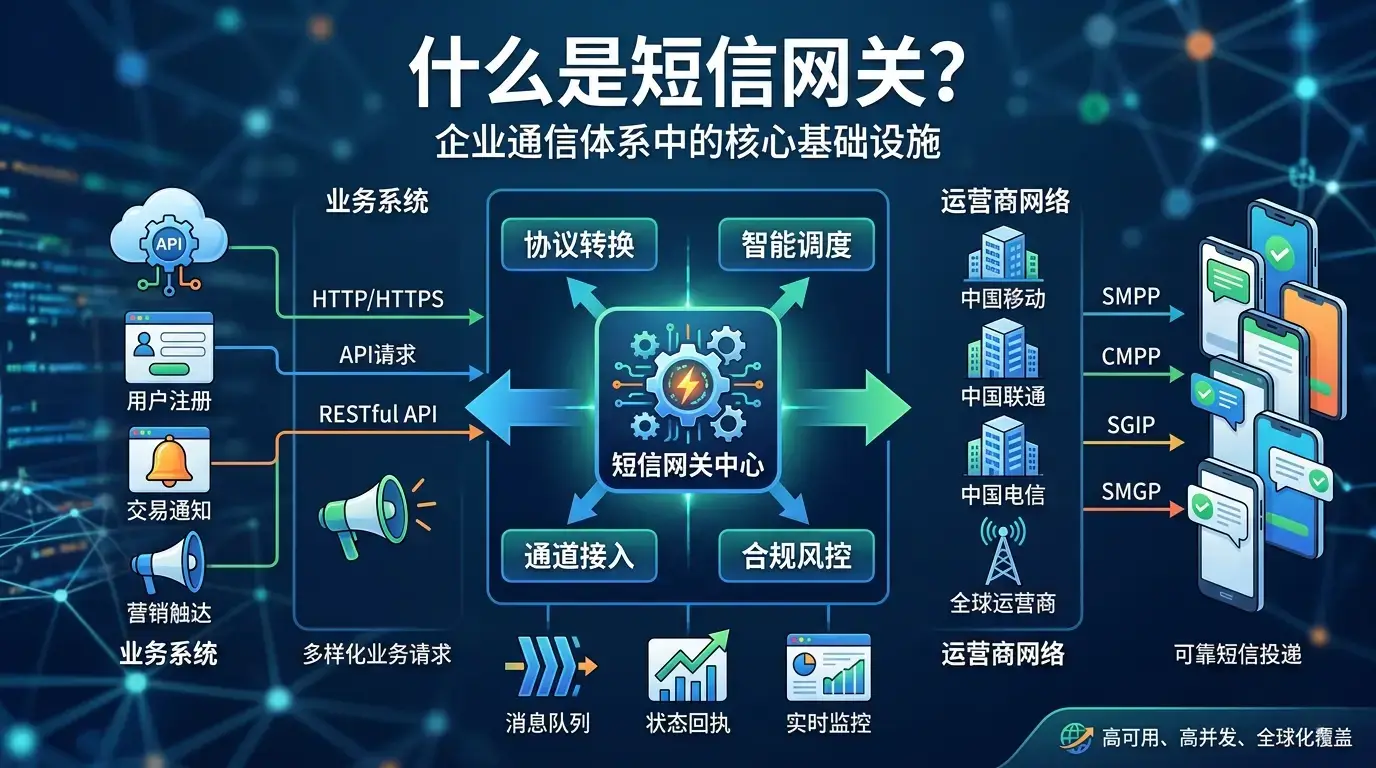
A truly mature cloud communication platform is not just a simple SMS sending system. Behind it is usually a complete set of global communication scheduling architecture. A typical architecture includes: Business System → API Gateway → Message Scheduling System → Intelligent Routing Engine → Operator Network → User Terminal.
Core System Modules
API Access Layer: Provides SMS API, Voice API, Webhook; Scheduling System: Responsible for message distribution and failure retry; Intelligent Routing: Dynamically selects the best operator line; Risk Control System: Anti-brush, anti-fraud, anti-attack; Data System: Delivery receipts, log analysis, report statistics; Global Nodes: Reduce international communication latency.
Key Metrics for International Business
For international business, what truly determines platform quality is not "whether it can send", but delivery rate, latency, stability, global coverage, channel quality, and compliance capabilities.
III. Core Capabilities of Cloud Communication
1. International SMS Service
International SMS remains one of the core communication capabilities for enterprises. Main scenarios include OTP verification codes, login verification, registration notifications, order reminders, user marketing, and risk notifications. Mature international SMS platforms usually support global operator coverage, intelligent routing, DLR delivery receipts, Sender ID, channel switching, and high-concurrency sending.
2. OTP Verification Code Service
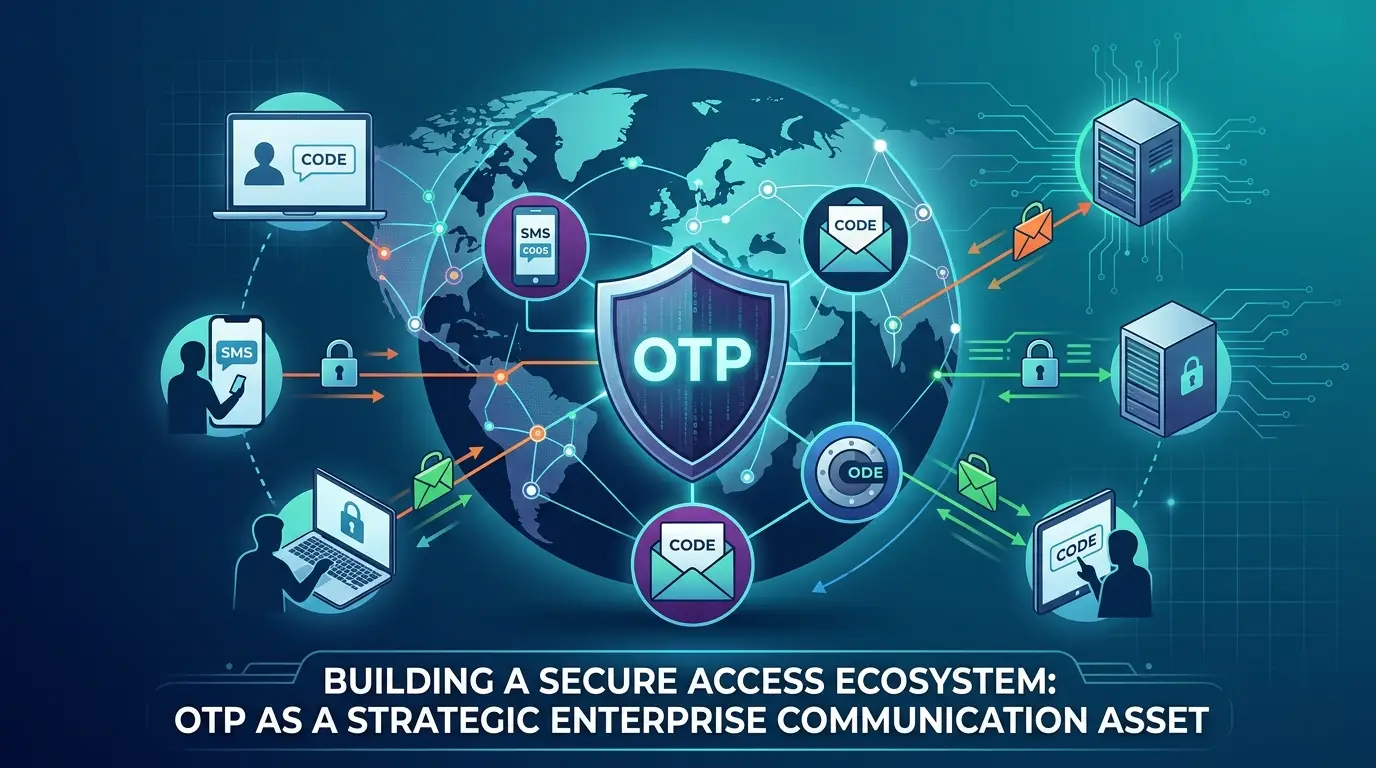
OTP (One-Time Password) is one of the core methods for internet identity verification today. Typical applications include login verification, two-factor authentication, payment security verification, and risk login verification. High-quality OTP systems usually need to have second-level delivery, high concurrency capability, risk control mechanisms, global number coverage, and multi-channel disaster recovery.
3. Cloud Voice Service
Cloud communication platforms usually also provide voice verification codes, international voice calls, SIP lines, AI voice outbound calls, and call center capabilities. Voice systems rely more on low network latency, RTP quality control, global line resources, and real-time scheduling capabilities than SMS.
4. Email Communication Service
Enterprise email systems are usually used for registration verification emails, marketing emails, billing notifications, and user reach. Mature email systems focus not only on sending volume but more importantly on email delivery rate, IP reputation, SPF/DKIM/DMARC, and anti-spam mechanisms.
IV. Core Technical Capabilities of Cloud Communication Platform
1. Intelligent Routing System
Multiple operator lines usually exist in the same country. The system needs to real-time determine which line has higher success rate, lower latency, current congestion status, and better cost, and then dynamically switch to the best channel. This is why mature platforms have much higher stability than ordinary aggregation platforms.
2. Global Communication Scheduling
In international business, communication quality highly depends on node deployment. For example: Southeast Asia → Singapore node, Europe → Frankfurt node, North America → Virginia node. Large cloud communication platforms usually adopt multi-region deployment, global load balancing, Anycast access, and multi-active architecture to ensure cross-border communication stability.
3. Communication Risk Control System
One of the core issues for verification code platforms is security. Common attacks include SMS bombing, bulk registration, API fraud, and fake number attacks. Therefore, mature platforms usually add IP reputation systems, sending frequency control, blacklist mechanisms, behavior recognition models, and device fingerprints. Often, half of a communication platform's capabilities are actually risk control systems.
V. Cloud Communication vs Traditional Communication
| Comparison |
Traditional Communication |
Cloud Communication |
| Deployment Method |
On-premise Data Center |
Cloud Platform |
| Access Cycle |
Long |
API Quick Access |
| Global Expansion |
Difficult |
Native Support |
| Scalability |
Manual Expansion |
Elastic Scaling |
| Operation Cost |
High |
Platform Managed |
| Update Speed |
Slow |
Rapid Iteration |
| Cost Structure |
Heavy Asset |
Pay-as-you-go |
The greatest value of cloud communication lies in: enabling enterprises to quickly have global communication capabilities without building communication infrastructure.
VI. Which Industries Need Cloud Communication Most?
1. Cross-border E-commerce
Used for international SMS notifications, user marketing, login verification, order reminders. Key dependencies include OTP verification codes, global number coverage, high-concurrency sending, and global scheduling capabilities.
2. App Global Expansion
Requires stable global communication capabilities to support user verification, push notifications, and message reach.
3. Finance and Payments
More concerned about security, SLA stability, real-time delivery rate, and compliance capabilities.
4. SaaS Platforms
Many SaaS products integrate email notifications, SMS reminders, ticket messages, and automated voice. Cloud communication has become an important part of modern SaaS systems.
VII. How to Choose a Cloud Communication Platform?
When choosing a cloud communication service provider, enterprises should focus on: Global delivery rate (low-cost lines usually mean unstable channel quality, gray route risks, and delivery rate fluctuations); Platform stability (multi-channel disaster recovery, intelligent routing, global node deployment, SLA guarantees); Risk control and security (lack of risk control may lead to SMS attacks, API fraud, and large abnormal bills); Global compliance capabilities (significant regulatory differences across countries, such as US A2P 10DLC, India DLT, EU GDPR).
VIII. Conclusion
Cloud communication is not just an SMS sending platform. It is essentially a global communication infrastructure built on cloud computing. For modern enterprises, what truly matters is no longer "whether messages can be sent", but whether they have global communication capabilities, whether they have a highly stable scheduling system, whether they have risk control and compliance capabilities, and whether they can support global business growth. As enterprise internationalization accelerates, cloud communication is evolving from a "tool" to a core enterprise infrastructure.