What is CPaaS Platform? - Communication as a Service Explained
In the process of enterprise digital transformation, "communication capability" is gradually becoming a core component of user experience and business growth from an edge function. Whether it is user registration verification, marketing outreach, transaction notifications, or customer service interactions, all rely on stable and efficient communication infrastructure behind the scenes. CPaaS (Communication Platform as a Service) is precisely the key form that carries this capability.
I. The Essence of CPaaS: API-based Communication Capability Output
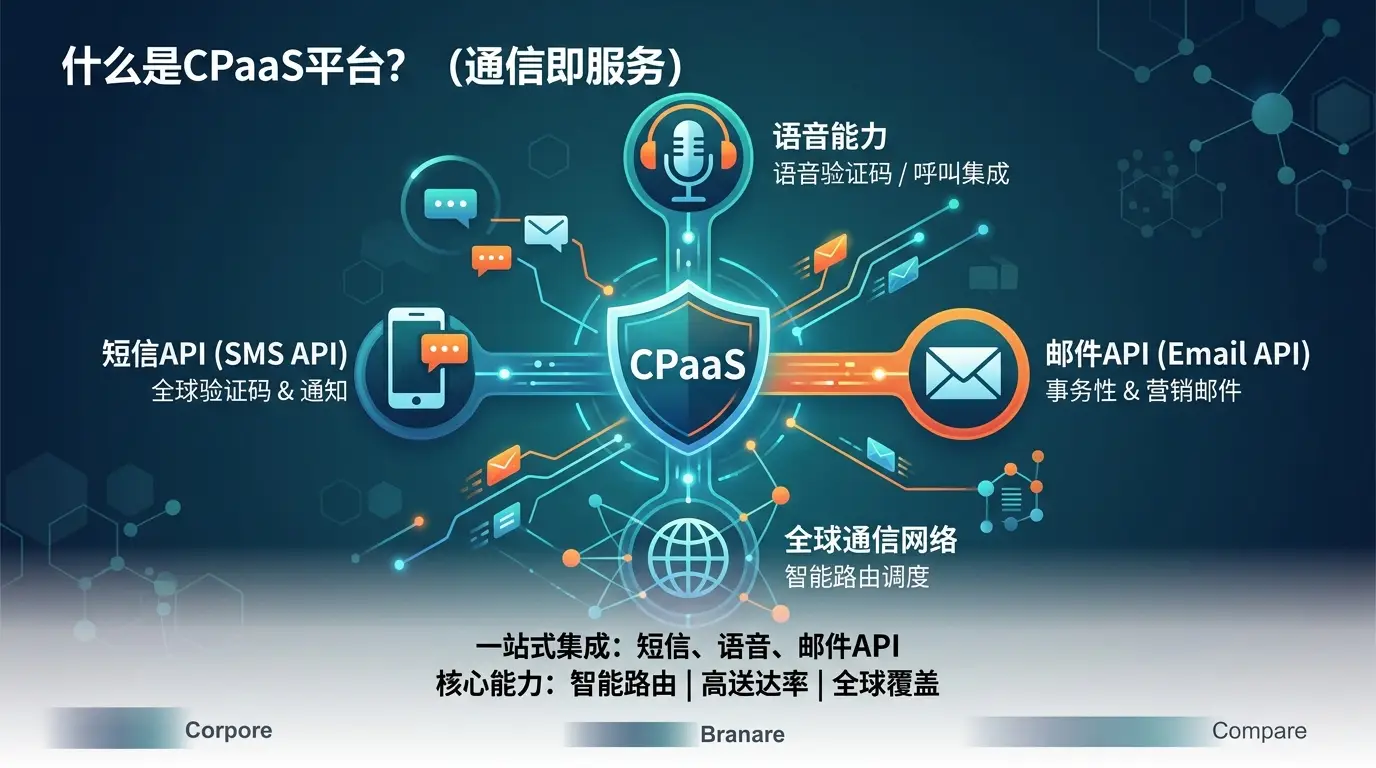
By definition, CPaaS is a platform that provides communication capabilities such as SMS, voice, email, and instant messaging to enterprise developers through APIs and SDKs.
However, staying at the "interface service" level easily underestimates its value. A more accurate understanding is:
"CPaaS = Communication Resource Integration + Routing & Scheduling Capability + Stability Engineering + Programmable Interfaces"
It essentially abstracts the originally complex, fragmented, and operator-dependent communication capabilities into a standardized, programmable service layer.
Enterprises do not need to directly connect to operators in various countries, nor maintain complex communication links. They only need to call APIs to quickly build their own communication systems.
II. What Problems Does CPaaS Platform Solve?
1. Fragmented Communication Resources
Global communication networks are highly scattered, with significant differences in operator rules, channel quality, and compliance requirements across different countries. CPaaS platforms unify these resources through multi-supplier access and schedule them through intelligent routing.
2. High Development and Access Costs
In the traditional model, enterprises need to independently connect to SMS gateways, voice lines, and even build their own communication systems. CPaaS encapsulates complex capabilities into APIs, greatly reducing the access barrier.
3. Difficulty in Ensuring Stability and Availability
Communication links naturally fluctuate (operator rate limiting, channel congestion, regional failures, etc.). Mature CPaaS platforms typically have:
- Multi-channel redundancy
- Real-time failover
- Intelligent retry mechanism
- Multi-region deployment
These capabilities form the core of communication system stability.
4. Complex Compliance and Risk Control
Especially for overseas businesses, different countries have strict requirements for SMS content, sending frequency, and user privacy. CPaaS platforms typically built-in:
- Number compliance verification
- Content filtering mechanism
- Sending policy control
- Risk identification models
III. Core Capability Modules of CPaaS
1. Messaging Capability
- International SMS (A2P SMS)
- Email (Email API)
- OTT Messages (e.g., WhatsApp, RCS)
Applicable to verification codes, notifications, marketing scenarios.
2. Voice Capability
- Voice verification codes
- Call Center (Call API)
- IVR (Interactive Voice Response)
Applicable to high-security verification and customer service.
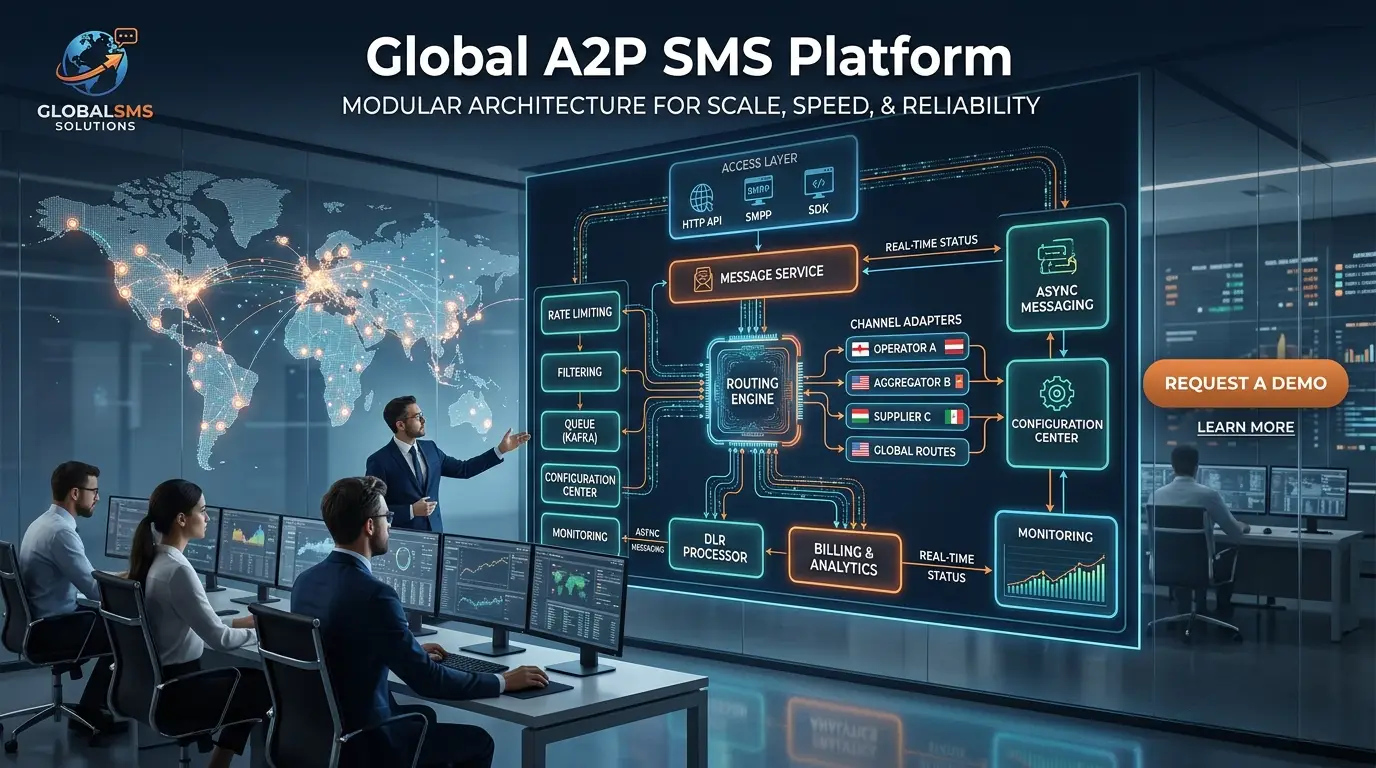
3. Channel and Routing Scheduling
This is one of the "core barriers" of CPaaS, including:
- Multi-supplier access
- Intelligent routing selection (based on success rate, latency, cost)
- Real-time link health detection
- Gray release and policy scheduling
4. Stability and Disaster Recovery System
- Multi-region active-active deployment
- Link isolation and fault degradation
- Automatic circuit breaker and rate limiting
- SLA monitoring system
Communication systems are essentially "high real-time + high reliability" systems with extremely high stability requirements.
5. Data and Analytics Capability
- Delivery rate analysis
- Conversion funnel
- Channel quality monitoring
- User behavior data feedback
This data directly affects business optimization strategies.
IV. Typical Application Scenarios of CPaaS
1. User Registration and Identity Verification
- SMS verification codes (OTP)
- Voice verification codes (Voice OTP)
Core诉求: High delivery rate + Low latency + Anti-brush capability
2. Transaction and Notification Messages
- Order confirmation
- Payment reminders
- Logistics notifications
Core诉求: Stability and timeliness
3. Marketing and User Outreach
- Bulk marketing SMS
- Email marketing
- Multi-channel outreach (SMS + OTT)
Core诉求: Reach rate + Cost control
4. Overseas Business Communication
- Multi-country verification code sending
- Localized channel adaptation
- Compliance control
Core诉求: Global coverage + Local optimization capability
V. Why Do Enterprises Choose CPaaS Instead of Building Their Own?
From a practical perspective, the vast majority of enterprises do not build their own communication systems. The reasons are very practical:
1. Unfavorable Cost Structure
Building your own requires:
- Connecting to multiple operators
- Building global nodes
- Maintaining stability systems
High investment, long cycles, and slow returns.
2. High Professional Barrier
Communication systems involve:
- Telecom protocols (SMPP / HTTP / SIP)
- Routing and scheduling algorithms
- Real-time system design
This is not the main battlefield for ordinary R&D teams.
3. Difficulty in Continuous Optimization
Communication links are dynamically changing and require continuous optimization:
- Channel quality fluctuations
- Changes in national policies
- Anti-spam strategy upgrades
CPaaS platforms are essentially doing "continuous optimization of communication networks".
VI. How to Evaluate a CPaaS Platform?
If you are standing at the perspective of enterprise selection, you can focus on these dimensions:
1. Coverage Capability
- Number of supported countries
- Proportion of local direct-connected resources
2. Delivery Rate and Latency
- Whether it has intelligent routing
- Whether it has verifiable data
3. Stability System
- Whether it has multi-active architecture
- Whether it has automatic fault switching capability
4. Cost and Transparency
- Whether it supports dynamic routing for cost optimization
- Whether the pricing structure is clear
5. Compliance and Risk Control
- Whether it supports compliance requirements of various countries
- Whether it has risk control strategies
VII. Conclusion: The Long-term Value of CPaaS
CPaaS is not simply an "SMS interface service". It is more like:
"An abstraction layer for enterprise communication infrastructure"
As enterprise businesses globalize and user touchpoint channels diversify, communication capabilities will become increasingly important. The future CPaaS is not just about "sending messages", but evolving in the following directions:
- Multi-channel integration (SMS + Email + OTT)
- Intelligent scheduling (AI-based routing optimization)
- User outreach strategy platformization
For enterprises, choosing a mature CPaaS platform is essentially building a foundation for their user growth and service experience.