What is 5G Messaging? Enterprise 5G Messaging Commercial Deployment Guide and Application Scenario Analysis
With the continuous development of 5G networks and enterprise digital operations, traditional SMS is upgrading towards intelligent and scenario-oriented directions. In recent years, 5G messaging has become an important focus in the enterprise communication field.
So, what is 5G messaging? Why do enterprises need to deploy 5G messaging? What are the commercial application scenarios of 5G messaging?
This article comprehensively introduces 5G messaging commercial deployment solutions from aspects such as technical principles, business value, application scenarios, and enterprise access methods.
1. What is 5G Messaging?
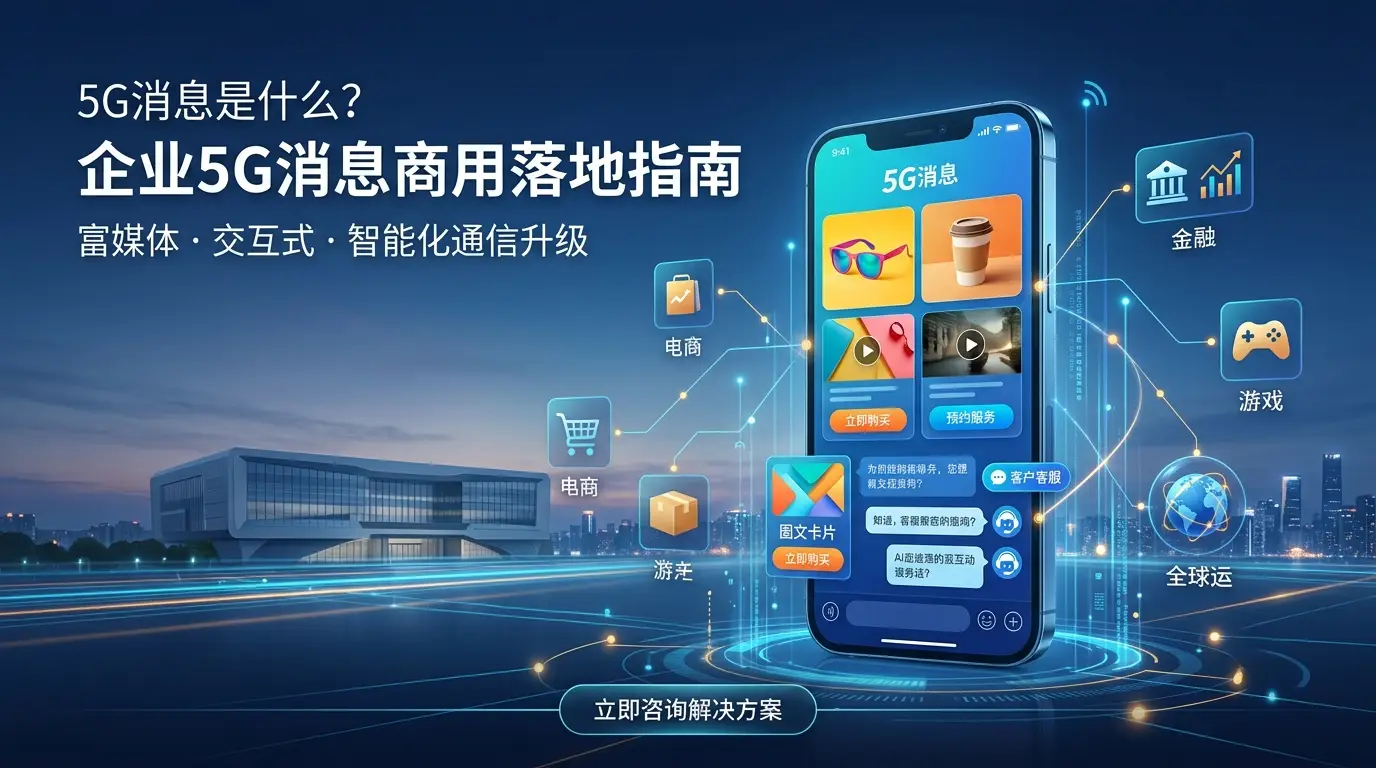
5G messaging is a new-generation messaging service based on the RCS (Rich Communication Services) standard.
Compared to traditional SMS which can only send text content, 5G messaging supports:
- Image display;
- Video content;
- Image-text cards;
- Button interaction;
- Mini program entry;
- Online service processing.
Users do not need to download and install additional applications, and can complete information viewing and business operations through the native messaging entry on their mobile phones.
Simply put:
Traditional SMS solves "information delivery",
5G messaging solves "information interaction".
For enterprises, 5G messaging is not only a communication channel but also a new digital entry point for connecting users, providing services, and driving conversions.
2. What Is the Difference Between 5G Messaging and Traditional SMS?
Many enterprises may wonder:
Will 5G messaging replace SMS?
In fact, the two have different positioning.
| Comparison Item |
Traditional SMS |
5G Messaging |
| Content Format |
Plain text |
Image-text, video, cards |
| Interaction Capability |
One-way notification |
Two-way interaction |
| User Experience |
Simple reach |
Service experience |
| Usage Scenarios |
Verification codes, notifications |
Marketing, customer service, business processing |
| Technical Standard |
SMS |
RCS |
Traditional SMS still has the advantages of wide coverage and high stability, while 5G messaging further enhances the interaction capability between enterprises and users.
In the future enterprise communication system, SMS and 5G messaging will coexist for a long time.
3. Why Do Enterprises Need 5G Messaging?
As channels for users to obtain information become more diverse, enterprises face three core problems:
3.1 Declining User Reach Efficiency
Traditional marketing SMS has limited content formats and is easily ignored by users.
5G messaging improves information attractiveness through rich content display.
For example:
When e-commerce enterprises send promotional information, they can directly display:
- Product images;
- Discounted prices;
- Activity entry;
- Purchase buttons.
Reduce user operation paths and improve conversion efficiency.
3.2 Increasing Customer Service Costs
Enterprise customer service usually relies on:
- Phone calls;
- Apps;
- Online customer service systems.
5G messaging can directly place service entries into the messaging window, enabling:
- Order inquiry;
- Information modification;
- Service appointment;
- After-sales processing.
Reduce customer service pressure and improve service efficiency.
3.3 Enterprises Need a Unified Communication Entry
Modern enterprises usually have multiple business systems:
- CRM customer management systems;
- ERP systems;
- E-commerce platforms;
- Membership systems.
Through the 5G messaging API interface, enterprise business can be connected with messaging capabilities to achieve automated reach.
4. What Are the Application Scenarios of 5G Messaging?
4.1 5G Messaging Applications in the Finance Industry
Banks, insurance, and fintech enterprises can use 5G messaging to implement:
- Account notifications;
- Transaction reminders;
- Product recommendations;
- Online service processing.
Compared to traditional SMS, 5G messaging can provide more intuitive information display.
4.2 5G Messaging Applications for E-commerce Enterprises
For cross-border e-commerce and retail enterprises, 5G messaging can be used for:
- Product marketing;
- Order reminders;
- Logistics inquiry;
- User membership operations.
Enhance user experience and improve marketing effectiveness through rich media content.
4.3 5G Messaging Applications in the Gaming Industry
Gaming enterprises can conduct the following through 5G messaging:
- Event notifications;
- New version promotion;
- User recall;
- Benefit push.
Help enterprises improve user activity.
4.4 Enterprise Customer Service Scenarios
5G messaging can be combined with AI customer service to achieve:
- Automatic reply;
- Intelligent Q&A;
- Business inquiry;
- Service processing.
Further enhance enterprise service automation capabilities.
5. How Do Enterprises Access 5G Messaging?
Enterprise deployment of 5G messaging usually requires the following steps:
5.1 Select a 5G Messaging Service Platform
Enterprises can access 5G messaging capabilities through operators or cloud communication service providers.
When selecting a service platform, attention should be paid to:
- Communication resource capability;
- API openness capability;
- Messaging stability;
- Industry solution experience.
5.2 Complete System API Integration
Connect enterprise business systems through interfaces:
For example:
Order System
→
5G Messaging Platform
→
User Mobile Phone
Achieve automatic sending of order notifications.
5.3 Configure Message Templates
Enterprises need to create message templates according to business scenarios:
For example:
- Verification notification templates;
- Service reminder templates;
- Marketing promotion templates.
Ensure that message content complies with industry specifications.
5.4 Data Operation Analysis
Enterprises need to continuously focus on:
- Message delivery rate;
- User click-through rate;
- Conversion rate;
- User feedback.
Optimize messaging strategies through data.
6. What Capabilities Should a 5G Messaging Platform Have?
A professional enterprise-level 5G messaging platform usually needs to have:
6.1 Multi-channel Communication Capability
Supports:
- 5G messaging;
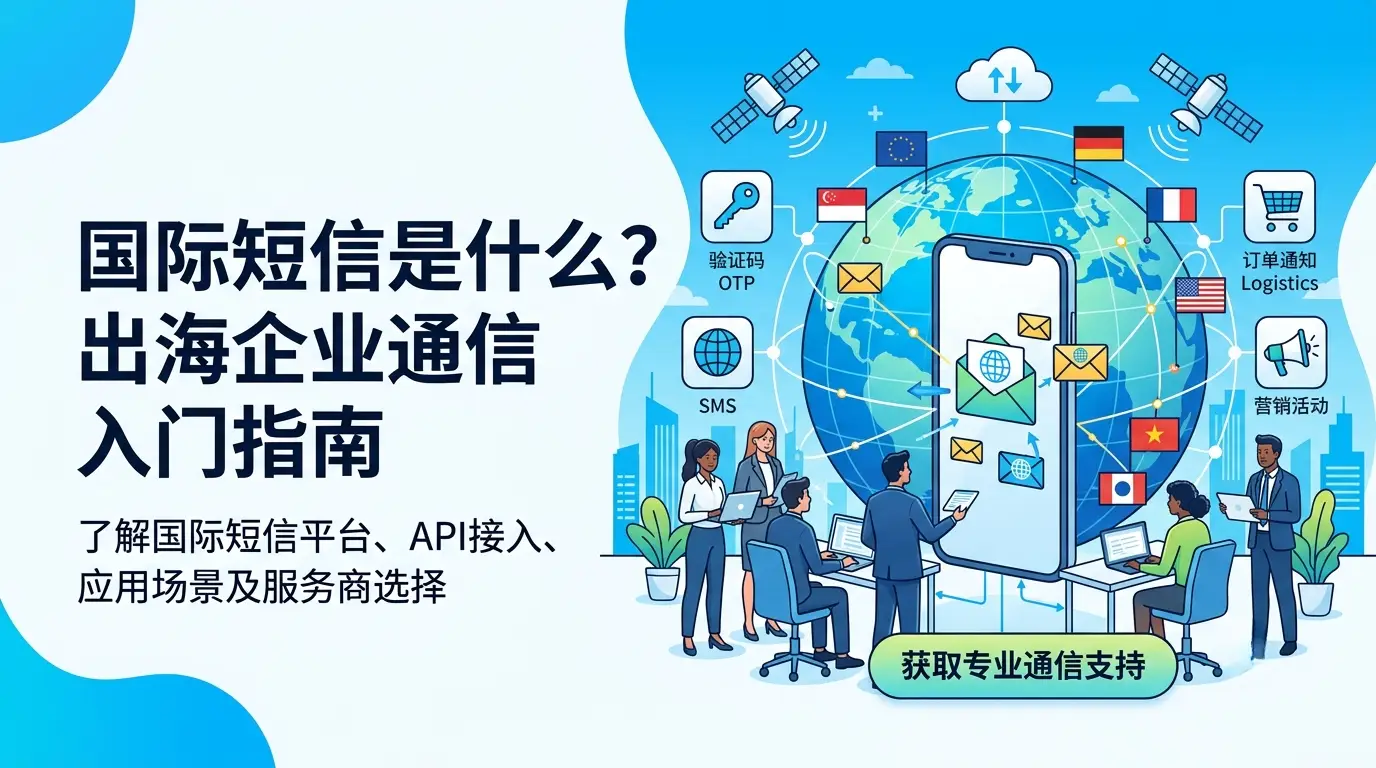
- International SMS;
- Enterprise SMS;
- Email;
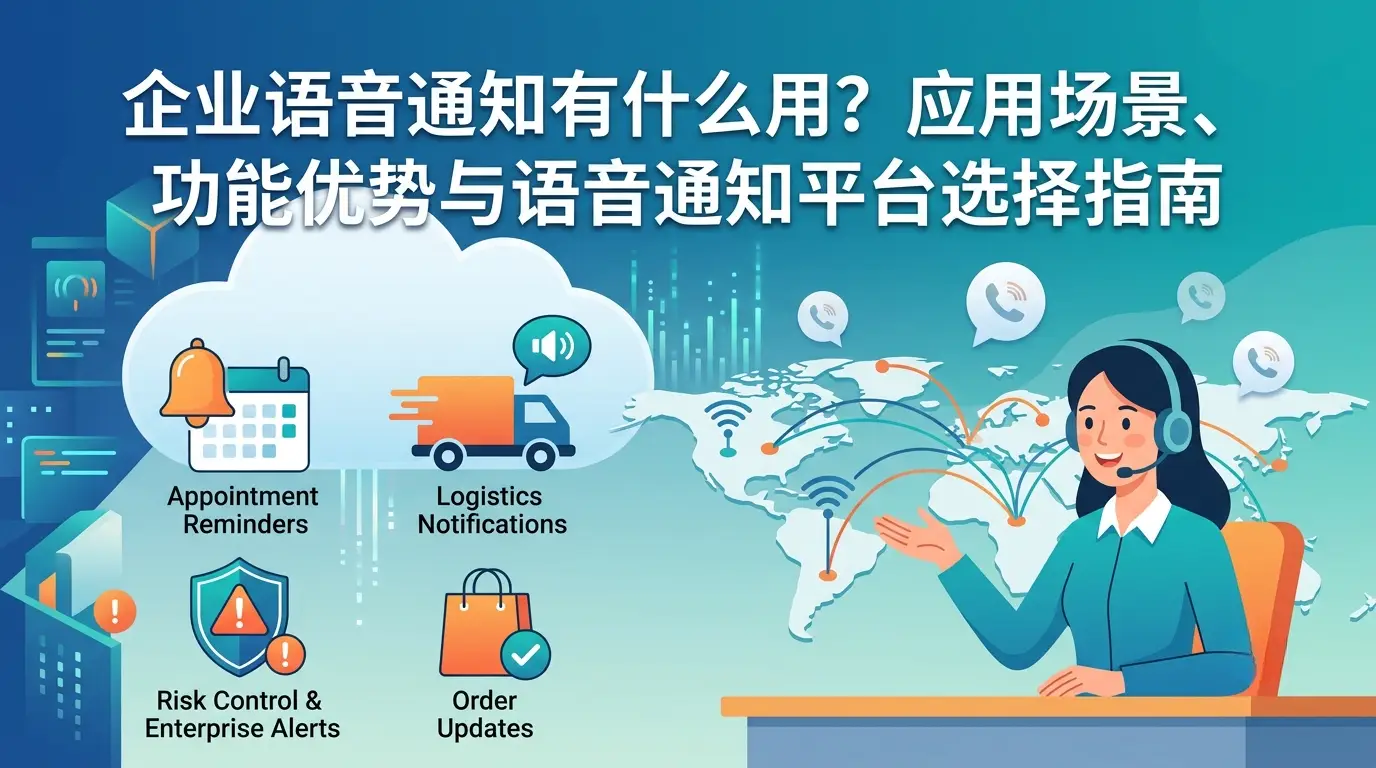
- Voice notification.
Help enterprises establish a unified communication system.
6.2 Highly Stable Messaging Architecture
Enterprise-level communication platforms need to support:
- High concurrent sending;
- Intelligent routing;
- Failure retry;
- Status receipt.
Ensure stable message delivery.
6.3 Global Communication Coverage Capability
For overseas enterprises, attention should be paid to:
- Multi-country coverage;
- Local compliance requirements;
- Operator resources;
- Message delivery quality.
7. Future Development Trends of 5G Messaging
In the future, 5G messaging will further integrate with:
- AI intelligent customer service;
- Large language models;
- Enterprise automation processes;
- Digital marketing systems.
Enterprise communication will evolve from the past "sending messages" to gradually develop into:
Message Reach → User Interaction → Service Completion → Data Accumulation
This is also an important direction for the future development of cloud communication platforms.
8. How Do Enterprises Choose a 5G Messaging Service Provider?
When selecting a 5G messaging service provider, enterprises can focus on:
① Whether it has stable communication resources
Avoid affecting message delivery due to channel quality issues.
② Whether it supports rapid API access
Reduce enterprise technical deployment costs.
③ Whether it supports multi-scenario solutions
Meet different needs such as marketing, notifications, and customer service.
④ Whether it has global service capabilities
Help enterprises expand overseas markets.
Conclusion: 5G Messaging is Becoming an Important Entry Point for Enterprise Communication Upgrade
5G messaging is not a simple SMS upgrade, but an important technology for the transformation of enterprise communication from "information notification" to "intelligent service".
For finance, e-commerce, gaming, retail, logistics, and overseas enterprises, early deployment of 5G messaging capabilities can improve user reach efficiency, optimize customer experience, and build a more intelligent communication system.
In the future, as the RCS ecosystem continues to mature, 5G messaging will play an increasingly important role in the fields of enterprise digital marketing and customer service.
Looking for 5G Messaging Solutions for Your Enterprise?
Professional cloud communication platforms provide:
- ✅ 5G Messaging Access Services
- ✅ Enterprise SMS API Interface
- ✅ International SMS Solutions
- ✅ Email and Voice Communication Capabilities
- ✅ Global Communication Resource Support
Help enterprises quickly build an intelligent customer reach system.
Consult now to obtain enterprise 5G messaging access solutions.