What is International SMS? International SMS Platform Empowers Enterprise Overseas Communication Solutions
With the continuous growth of enterprise globalization business, more and more Chinese enterprises are entering overseas markets.
Whether it is cross-border e-commerce, game overseas expansion, fintech, social applications, or online education, when serving overseas users, enterprises need to solve a core problem:
How to quickly, stably, and securely reach global users with messages?
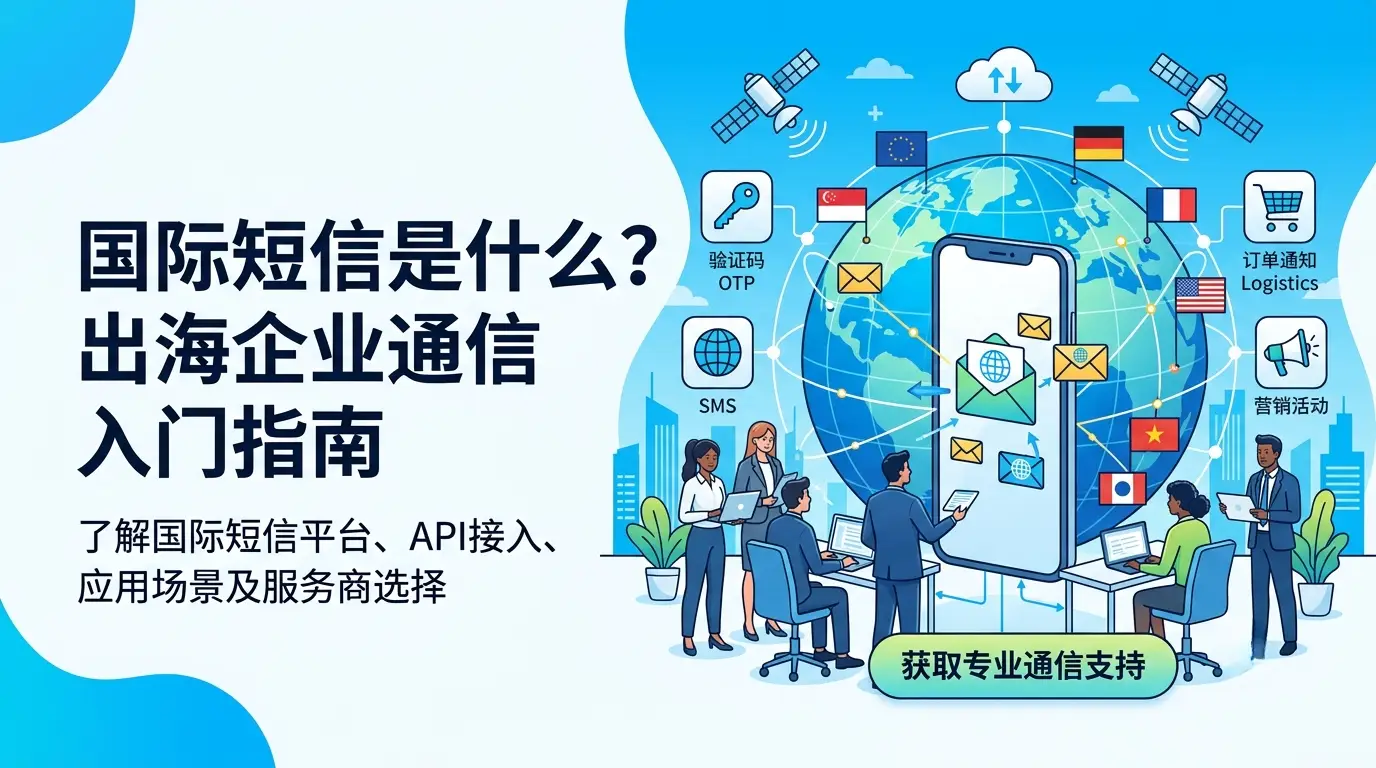
International SMS is exactly an important way for enterprises to solve their global communication needs. Through an international SMS platform, enterprises can send verification codes, notifications, and marketing information to global user mobile phones, achieving cross-country and cross-operator message delivery.
For enterprises that are laying out overseas markets, international SMS has become a basic capability in their overseas communication system.
1. What is International SMS?
International SMS refers to an enterprise-level SMS service through which enterprises send messages to overseas mobile users via SMS channels provided by professional communication service providers.
Different from sending SMS on personal mobile phones, international SMS is mainly for enterprise business scenarios, connecting through:
- HTTP API interface;
- REST API;
- SMPP protocol;
and other methods to connect enterprise business systems to achieve automated SMS sending. Simply understood:
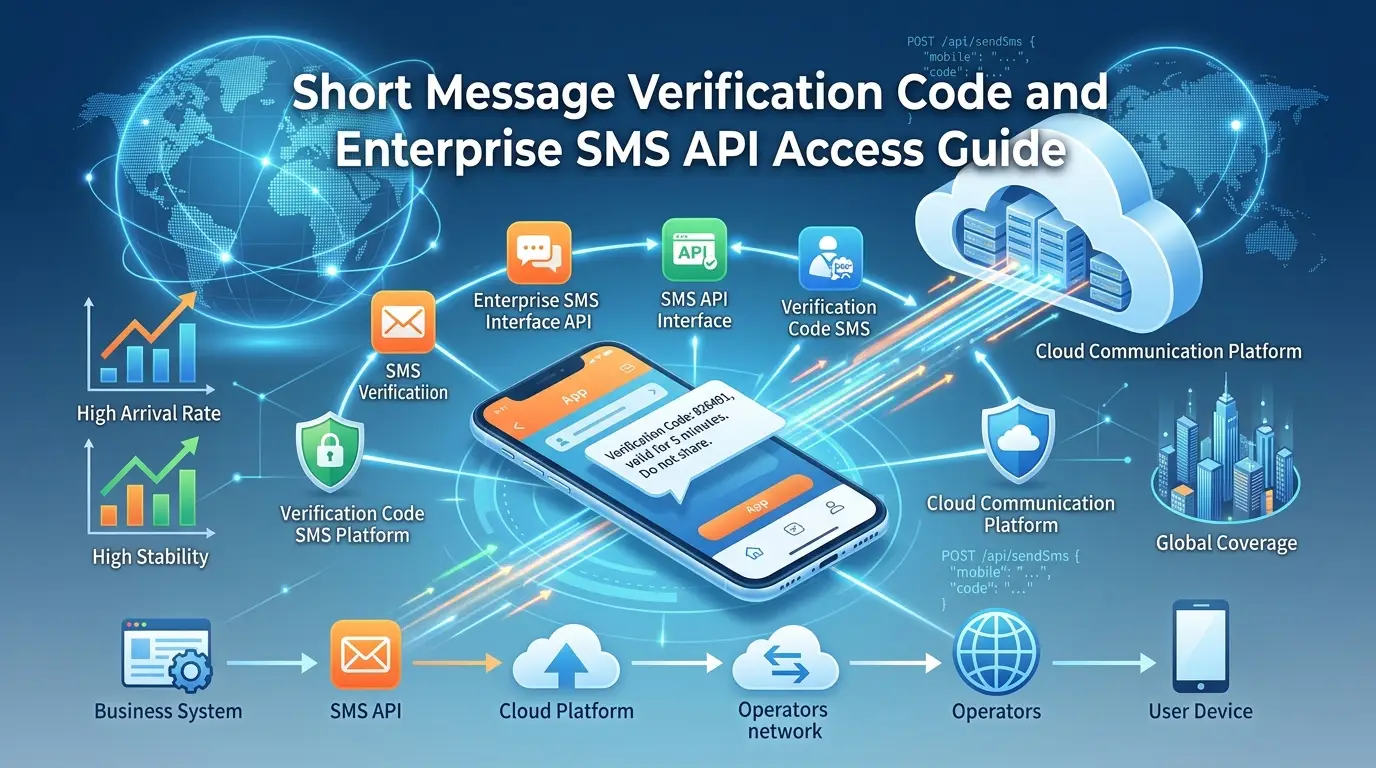
Enterprise business system
↓
International SMS platform
↓
Global operator network
↓
User mobile phone
For example:
- Overseas App registration verification code;
- Cross-border e-commerce order notification;
- Financial account security verification;
- User marketing activity reminder.
These enterprise communication scenarios all rely on stable international SMS services.
2. Why Do Overseas Enterprises Need International SMS?
After enterprises enter overseas markets, users are distributed in different countries and regions. Due to differences between countries:
- Operator network differences;
- Communication regulatory policy differences;
- SMS channel quality differences;
It is difficult for enterprises to directly build global communication capabilities. An international SMS platform can help enterprises solve the following problems.
1. Support overseas verification SMS business
Verification SMS is one of the most important application scenarios for international SMS. Currently, many overseas Internet products use mobile phone numbers as user identity authentication methods.
Typical applications:
- Registration verification code;
- Login verification;
- Password recovery;
- Two-factor authentication (2FA);
- Payment security verification.
Compared with email verification, SMS verification codes have:
- Fast arrival speed;
- Wide user coverage;
- No need to install applications;
- Controllable usage cost.
Therefore, overseas verification SMS has become an essential communication capability for enterprises going global.
2. Improve overseas user reach efficiency
For global enterprises, user reach speed directly affects business experience.
International SMS platforms can help enterprises:
- Cover multiple countries and regions;
- Connect local operator resources;
- Intelligently select sending routes;
- Obtain SMS status reports in real time.
For example, cross-border e-commerce platforms can send via international SMS:
- Order confirmation;
- Shipping reminder;
- Delivery notification.
Improve user satisfaction and reduce customer service pressure.
3. Reduce enterprise global communication construction costs
If enterprises build international communication systems themselves, they need to face:
- Global operator connection;
- Communication protocol development;
- Line maintenance;
- Compliance management.
By connecting to a professional platform through international SMS APIs, enterprises can quickly obtain global SMS sending capabilities without investing heavily in communication infrastructure.
3. How International SMS Platforms Work
A mature international SMS platform usually consists of multiple technical modules.
International SMS system architecture:
Enterprise business system
↓
SMS API interface
↓
Message processing center
↓
Intelligent routing system
↓
International SMS gateway
↓
Overseas operator network
↓
User mobile phone
1. SMS API interface layer
The international SMS API is responsible for data interaction between the enterprise system and the SMS platform.
Main functions:
- SMS submission;
- Parameter verification;
- Identity authentication;
- Traffic control.
Enterprises only need to call the interface to complete SMS sending.
2. Message scheduling system
In the face of a large number of SMS requests, the platform needs to have high concurrent processing capabilities.
Core technologies include:
- Message queue;
- Asynchronous processing;
- Failure retry;
- Priority scheduling.
For example, verification SMS requires the highest priority to ensure users receive it quickly.
3. Intelligent SMS routing
The quality of international SMS sending largely depends on route selection.
The intelligent routing system will base on:
- Country;
- Operator;
- Historical success rate;
- Network latency;
Automatically select the best sending path.
Improve SMS:
- Delivery rate;
- Stability;
- Sending speed.
4. What are the Application Scenarios for International SMS?
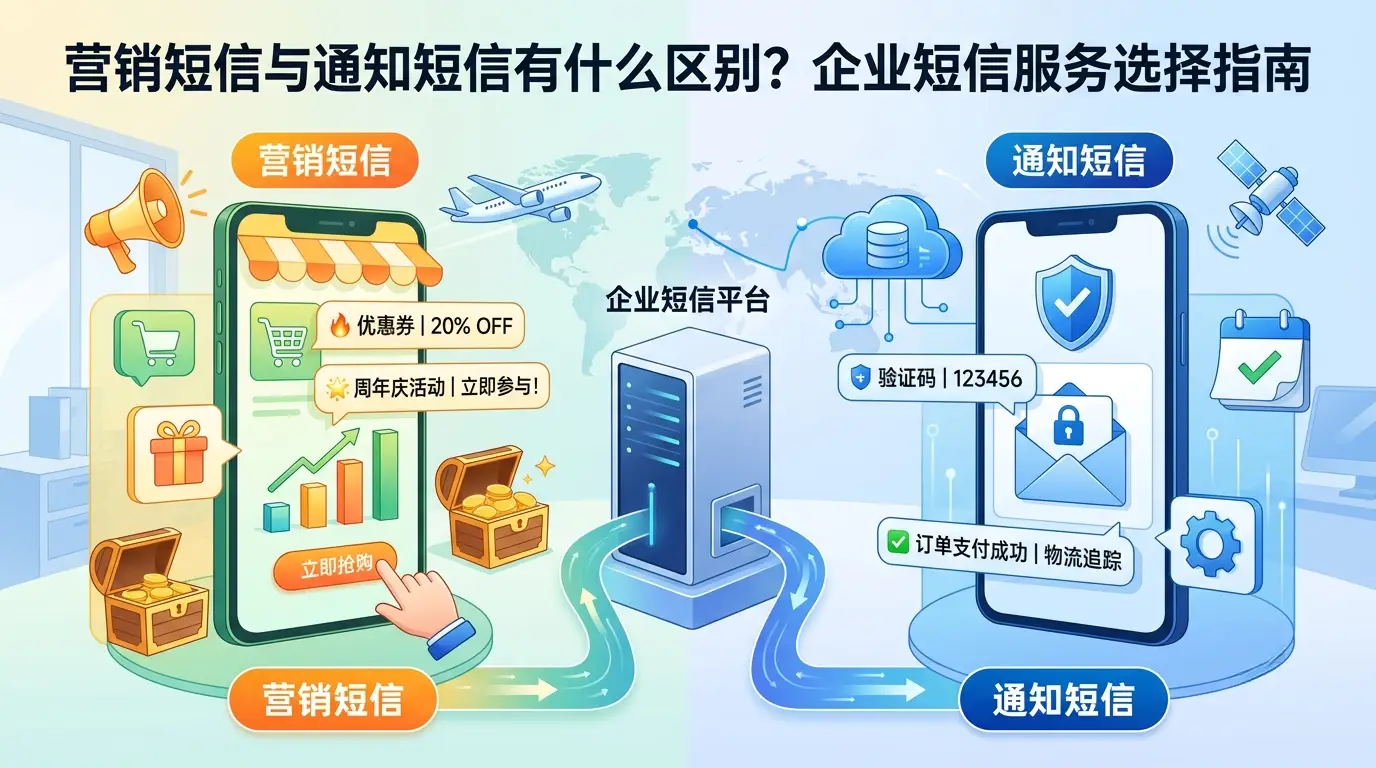
1. Overseas verification SMS
Suitable for:
- App registration;
- Game account verification;
- Finance login;
- Social platform authentication.
Keyword coverage:Overseas verification SMS platform, international verification SMS service.
2. Enterprise notification SMS
Including:
- Order notification;
- Logistics reminder;
- Account reminder;
- System notification.
Keyword coverage:Enterprise SMS service, international notification SMS.
3. Overseas marketing SMS
Enterprises can carry out through international SMS:
- User recall;
- Activity promotion;
- Membership marketing.
Keyword coverage:Overseas marketing SMS, international SMS marketing platform.
Please note:Different countries have strict regulatory requirements for marketing SMS, and enterprises must comply with local communication regulations.
5. How to Choose a Reliable International SMS Service Provider?
When choosing an international SMS platform, enterprises should focus on the following factors.
1. Global coverage capability
Excellent international SMS service providers should have:
- Multi-country coverage;
- Multi-operator connection;
- Localized communication resources.
Key markets include:
- Southeast Asia;
- Europe;
- North America;
- Middle East;
- Latin America.
2. SMS channel quality
International SMS price is not the only criterion. Enterprises should pay more attention to:
- Delivery rate;
- Latency time;
- Failure rate;
- Stability.
Low-price routes may cause:
- SMS cannot be delivered;
- Users cannot receive verification codes;
- Affect business conversion.
3. API interface stability
Enterprise-level international SMS platforms need to support:
- API quick integration;
- SMPP protocol;
- Status receipt;
- Data statistics.
Facilitate automated communication management for enterprises.
4. Global compliance capability
International communication involves regulatory requirements of different countries. Enterprises need to focus on:
- Sender ID registration;
- SMS template review;
- Anti-spam SMS mechanism;
- Local communication policies.
Compliance capability directly affects the stability of SMS sending.
6. Differences Between International SMS and Other Communication Methods
| Type |
Advantages |
Applications |
| International SMS |
Wide coverage, fast reach |
Verification codes, notifications |
| Email |
Low cost, rich content |
Marketing emails |
| WhatsApp |
High interactivity |
Customer service communication |
| Push |
Low cost |
App operations |
For mature enterprises, the future trend is not to choose a single channel, but to build a multi-channel integrated communication system: SMS + Email + WhatsApp + Voice.
7. Future Development Trends of International SMS
With the deepening of enterprise globalization, international SMS is developing in the direction of intelligence. Main future trends:
1. Intelligent routing optimization
Automatically select the best communication route through data analysis.
2. AI-driven communication operations
AI will be applied to:
- Content review;
- Risk control identification;
- User analysis;
- Intelligent marketing.
3. CPaaS communication platformization
In the future, enterprises will no longer purchase SMS, email, and voice services separately, but complete global user connections through a unified communication platform.
Choose a Professional International SMS Platform to Connect Enterprises with Global Users
For overseas enterprises, international SMS is not only a message channel, but also an important infrastructure for connecting users and driving business growth.
A stable international SMS platform can help enterprises:
- Quickly cover global markets
- Improve verification code delivery rate
- Reduce communication construction costs
- Meet global compliance requirements
- Support large-scale business growth
Need Stable International SMS Solutions?
If your enterprise is laying out overseas markets and needs stable international SMS APIs, overseas verification SMS services, or global enterprise communication solutions, please contact us for professional communication support.
- Coverage of 200+ countries worldwide
- Quick international SMS API integration
- High delivery rate verification channels
- Global compliance communication support
Consult now to get global communication solutions suitable for your business.