What is SMS Verification Code? Enterprise SMS Interface API Integration Guide | Cloud Communication Platform Solution
In internet business scenarios such as user registration, login, security verification, and payment confirmation, SMS verification codes have become one of the most commonly used identity verification methods for enterprises.
Whether it is APPs, websites, mini-programs, or cross-border business platforms, stable SMS verification code services are needed to complete user identity confirmation.
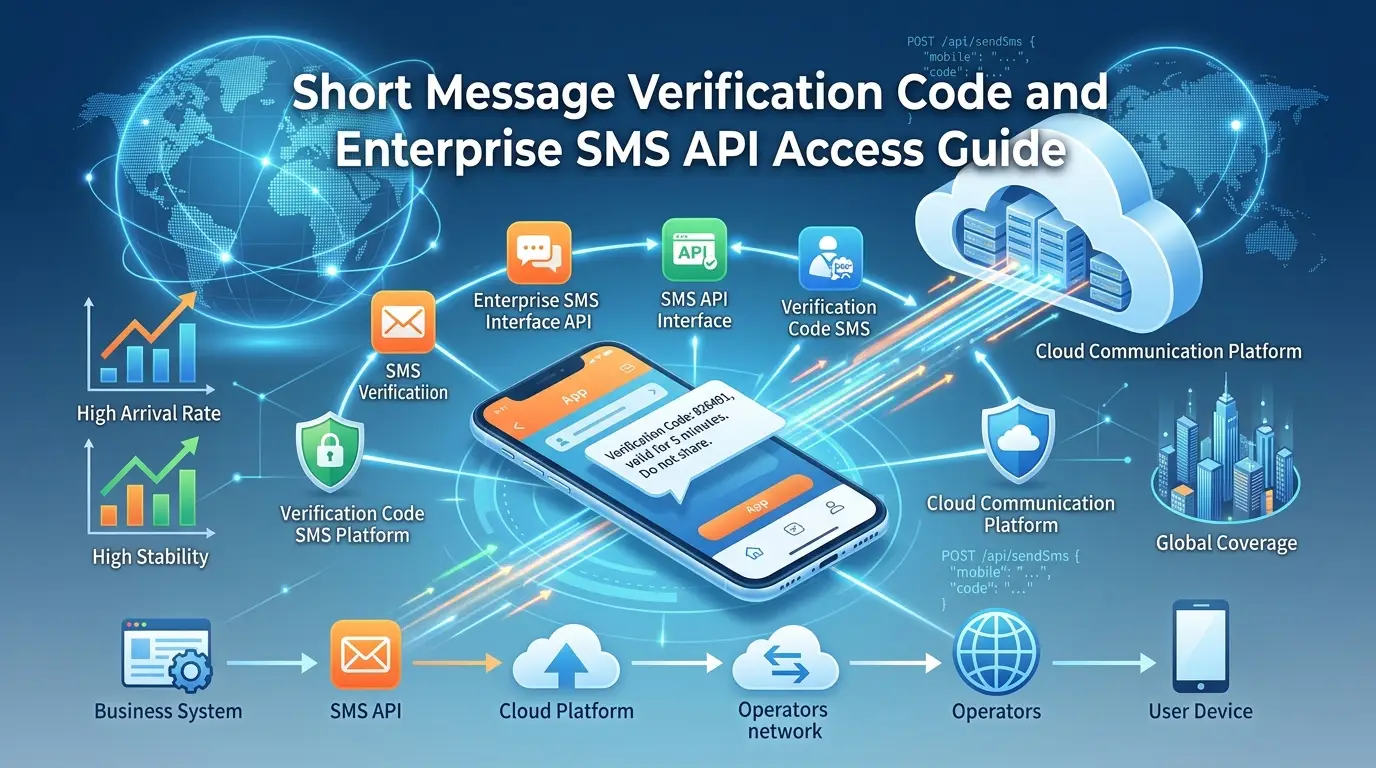
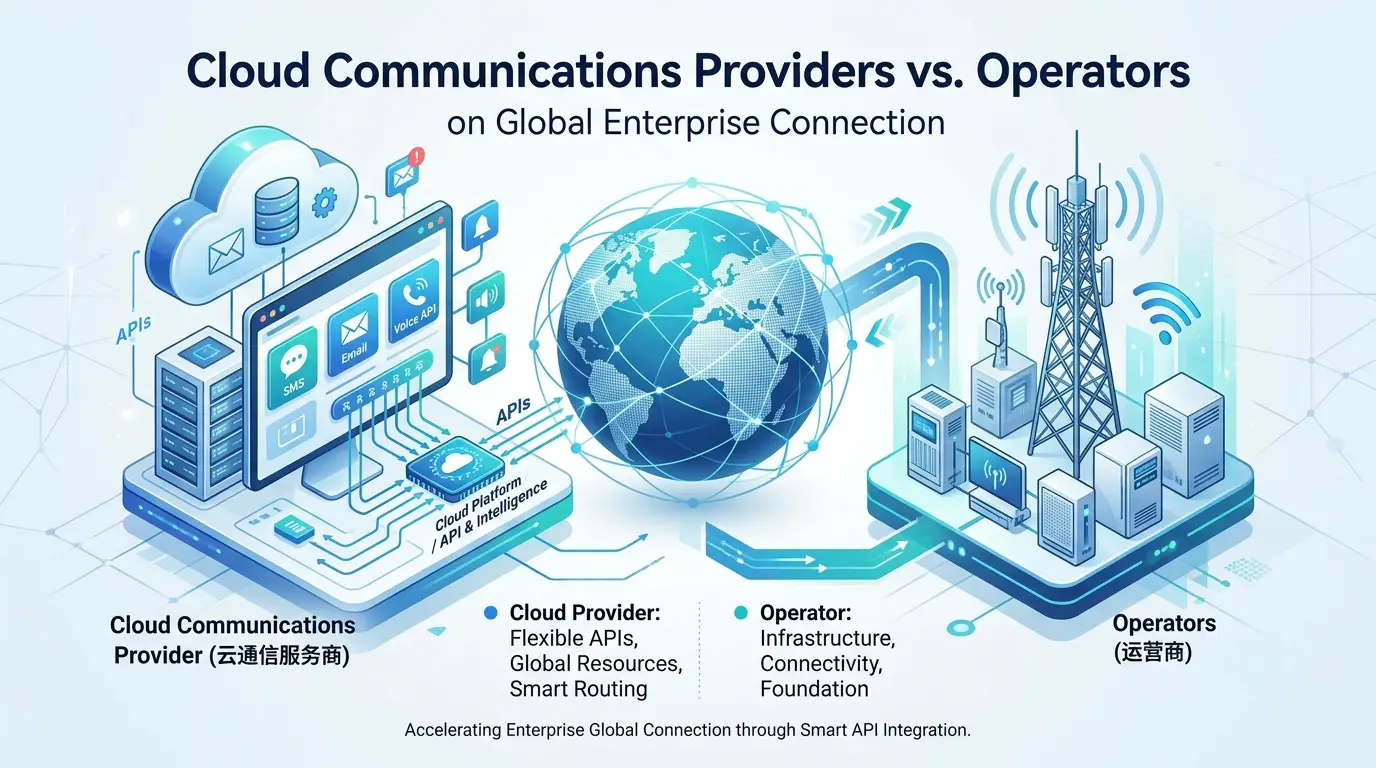
For enterprises, SMS verification code is not simply sending a text message, but a communication capability composed of business systems, SMS interfaces, cloud communication platforms, and operator networks.
By integrating professional enterprise SMS interfaces (SMS API), enterprises can achieve automatic SMS verification code sending, improve user registration success rates, and ensure business security.
1. What is SMS Verification Code?
SMS Verification Code is an identity verification technology based on mobile communication networks.
Enterprise systems generate random verification codes, send them to user mobile numbers through SMS interfaces, and users complete identity verification after inputting the codes.
For example: [Some App] Your login verification code is: 826491, valid for 5 minutes. Do not disclose it.
SMS verification codes are mainly used in:
- User registration verification
- APP login verification
- Password recovery
- Payment security verification
- Mobile binding
- Two-factor authentication
- Risk control security verification
Compared with traditional account password verification methods, SMS verification codes have advantages such as:
- Users do not need to remember passwords
- Simple operation process
- Fast verification speed
- Higher security
2. What is the SMS Verification Code Sending Process?
Many enterprises think sending verification codes is just calling an interface, but actually it involves a complete communication link.
The typical process is as follows:
- User requests verification code
- Enterprise business server
- SMS API interface
- Cloud communication SMS platform
- Operator SMS gateway
- User mobile terminal
1. User triggers verification code request
For example: User registers an account: enter mobile number, click get verification code, the business system generates a verification code after receiving the request.
2. Enterprise calls SMS API interface
Enterprise servers call the SMS platform through HTTP API. Request example: {"mobile":"13800000000","template":"register_code","code":"826491"} After receiving the request, the SMS platform enters the sending queue.
3. SMS platform intelligent scheduling
Professional enterprise SMS platforms typically have: intelligent routing, multi-channel management, message queue, failure retry, status receipt, sending monitoring.
The system is based on:
- Country and region
- Operator network
- Channel success rate
- Historical data
to select the optimal sending route.
4. Operator completes SMS delivery
SMS is ultimately sent to the user mobile phone through the operator network.
The entire process typically requires:
- Second-level response
- High stability
- High delivery rate
Otherwise it will affect user registration and business conversion.
3. What is Enterprise SMS Interface?
Enterprise SMS Interface (SMS API) is a communication interface provided by cloud communication service providers for enterprise system calls.
Simply put: Enterprise SMS interface enables enterprise software systems to have the ability to automatically send SMS.
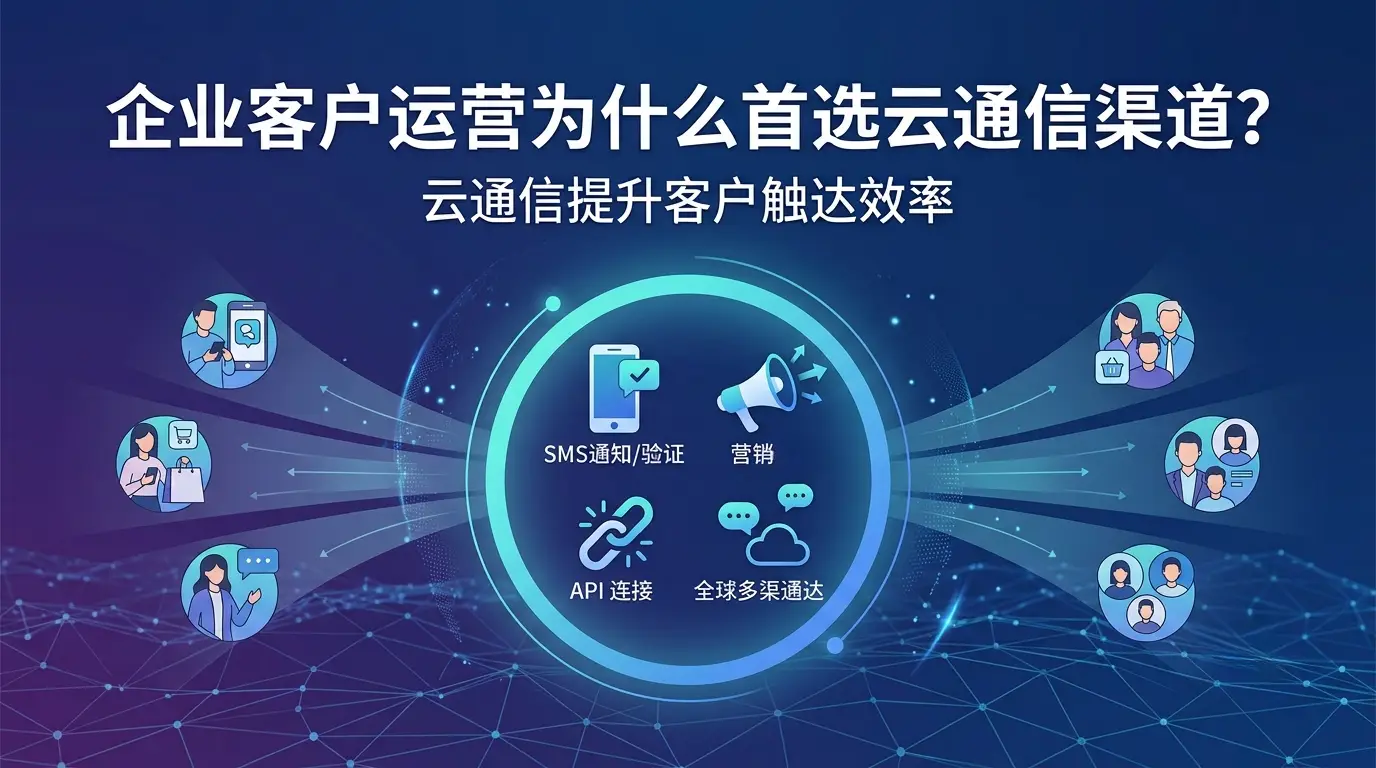
Enterprises do not need to build their own SMS gateways. They only need to connect to the SMS platform through API to achieve:
- Verification code SMS sending
- Order notification
- Logistics reminder
- Account security reminder
- International SMS reach
4. What Types of Enterprise SMS Interfaces Are There?
1. HTTP SMS API Interface
Currently the most widely used.
Features:
- Simple development
- Quick integration
- Supports mainstream development languages
Suitable for:
- APP developers
- SaaS platforms
- E-commerce systems
- Enterprise websites
2. SMPP SMS Interface
SMPP is an operator-level SMS communication protocol.
Advantages:
- High concurrency
- Low latency
- Strong stability
Main applications:
- Large internet platforms
- Financial enterprises
- International SMS service providers
3. SDK SMS Interface
Some SMS platforms provide:
- Java SDK
- PHP SDK
- Python SDK
- Node.js SDK
to help development teams complete integration quickly.
5. How Do Enterprises Integrate SMS Verification Code Interface?
Step 1: Choose SMS Service Platform
Enterprises need to choose a service provider with:
- Qualified SMS license
- Stable operator resources
- API interface capability
- Global SMS coverage
Step 2: Apply for SMS Signature and Template
Verification code SMS usually requires configuration:
SMS signature: [Enterprise Name]
SMS template: Your verification code is ${code}, valid for 5 minutes.
Step 3: Call SMS API
Developers obtain:
- API address
- Access Key
- Secret Key
- Template ID
to complete interface development.
Step 4: Launch Monitoring
Enterprise-level SMS systems also need to focus on:
- Success rate monitoring
- Latency analysis
- Failure retry
- Channel switching
- Data statistics
to ensure stable business operation.
6. How to Choose an Enterprise SMS Interface Service Provider?
When choosing an SMS verification code platform, it is not recommended to focus only on price. Enterprises should pay more attention to the following factors:
1. SMS Delivery Rate
The core indicator in verification code scenarios is: whether users can quickly receive verification codes.
- Channel quality
- Operator coverage
- Intelligent routing capability
2. Sending Speed
Excellent SMS platforms need to achieve: fast submission, fast review, fast delivery, avoiding long user waiting times.
3. Global SMS Coverage Capability
For overseas enterprises, need to focus on: the number of supported countries, local operator resources, Sender ID support, compliance capabilities.
Especially in:
- Southeast Asia
- Europe
- North America
- Middle East
and other markets.
4. API Stability
Enterprise SMS interfaces need to have:
- High availability architecture
- Multi-line backup
- Automatic failover
- 7×24-hour operation capability
7. SMS Verification Code Common Questions FAQ
Q1: Why can't I receive the SMS verification code?
Common reasons: wrong mobile number, abnormal mobile signal, SMS channel delay, operator interception, sending frequency limit. Enterprises can improve verification code success rates through multi-channel strategies, intelligent routing, and failure resending.
Q2: What development languages does enterprise SMS interface support?
Mainstream SMS APIs typically support Java, PHP, Python, Go, Node.js and other development languages. Developers can complete calls through HTTP interfaces.
Q3: Can international business use SMS verification codes?
Yes. International SMS verification codes are widely used in overseas APP registration, cross-border e-commerce login, gaming overseas, fintech verification and other scenarios. Enterprises need to choose international SMS platforms supporting global operator coverage.
Q4: How can enterprises integrate SMS interface?
The integration process includes: choosing a qualified SMS service provider, applying for SMS signature and template, obtaining API keys, completing interface development, and launching monitoring. Integration can be quickly completed through professional cloud communication platforms.
8. The Value of SMS Verification Codes in Enterprise Digitalization
With the growth of enterprise online businesses, SMS verification codes have evolved from simple notification tools into enterprise communication infrastructure.
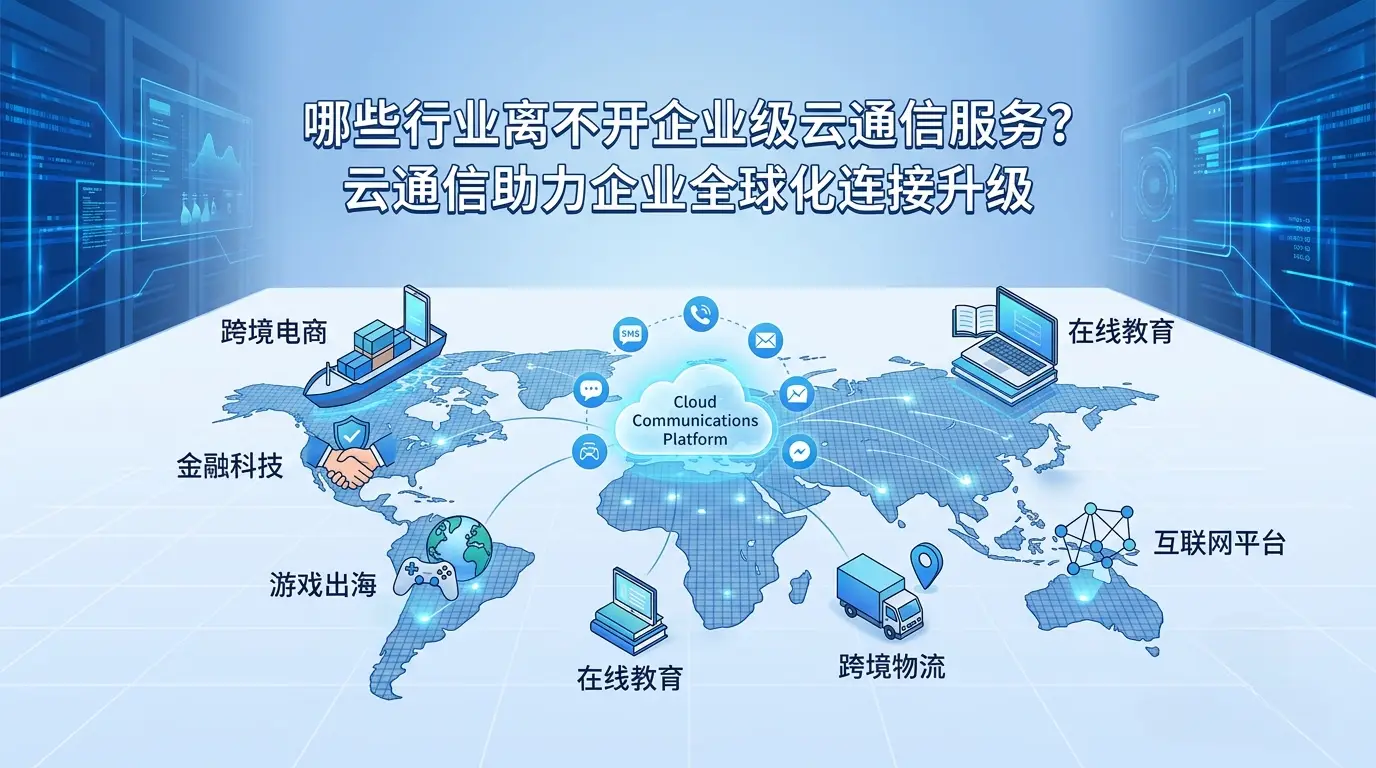
Especially for:
- Cross-border e-commerce
- Fintech
- Online education
- Gaming overseas
- Social applications
Stable SMS verification code capability directly affects:
- User registration rate
- Login success rate
- User experience
- Business growth efficiency
Conclusion: Choose Professional Cloud Communication Platform for More Stable SMS Reach
Enterprise SMS interfaces need not only to achieve "sending SMS" but also to ensure: high delivery rate, fast response, global coverage, and stable API connections.
Professional cloud communication platforms provide verification code SMS services, international SMS services, notification SMS services, and SMS API interfaces through operator resource integration, intelligent routing scheduling, and complete communication architecture, helping enterprises quickly build reliable global communication capabilities.
Integrate enterprise SMS API now to improve user reach efficiency.