Cloud Communications vs Traditional Communications: Differences and Business Benefits
With enterprise digital transformation and rapid global business development, communication capabilities have become an important infrastructure for enterprises to connect with users. In the past, enterprises mainly relied on traditional communication systems for SMS, voice, email, and other services. However, as business scales expand, traditional communications face challenges such as long deployment cycles, high maintenance costs, and difficulties in global expansion. In recent years, API-based cloud communication platforms have developed rapidly, providing enterprises with more flexible, efficient, and scalable communication services. So, what are the differences between traditional communications and cloud communications? What advantages does cloud communications have over traditional communications? This article will analyze from the perspectives of technical architecture, cost, deployment efficiency, global coverage, and security capabilities.
1. What is Traditional Communications?
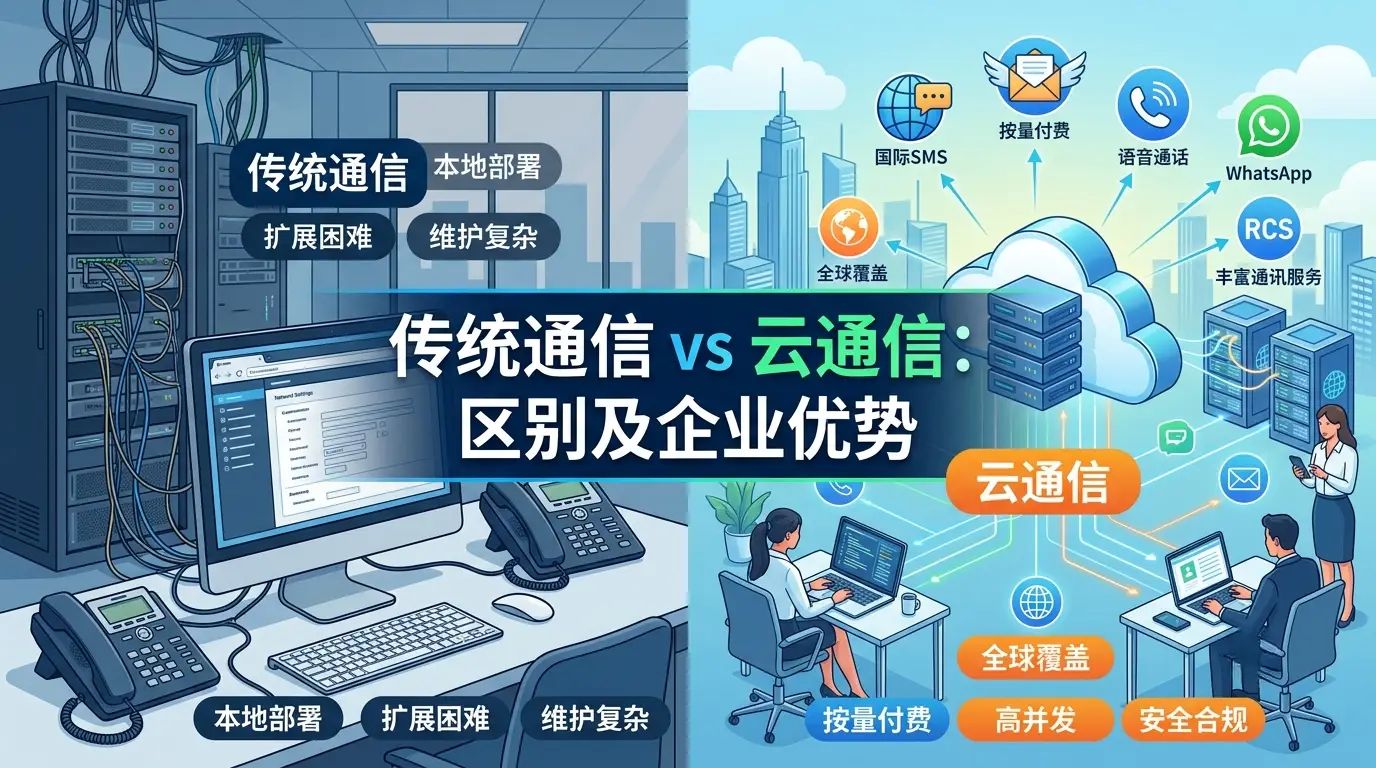
Traditional communications is a communication mode where enterprises achieve message delivery through self-built communication infrastructure or direct procurement of operator resources.
Enterprise servers;
SMS gateway equipment;
Communication lines;
Operator interfaces;
Self-built management systems。
Traditional communication modes can meet the communication resource control needs of large enterprises, but as global business grows, their construction and maintenance costs continue to increase.
2. What is Cloud Communications?
Cloud Communications is a new enterprise communication service model based on cloud computing, communication networks, and API interfaces.
API interfaces;
SDK tools;
Management console;
International SMS service;
Enterprise email service;
Voice communication service;
WhatsApp Business API;
RCS messaging service;
Communication API platform。
Cloud communication platforms integrate global operator resources to provide enterprises with stable and efficient user reach capabilities.
3. Comparison of Traditional Communications vs Cloud Communications
1. Technical Architecture Differences
Traditional communications adopts an enterprise self-built model: Enterprise Business System → Communication Server → SMS Gateway → Operator Network → User Terminal. Enterprises need to maintain communication infrastructure themselves.
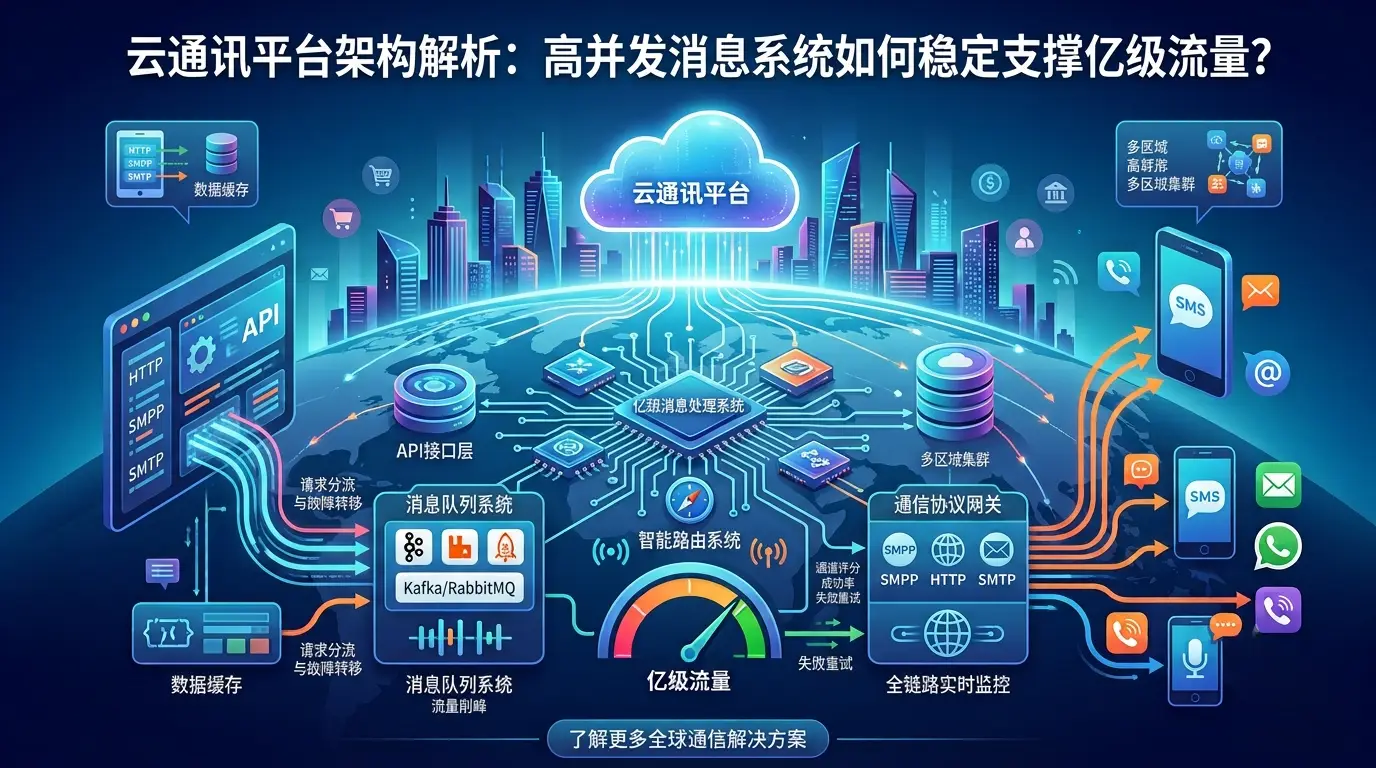
Cloud communications adopts a cloud service model: Enterprise Business System → API Interface → Cloud Communication Platform → Intelligent Routing System → Global Operator Network → User Terminal. Enterprises do not need to focus on underlying communication resources; they only need to call APIs to complete business integration.
4. What Advantages Does Cloud Communications Have Over Traditional Communications?
1. Faster Deployment Capability
Traditional communication construction usually requires: equipment procurement, network configuration, system development, operator testing. The project cycle may last for weeks or even months.
Cloud communication platforms, through standardized API interfaces, can help enterprises quickly complete: SMS verification code integration, email notification systems, voice verification functions, user message reach. Significantly shortening the communication service launch cycle.
2. Reduce Enterprise Communication Costs
Traditional communication costs mainly include hardware costs: communication servers, gateway equipment, network facilities.
Operation costs: system maintenance, fault handling, technical personnel investment.
Cloud communications adopts a pay-as-you-go model: enterprises pay based on actual usage without investing in large-scale infrastructure.
- Cross-border e-commerce
- Game overseas enterprises
- SaaS enterprises
- Fintech companies
- Online education platforms
3. Support Global Business Expansion
For enterprises going overseas, one of the biggest challenges is global communication connectivity. Traditional communications entering different national markets need to resolve: local operator cooperation, communication regulations, Sender ID registration, SMS template review.
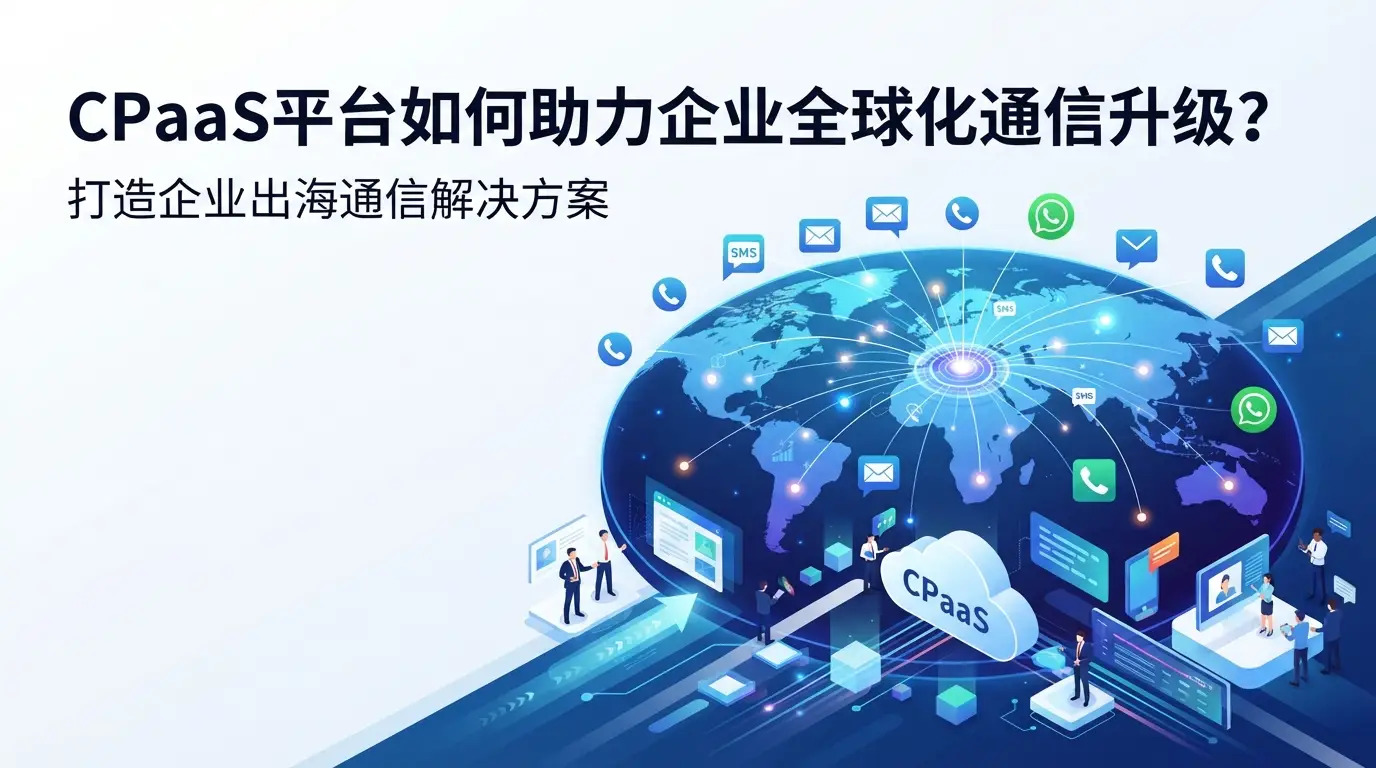
Professional cloud communication platforms usually have established global communication networks. Enterprises can achieve: multi-country coverage, multi-operator connections, intelligent route selection, automatic failover through a unified interface. Helping enterprises improve international SMS delivery rates and communication stability.
4. Support High-Concurrency Communication Needs
Modern enterprises may generate a large number of communication requests daily: for example: user verification codes, login reminders, order notifications, marketing messages.
Traditional architectures require enterprises to build: message queues, distributed systems, load balancing, high-availability architectures.
Cloud communication platforms usually adopt: distributed architecture, cluster deployment, intelligent scheduling, elastic scaling. Capable of meeting enterprise message volume growth from millions to hundreds of millions.
5. Provide Comprehensive Data Analysis and Monitoring Capabilities
Enterprise communication not only requires sending, but also understanding sending effects. Cloud communication platforms usually provide: sending status monitoring, delivery rate analysis, failure reason statistics, user behavior analysis, communication quality reports. Helping enterprises continuously optimize communication effectiveness.
5. Comparison Table: Cloud Communications vs Traditional Communications
- Deployment Method: On-premise vs Cloud Service
- Integration Method: Custom Development vs API Quick Integration
- Construction Cost: High vs Low
- Operation Pressure: Enterprise vs Platform
- Global Coverage: Difficult Expansion vs Global Resource Integration
- Elastic Capability: Limited vs Auto Scaling
- Data Analysis: Need Development vs Platform Provided
- Multi-service Integration: Difficult vs SMS, Email, Voice Support
6. Which Enterprises Are Suitable for Cloud Communications?
1. Cross-border E-commerce Enterprises
- Registration verification codes
- Order notifications
- Logistics reminders
- Marketing reach
2. Game Overseas Enterprises
- User registration verification
- Login security
- Activity notifications
3. Fintech Enterprises
- OTP verification codes
- Risk control reminders
- Transaction notifications
4. SaaS Enterprises
- User message notifications
- Enterprise customer management
- Automated marketing
7. What Factors Should Enterprises Consider When Choosing a Cloud Communication Platform?
1. Global Communication Resources
Whether it has: multi-country coverage, high-quality operator resources, stable communication lines.
2. API Capabilities
Including: HTTP API, SMPP interface, SDK support, development documentation completeness.
3. Message Quality
Focus on: delivery rate, latency, failure rate, communication stability.
4. Compliance Capabilities
Including: content review, Sender ID management, local regulation adaptation, data security protection.
8. Future Trends: Cloud Communications is Becoming Enterprise Communication Infrastructure
With enterprise globalization, communication needs are evolving from single message sending to: multi-channel integration, intelligent routing, automated reach, data-driven optimization.
Future enterprises need not just SMS channels, but a complete enterprise cloud communication solution. Cloud communication platforms are becoming important infrastructure connecting enterprises with global users.
9. How Can Enterprises Quickly Integrate Cloud Communication Services?
- International SMS platform
- Enterprise email service
- Global voice communication
- CPaaS communication capabilities
- ✓ Quickly deploy communication interfaces
- ✓ Connect global operator resources
- ✓ Optimize message delivery rate
- ✓ Reduce communication construction costs
- ✓ Support global business growth
Experience enterprise-level cloud communication solutions now, and make communication capabilities the foundation for enterprise growth.
Upgrade Enterprise Communication Capabilities, Start with Stable Connection
If your enterprise is deploying:
- International SMS verification codes
- Global message reach
- Enterprise email systems
- Voice communication services
- Overseas business communication infrastructure
A professional cloud communication platform can help your enterprise quickly access global communication networks, improving message delivery rate and business stability.
Consult Now,Get Enterprise Global Communication Solution。