What Are the Real Barriers in the Cloud Communication Industry? Cloud Communication Core Competitiveness and Technical Advantages Analysis
In the process of enterprise digitalization and globalization, cloud communication (international SMS, voice, email, RCS, WhatsApp Business API) has become an infrastructure-level capability.
However, when choosing a cloud communication platform, many enterprises only focus on price or number of channels, overlooking a key question:
The real barrier in the cloud communication industry is never "whether it can send", but "whether it can deliver stably".
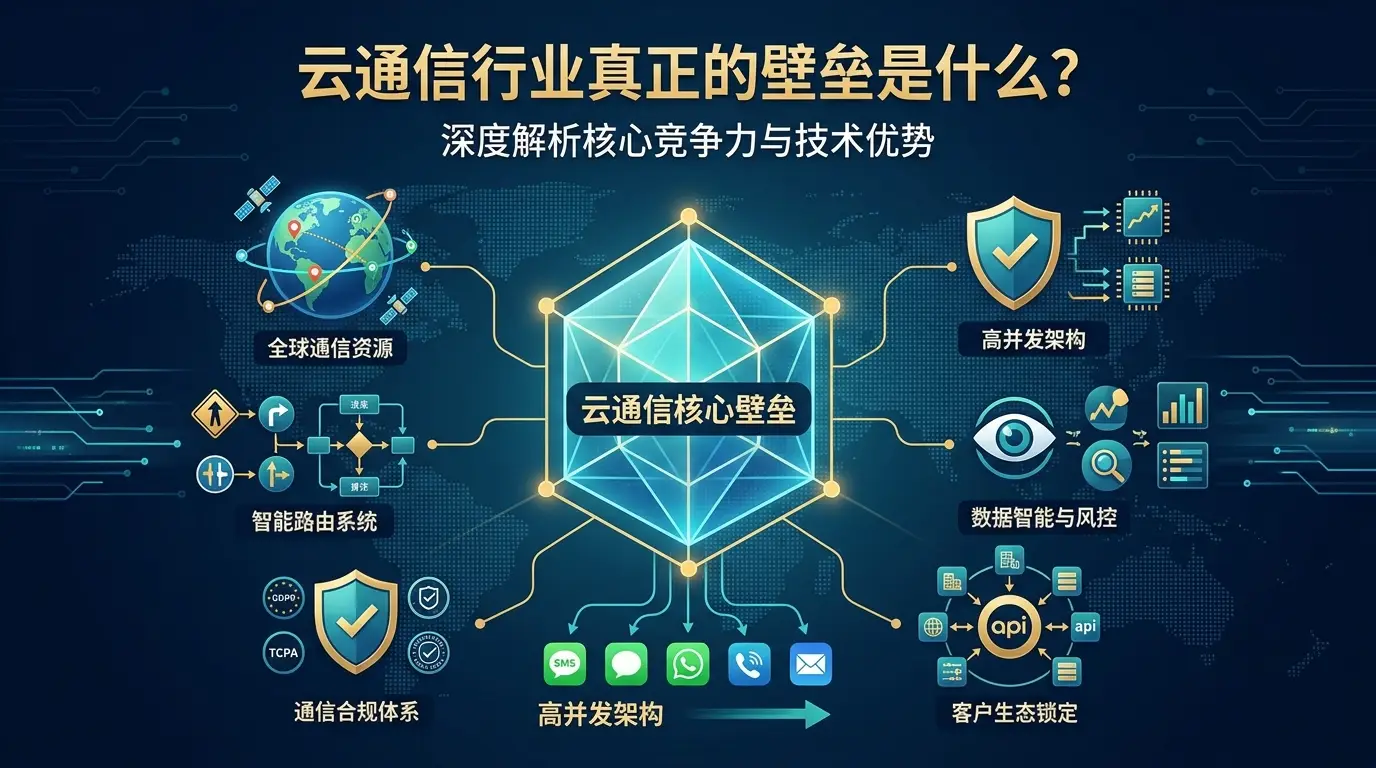
1. Global Communication Resource Barrier: The Basic Threshold of the Cloud Communication Industry
In the cloud communication industry, global SMS channel resources are the first layer of barriers.
Core differences are mainly reflected in:
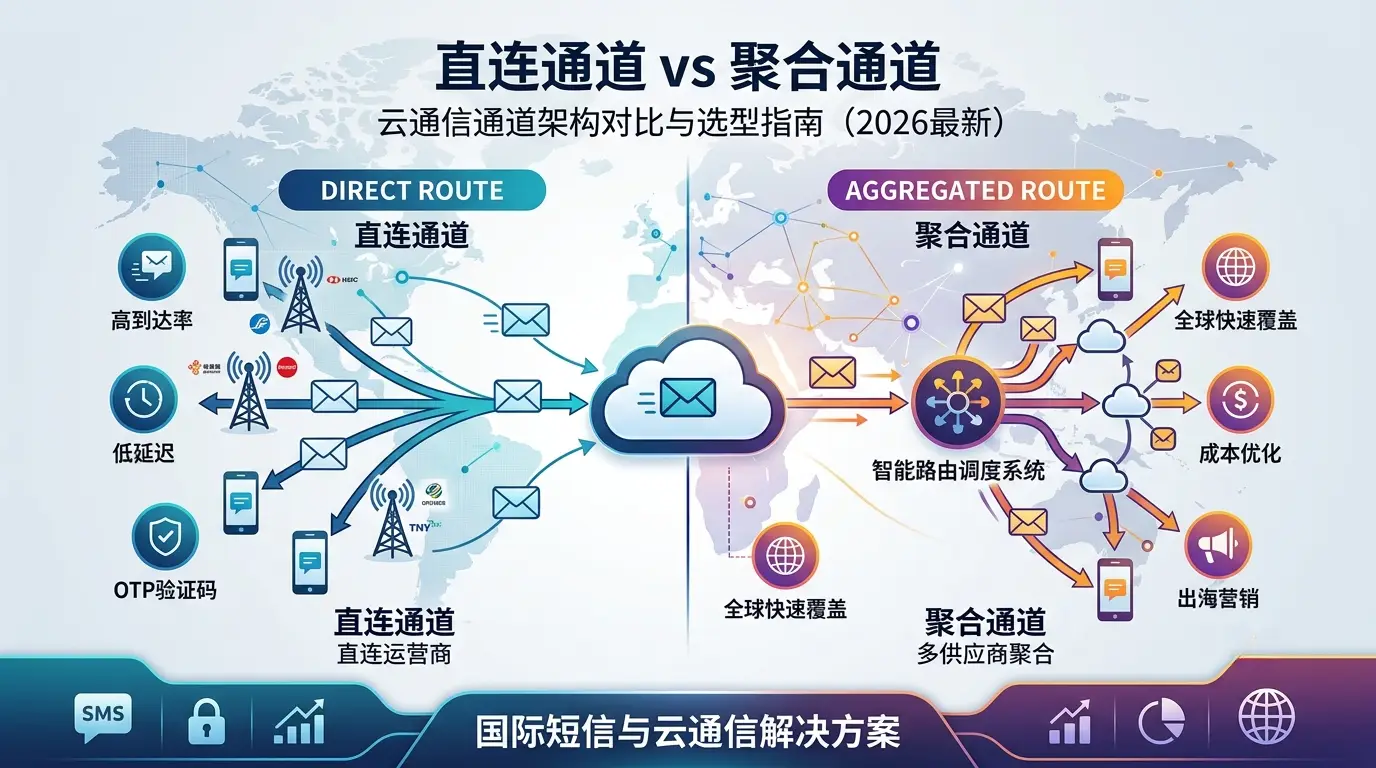
- Whether it has direct carrier connection capability (Direct Carrier Route)
- Whether it has multi-country redundant channel resources
- Whether it supports local A2P landing routing
- Whether it can guarantee peak period stability and SLA
Truly mature platforms are often not "more channels" but "stable and controllable channels".
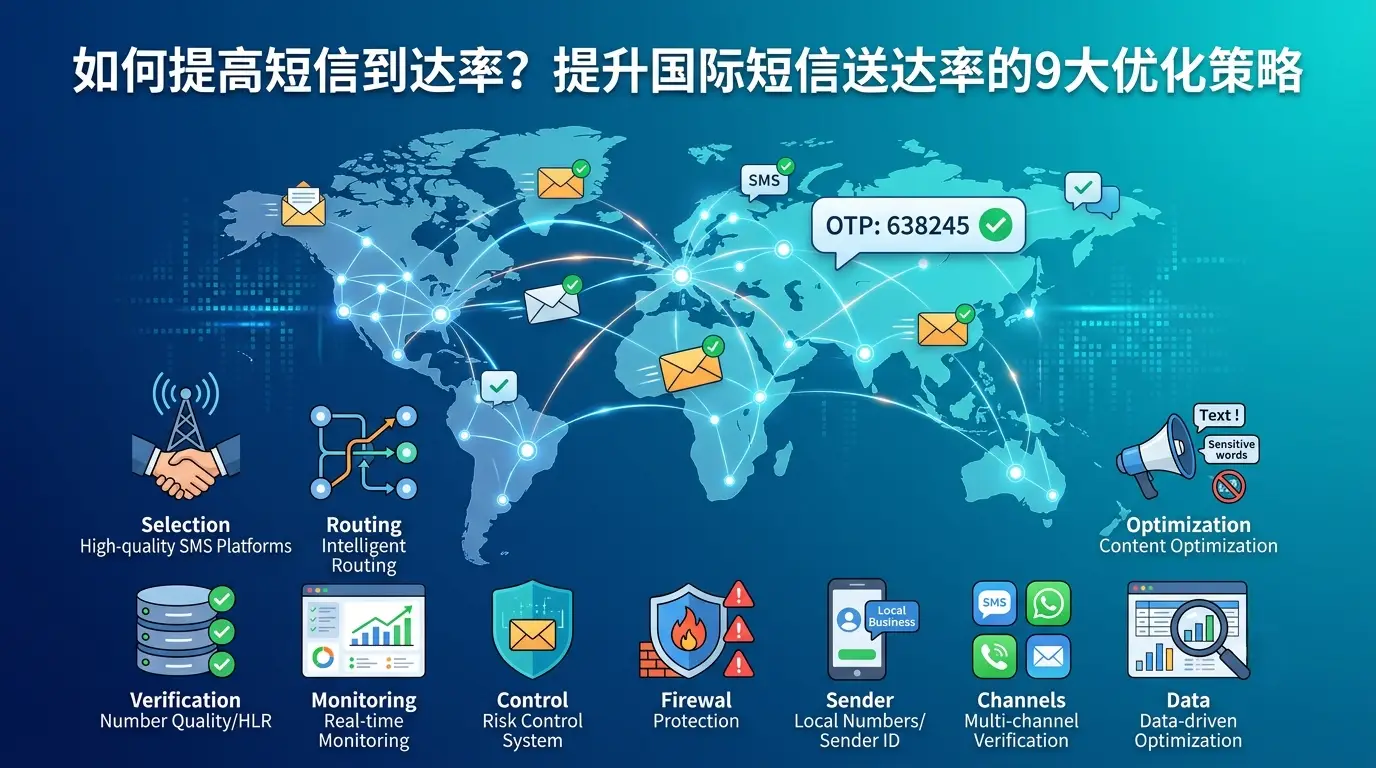
2. SMS Delivery Rate Optimization Capability: Core Indicator Determining Business Results
In actual business, sending success ≠ delivery success.
Key factors affecting SMS delivery rate include:
- Country carrier filtering mechanisms
- Sender ID reputation system
- Routing selection strategy (cost vs. success rate)
- Blacklist and anti-spam interception mechanisms
- Retry and resend logic
Mature platforms must have:
Real-time data-based intelligent routing optimization system that dynamically selects optimal channels to achieve high delivery rate guarantee for verification codes and notification SMS.
3. Smart Routing System: The "Decision Center" of Cloud Communication
One of the core capabilities of cloud communication platforms is intelligent routing scheduling capability.
Main features include:
- Dynamic channel selection by country/carrier
- Automatic path switching based on success rate
- Cost and quality balance strategy
- Real-time failure circuit breaker mechanism
These capabilities directly determine:
- Whether verification codes can be received
- Whether marketing SMS is intercepted
- Whether costs are controllable
Industry-leading platforms usually build multi-layer routing decision systems + real-time feedback loops.
4. Communication Compliance and Risk Control System: Key to Long-term Stable Operations
The cloud communication industry is a heavily regulated industry with strict rules in different countries:
- GDPR (EU Data Privacy)
- TCPA (US Communication Regulations)
- Anti-spam SMS policies of various countries
- Financial OTP compliance requirements
Enterprise-level cloud communication platforms must have:
- Content risk control and filtering mechanism
- Sending behavior audit capability
- User authorization verification mechanism
- National-level compliance adaptation capability
Platforms with insufficient compliance capabilities often struggle to operate long-term.
5. High-Concurrency Communication Architecture: The Real Test of Stability
Cloud communication systems usually face extreme traffic scenarios:
- E-commerce promotion verification code peak
- Game registration and login surge
- Financial transaction verification high concurrency
- Global marketing campaign instant traffic
Core technical capabilities include:
- Message queue peak shaving and valley filling
- Multi-active disaster recovery architecture
- Channel circuit breaker and automatic switching
- Millisecond-level response capability
The real gap is not in daily operations, but in "whether it remains stable under high pressure".
6. Data Intelligence and Cost Optimization: The Next Generation Competitive Barrier
The cloud communication industry is transitioning from "resource competition" to "data competition":
- Intelligent routing based on historical success rates
- AI prediction of carrier congestion
- Automatic cost-optimal path selection
- Real-time anti-fraud identification
- Automatic optimization of sending strategies
The future cloud communication platform is not just a channel system, but:
A data-driven communication decision system
7. Customer Ecosystem Lock-in: The Hardest-to-Replicate Hidden Barrier
When enterprises deeply embed cloud communication systems into their business, strong binding is formed:
- OTP verification system embedded in login system
- Notification system embedded in transaction chain
- Deep API integration with business systems
- Multi-channel communication (SMS/Voice/Email/WhatsApp)
Migration costs include:
- System renovation costs
- Route re-verification
- Compliance re-audit
- Risk and interruption costs
Why Choose a Professional Cloud Communication Platform?
In global business expansion, a stable cloud communication system means:
- Higher user conversion rate
- Lower verification code failure rate
- More stable global business experience
- More controllable communication costs
Immediately Enhance Your Global Communication Capabilities
If you are looking for:
We can provide you with customized solutions.
- International SMS high delivery rate solution
- Global OTP verification system
- Multi-country communication channel access
- Enterprise-level cloud communication architecture optimization
Get exclusive cloud communication solution evaluation
Get customized cloud communication architecture solution now