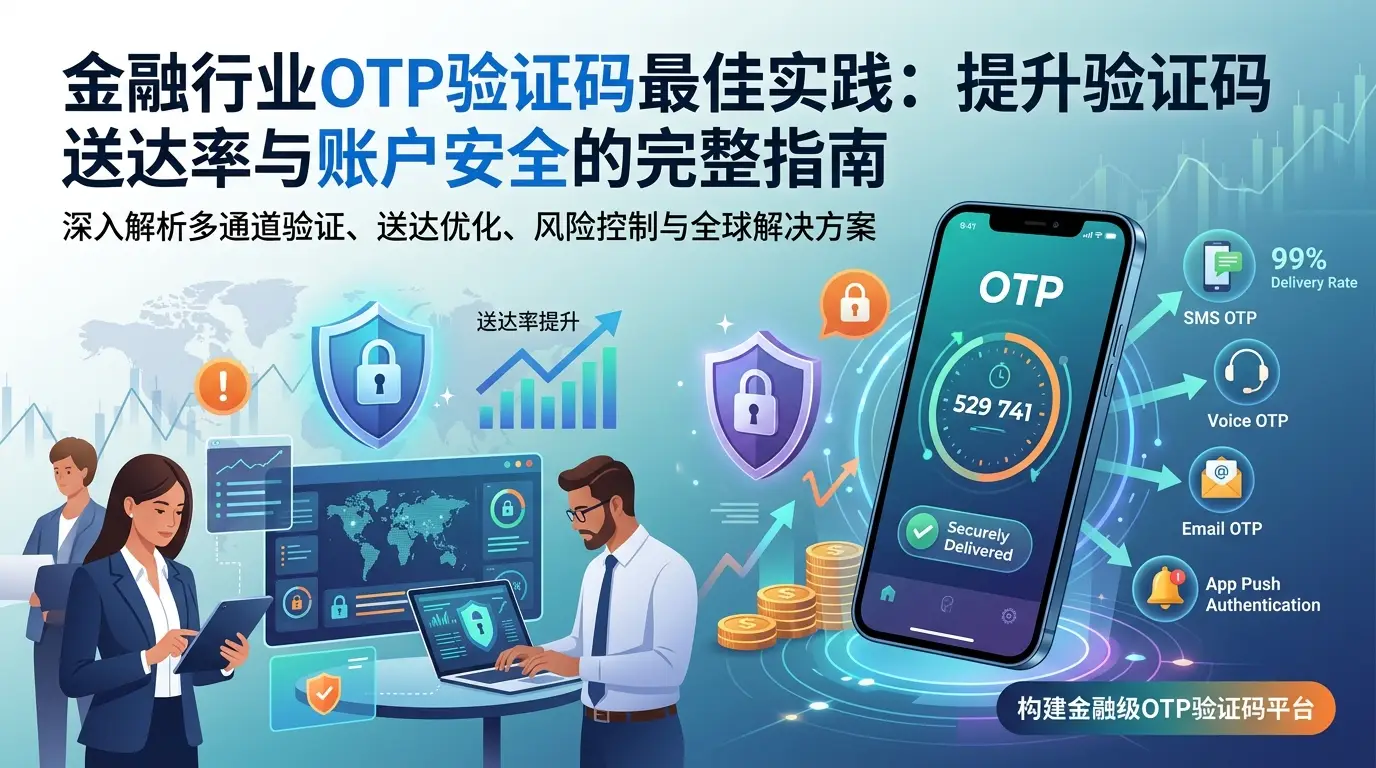
Financial Industry OTP Verification Code Best Practices: Complete Guide to Improving Delivery Rate and Account Security
Financial Industry OTP Verification Code Best Practices: Complete Guide to Improving Delivery Rate and Account Security
With the rapid development of digital banking, mobile payments, internet securities, and fintech, OTP (One-Time Password) verification codes have become an important part of the identity authentication system in the financial industry.
Whether it is user registration, login verification, fund transfer, password modification, or high-risk transaction confirmation, OTP verification codes serve as the first line of defense for account security.
However, for financial institutions, merely sending verification codes is far from enough. How to ensure fast delivery of OTP verification codes, effectively defend against fraud attacks, meet regulatory requirements, and balance user experience has become an important issue in fintech infrastructure construction.
This article will systematically analyze OTP verification code best practices for the financial industry, providing reference for banks, payment institutions, securities firms, and internet financial platforms.
I. Why Must the Financial Industry重视 OTP Verification Codes?
According to industry statistics, over 80% of account theft incidents are related to vulnerabilities in the identity authentication process.
Financial services have the following characteristics:
- Involves fund security
- Abundant user sensitive data
- High frequency of fraud attacks
- Strict regulatory requirements
- High user experience expectations
Therefore, OTP verification codes are not only a communication capability but also an important part of the financial risk control system.
II. Typical Application Scenarios
User Identity Verification
- New user registration
- Login verification
- Device binding
- Risk device identification
Transaction Security Verification
- Transfer confirmation
- Withdrawal review
- Payment authorization
- Large transaction verification
Account Security Management
- Password modification
- Phone number change
- Payment information modification
- Security settings change
III. Core Challenges Facing OTP Verification Codes in Financial Industry
1. Verification Code Delay Causes User Loss
Financial users have extremely high requirements for verification timeliness.
Typically:
- OTP delivery time ≤5 seconds
- Maximum tolerance time ≤30 seconds
If verification codes are not delivered for a long time, users may:
- Abandon registration
- Interrupt payment
- Cancel transaction
- Reduce platform trust
Especially in cross-border payments and overseas financial services, verification code delay issues are more prominent.
2. SMS Interception and Carrier Filtering
In recent years, global carriers have continuously strengthened A2P SMS regulation.
Common issues include:
- Content triggers sensitive word filtering
- Sender ID not registered
- Unstable channel quality
- Local carrier policy adjustments
These factors all affect OTP verification code delivery rates.
3. Fraud Attacks Continue to Escalate
The financial industry is a key target for verification code attacks.
Attack methods include:
SMS Flood Attack
Maliciously requesting a large number of verification codes.
SIM Swap Attack
Obtaining user phone numbers through card replacement.
OTP Hijacking
Using Trojan programs to intercept verification codes.
Bot Attack
Automated batch registration and credential stuffing attacks.
Therefore, OTP systems must be linked with risk control systems.
IV. Financial Industry OTP Verification Code Best Practices
1. Establish Multi-channel OTP Verification System
A single SMS channel can no longer meet financial-grade requirements.
Recommended approach:
Priority 1
SMS OTP
Wide coverage, mature user habits.
Priority 2
Voice OTP
Automatic fallback when SMS fails.
Priority 3
Email OTP
Suitable for account security verification.
Priority 4
App Push Authentication
Suitable for digital banking and financial apps.
Through multi-channel integration, the overall verification success rate can be increased to over 99%.
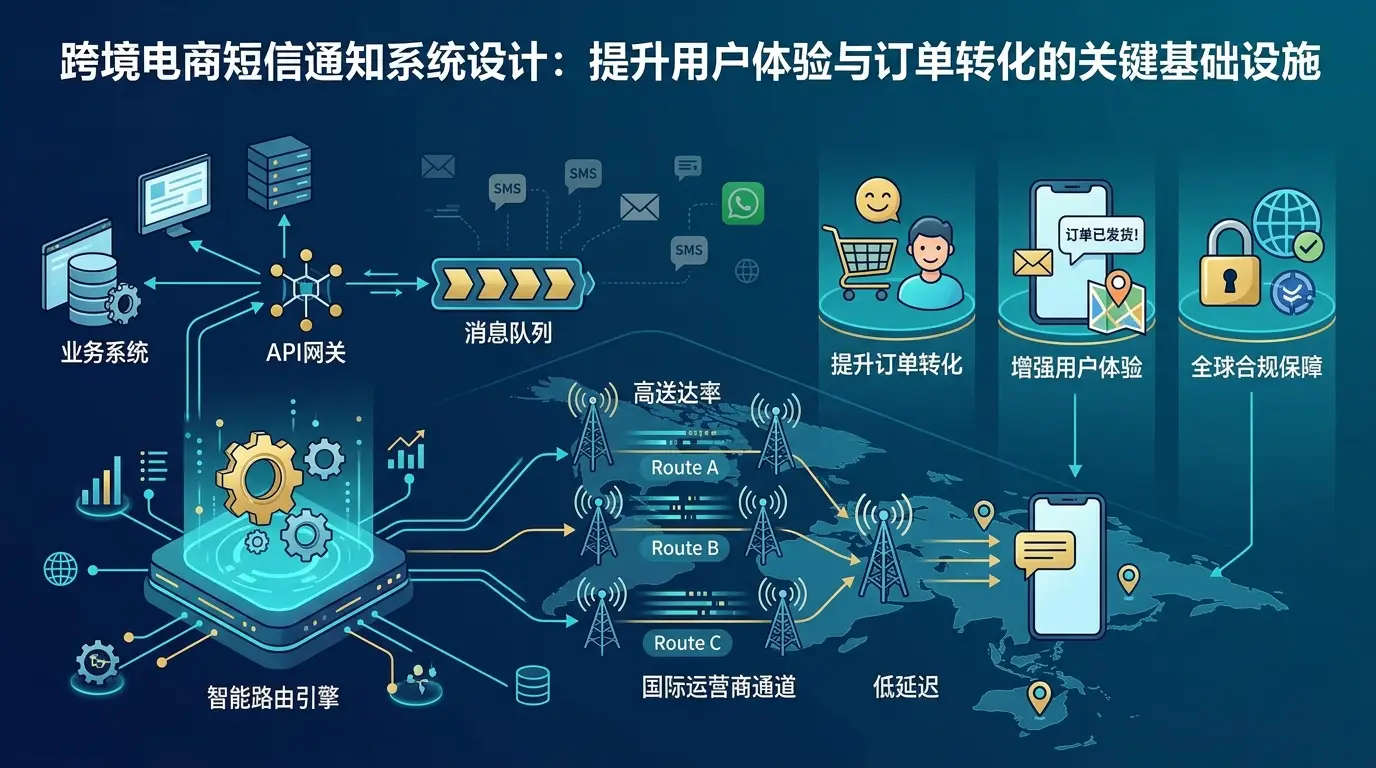
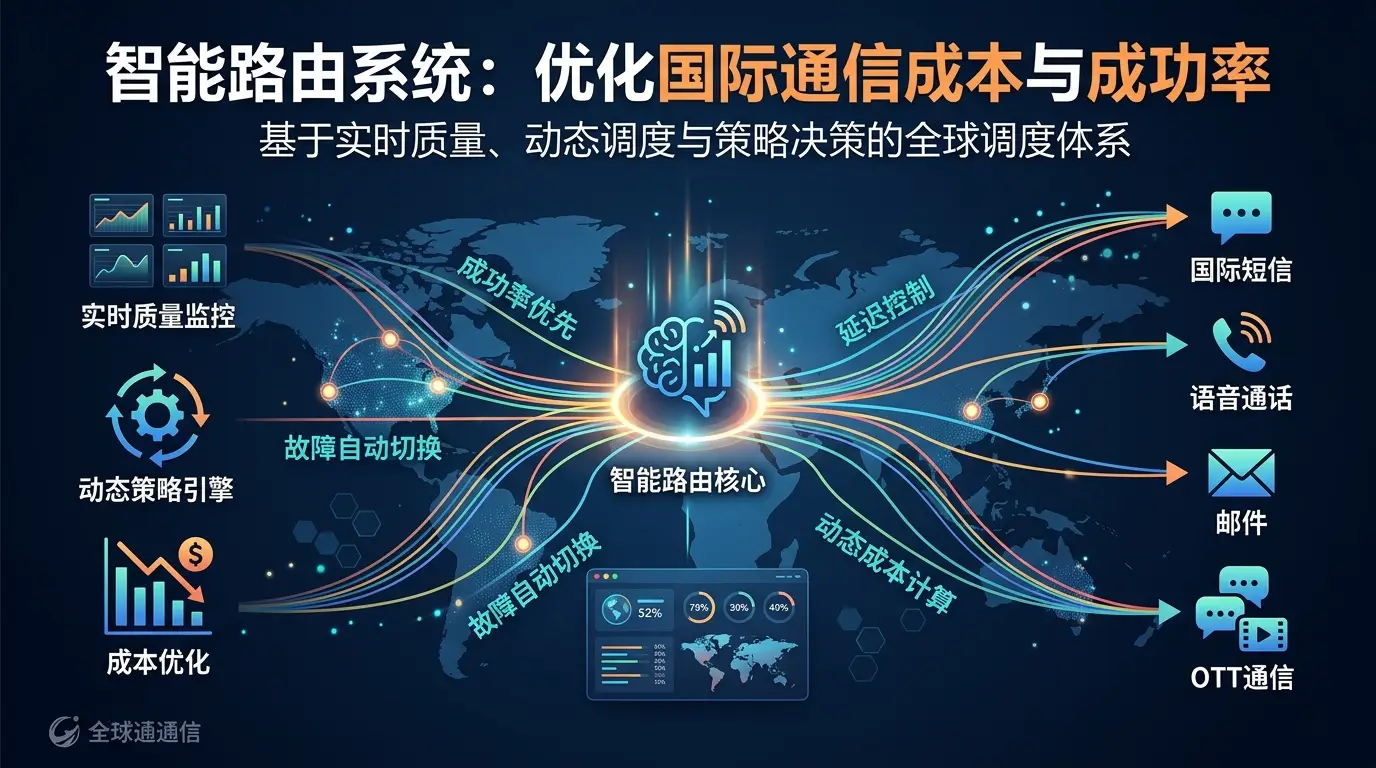
2. Build Intelligent Routing System
Excellent OTP verification code platforms should have intelligent routing capabilities.
Core strategies include:
Carrier Quality Scoring
Real-time monitoring:
- Delivery rate
- Arrival delay
- Error codes
- User feedback
Dynamic Routing Switching
Automatic selection:
- Optimal carrier route
- Optimal country route
- Optimal sending window
Automatic Failover
When a route is abnormal:
- Automatic circuit breaker
- Automatic switch to backup route
- Real-time recovery monitoring
This is also the architecture pattern commonly adopted by large banks and payment institutions.
3. OTP Verification Code Security Design
Control Validity Period
Recommended settings:
Scenario OTP Validity
- Login verification: 60 seconds
- Registration verification: 120 seconds
- Payment confirmation: 60 seconds
- High-risk transaction: 30 seconds
Limit Verification Attempts
Recommendations:
- Lock after 3 consecutive errors
- Trigger risk review after 5 attempts
- Limit request frequency per IP
Effectively prevent brute force attacks.
Dynamic Verification Code Generation
Adopt international standards:
Avoid fixed rule generation methods.
Device Fingerprint Identification
Combine:
- IP address
- Device ID
- Browser features
- Geographic location
Establish risk scoring model.
4. Establish Real-time Risk Control Linkage Mechanism
OTP systems should not operate independently.
Best practice is to integrate with risk control platform:
Risk Level Determination
Low risk: Directly send verification code.
Medium risk: Increase OTP verification.
High risk: Trigger secondary identity authentication.
Extreme risk: Directly reject transaction.
Form a complete identity authentication closed loop.
5. Global OTP Verification Code Deployment
For cross-border financial services and international payment platforms, global OTP coverage capability is particularly important.
Key focuses:
Local Carrier Direct Connection
Reduce transit nodes.
Improve:
- Delivery speed
- Delivery rate
- Stability
Local Number Pool Resources
Support:
- North America
- Europe
- Southeast Asia
- Middle East
- Latin America
Market coverage.
Global Monitoring System
Real-time monitoring:
- Country-level delivery rate
- Carrier status
- Route quality
Achieve dynamic optimization.
V. OTP Verification Code Platform Selection Recommendations
When financial institutions select OTP verification code service providers, it is recommended to focus on evaluating the following indicators:
Evaluation Dimension Core Indicators
- Delivery capability: OTP delivery rate ≥95%
- Timeliness capability: Average arrival time ≤5 seconds
- Global coverage: Covering 200+ countries and regions
- Security capability: Support 2FA, multi-factor authentication
- Stability: SLA ≥99.99%
- Compliance capability: GDPR, PCI DSS, etc.
- Risk control capability: Real-time risk identification
FAQ: Common Questions about OTP Verification Codes in Financial Industry
What is the difference between OTP verification code and SMS verification code?
SMS verification code is a delivery method, while OTP is a one-time dynamic password mechanism. OTP can be sent through multiple channels such as SMS, email, voice, and APP push.
What is the appropriate OTP validity period setting for the financial industry?
Generally recommended: Login scenario: 60 seconds, Registration scenario: 120 seconds, Payment scenario: 30-60 seconds. The higher the risk level, the shorter the validity period.
How to improve OTP verification code delivery rate?
Main measures include: Access carrier direct connection channels, deploy intelligent routing system, establish multi-channel backup mechanism, optimize SMS content template, real-time monitor carrier status.
Why do overseas OTP verification codes often fail?
Common reasons: Carrier filtering, Sender ID restrictions, Poor international route quality, Local regulatory restrictions, Abnormal phone number status. Need to select communication service providers with global localized resources.
Conclusion
In the process of financial digital transformation, OTP verification codes have evolved from simple identity verification tools to important infrastructure in the financial security system.
An excellent financial OTP verification code solution should simultaneously have:
- High delivery rate
- Low latency
- Strong security
- Global coverage capability
- Intelligent risk control linkage capability
Only by deeply integrating communication capabilities with security systems can we truly protect user account security, improve transaction success rates, and meet the development needs of global financial services.
Build Financial-Grade OTP Verification Code Platform
If your enterprise is developing:
- ✓ Digital banking projects
- ✓ Payment platform construction
- ✓ Fintech application development
- ✓ Overseas financial business expansion
- ✓ Cross-border payment system deployment
We can provide:
- Global SMS OTP verification code service
- Voice verification code solutions
- Intelligent routing scheduling system
- Multi-factor authentication (MFA/2FA)
- Financial-grade risk control verification system
- Communication network covering 200+ countries and regions
Contact us now to get exclusive financial industry OTP verification code solutions and test accounts.