After Scaled Overseas Expansion, How Can Chinese Brands Build a Sustainable Global Touchpoint Network?
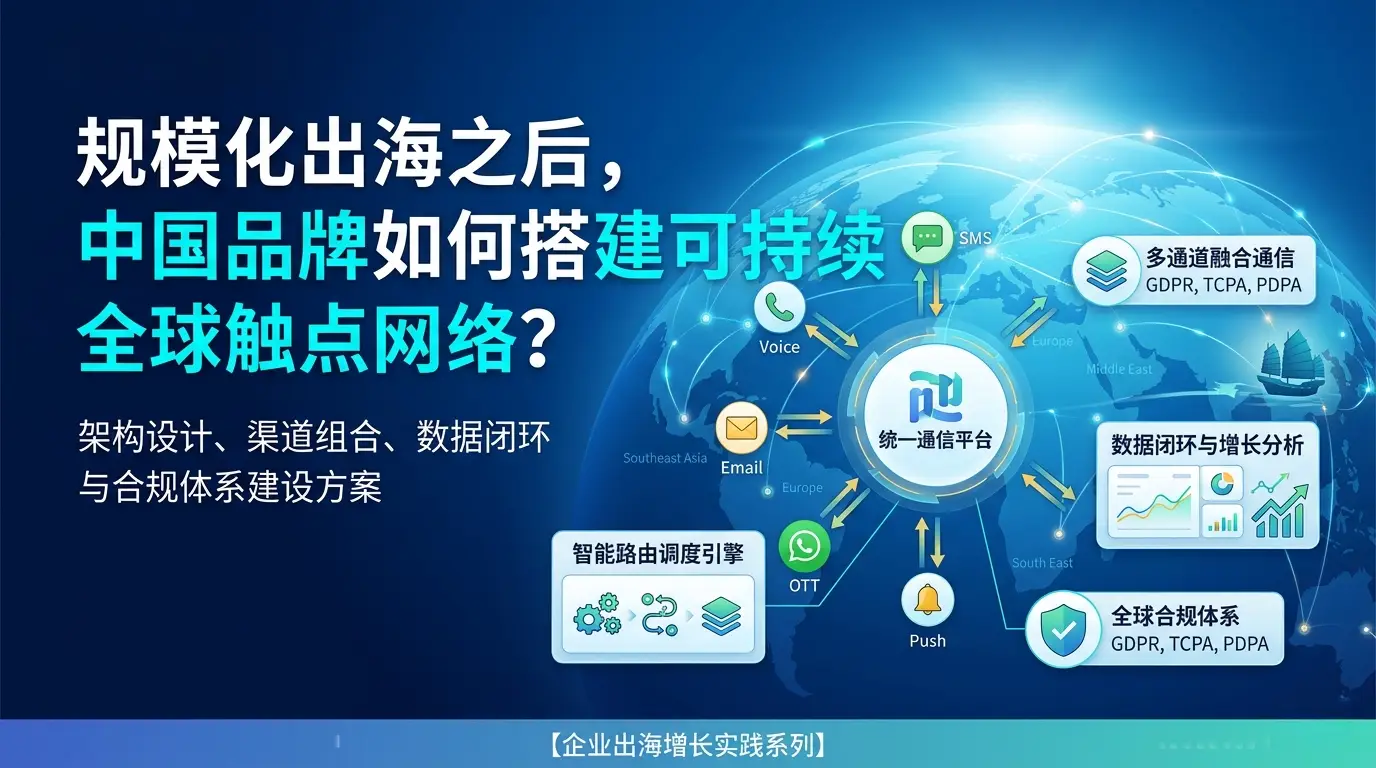
After completing the transition from "testing the waters" to "scaled expansion", Chinese brands generally face a more complex question: how to build a long-term stable, reusable, and growth-oriented global touchpoint network. This is not just about traffic, but the core embodiment of user connection capability and brand asset accumulation capability. This article will dismantle a practical global touchpoint network construction plan from four dimensions: architecture design, channel combination, data closed-loop, and compliance system.
I. What is a "Global Touchpoint Network"?
A global touchpoint network is essentially the collection of all connection methods between brands and users at different lifecycle stages, including but not limited to:
- User acquisition touchpoints: advertising, social media, app stores
- User verification touchpoints: SMS verification codes (OTP), voice verification
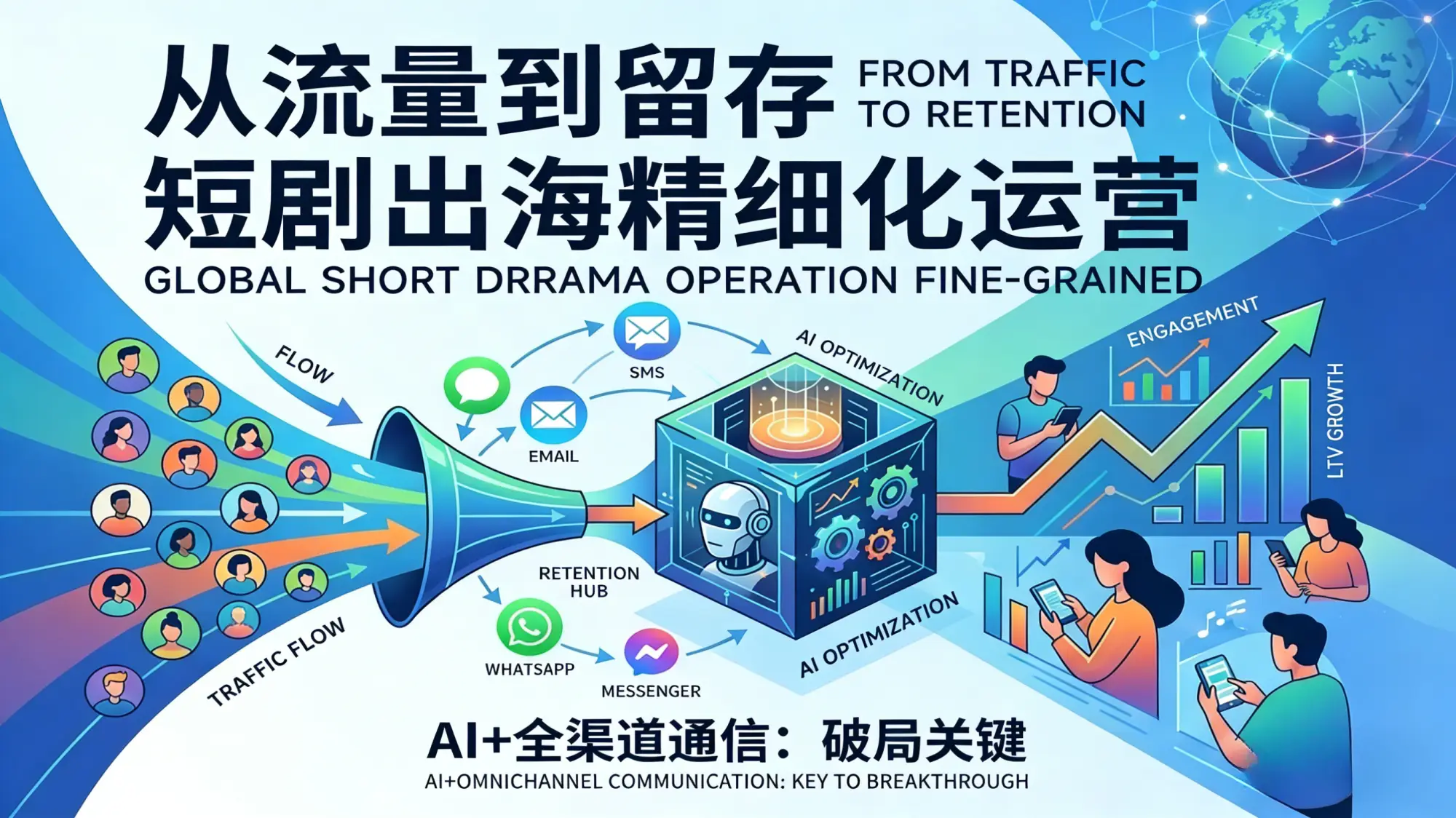
- User operation touchpoints: marketing SMS, email, push notifications, instant messaging
- User service touchpoints: customer service systems, tickets, voice outbound calls
The core goal is only one: to achieve "stable reach + efficient conversion + sustainable reuse" in different countries and scenarios.
II. Core Challenges Facing Scaled Overseas Expansion
1. Severe touchpoint fragmentation
User communication preferences vary greatly across countries:
- Southeast Asia: SMS + WhatsApp
- Europe and America: Email + Push + iMessage
- Middle East: SMS + voice verification
A single channel cannot cover all users.
2. Unstable channel quality
Gray channels and low-quality routes will expose problems after scaled volume:
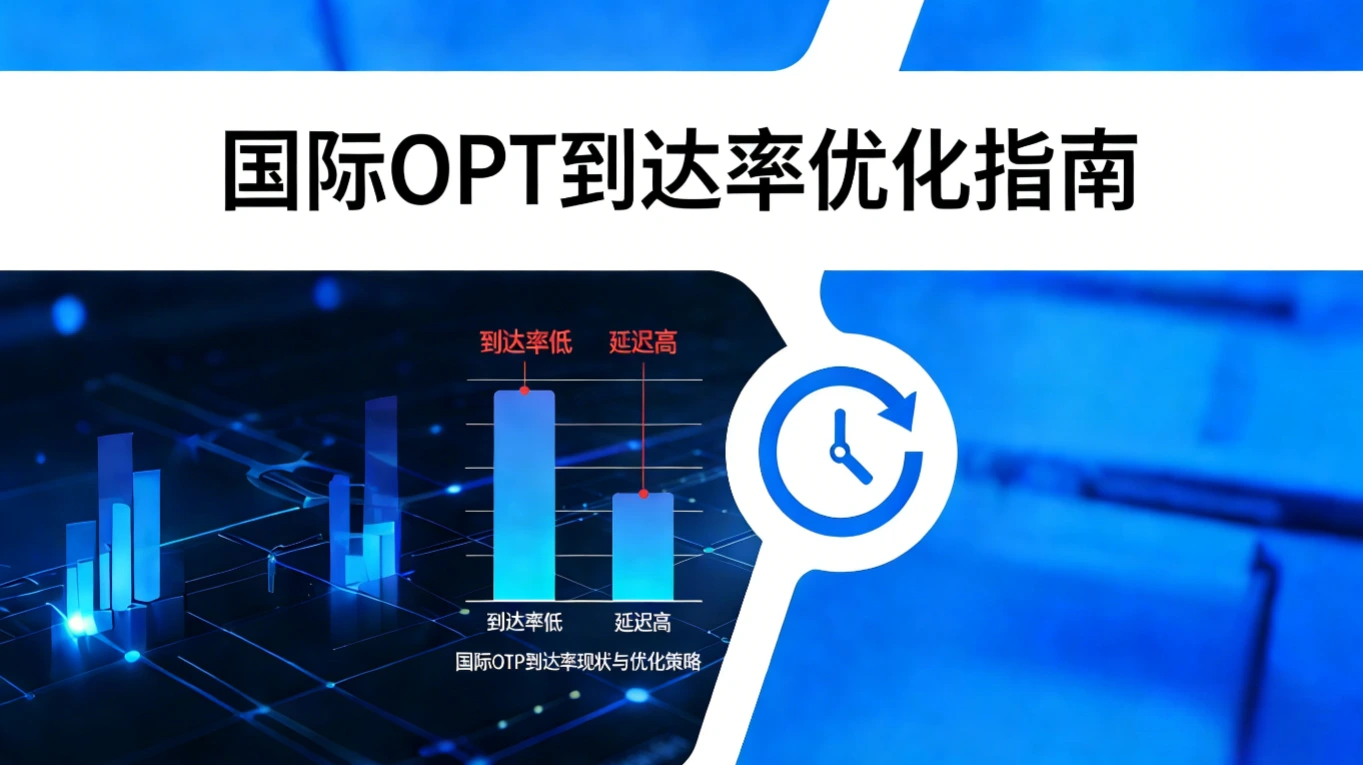
- Decreased delivery rates
- Increased latency
- Verification code failures
3. Rising compliance risks
Regulatory requirements are becoming stricter in various countries:
- GDPR (EU)
- TCPA (US)
- PDPA (Southeast Asia)
Non-compliant touchpoint strategies can directly lead to bans or even fines.
4. Data fragmentation, unable to form a closed loop
Multi-channel, multi-vendor environment leads to:
- Inability to uniformly analyze user behavior
- Untraceable conversion links
- Optimization decisions based on experience rather than data
III. Core Architecture Design of Global Touchpoint Network
1. Multi-Channel Integration Communication Layer (Multi-Channel Layer)
Build a unified communication middle platform, abstracting the following capabilities:
- SMS (A2P international SMS)
- Voice (voice verification / IVR)
- Email (transactional email / marketing email)
- OTT messages (WhatsApp / RCS / Telegram, etc.)
- App Push (FCM / APNs)
Key capabilities:
- Multi-channel automatic switching (Failover)
- Intelligent routing scheduling (based on country/operator/success rate)
- Real-time channel quality monitoring
Practical suggestion:
Verification code scenarios must support the multi-path strategy of "SMS failure → voice compensation → OTT fallback".
2. Global Number and Identity System (Identity Layer)
The core of user touchpoints is "unified identity identification".
It is recommended to build:
- Global phone number standardization (E.164)
- Email as auxiliary ID
- User device ID (for Push)
Key points:
- Deduplication and merging (avoid duplicate touchpoints)
- Multi-ID mapping (phone number + email + device)
3. Intelligent Scheduling and Strategy Engine (Routing Engine)
In scaled scenarios, the scheduling system determines cost and effectiveness.
Scheduling strategies include:
- Country/region priority routing
- Operator-level optimization
- Real-time success rate feedback
- Dynamic balance between cost and delivery rate
Typical strategy model:
Priority = success rate * weight + latency * weight + cost * weight
4. Data Closed-loop and Growth Analysis (Data Layer)
Build a unified data platform to achieve full-link tracking:
- Send → Arrive → Open → Click → Convert
- Channel dimension analysis (SMS vs email vs Push)
- Country/operator dimension analysis
- User lifecycle analysis (LTV)
Key indicators:
- OTP success rate (Verification Success Rate)
- Message delivery rate (Delivery Rate)
- Conversion rate (Conversion Rate)
- User retention rate (Retention)
5. Compliance and Risk Control System (Compliance Layer)
Must be built in, not post-remedy:
- User consent management (Opt-in / Opt-out)
- Template reporting and content review
- Data localization (e.g., EU, India)
- Sending frequency control and anti-harassment mechanisms
IV. Touchpoint Combination Strategy: Best Practices for Different Stages
1. User Acquisition Stage
- Advertising + landing page + email subscription
- SMS for key conversion nodes (such as registration)
2. Registration and Verification Stage (Key Conversion Point)
- Main channel: SMS OTP
- Backup channel: voice OTP
- High-value users: guide to bind email
Optimization focus: verification code latency < 5 seconds, success rate > 95%
3. User Activation and Retention Stage
- Push: low-cost high-frequency touchpoints
- Email: content delivery (activities/notifications)
- SMS: key reminders (payment, risk control)
4. User Recall and Marketing Stage
- Email + SMS combined touchpoints
- Behavior-based stratified push
- Avoid excessive touchpoints (frequency control strategy)
V. From "Channel Capability" to "Growth Infrastructure"
Many enterprises view SMS, email, and other capabilities as "tools" in the early stages of overseas expansion, but in the scaled stage, these capabilities must be upgraded to "infrastructure".
Typical characteristics of mature enterprises:
- Have a unified communication middle platform (rather than multi-vendor splicing)
- Establish a real-time routing scheduling system
- Data-driven touchpoint strategy, not experience-driven
- Built-in compliance capabilities (rather than relying on manual work)
VI. Implementation Suggestions: Three Steps to Build a Global Touchpoint Network
Step 1: Unified Access Layer
Integrate SMS, voice, email, Push to form a unified API entry.
Step 2: Build Scheduling Middle Platform
Implement multi-channel intelligent routing + real-time quality monitoring.
Step 3: Open Data Closed-loop
Access BI system to achieve full-link analysis from sending to conversion.
Conclusion
The essence of scaled overseas expansion is not just "selling products", but "continuously connecting with users".
The construction of a global touchpoint network is a key infrastructure for brand long-term competitiveness. Whoever can establish a balance between "touchpoint efficiency + user experience + compliance capability" will go further in the global market.