In scenarios such as cross-border e-commerce, overseas apps, and fintech, international SMS (A2P SMS) remains one of the most reliable and stable communication methods with the highest reach rate. Below are the 20 most common questions enterprises encounter when accessing and using international SMS.
Common Questions
1.What is international SMS (A2P SMS)?
International SMS refers to Application-to-Person messages sent by businesses to overseas users through platforms, commonly used in scenarios such as verification codes, notifications, and marketing.
2.What is the difference between international SMS and regular SMS?
Regular SMS is mostly person-to-person (P2P), while international SMS is enterprise-level communication, involving dedicated channels, compliance requirements, signature templates, etc.
3.Which countries and regions does international SMS support?
Mainstream service providers can cover over 200 countries and regions, but there are significant differences in delivery rates, prices, and restrictions across different countries.
4.Why are prices so different across countries?
Prices are mainly influenced by carrier costs, termination fees, gray channel risks, and policy regulations.
5.How to is international SMS sent?
It is usually accessed through API (HTTP/SMPP), submitting SMS to the cloud communication platform, which then completes delivery through global carrier links.
6.How long does it take for SMS to be delivered after sending?
Verification code SMS is generally delivered within 5-10 seconds, but delays may occur due to country, channel quality, and network conditions.
7.Why are some SMS sent successfully but not received by users?
Common reasons include:
- Blocked by carriers (content or frequency issues)
- Blocked by user devices (blacklist/spam filtering)
- Unstable channel quality
- Abnormal number status (suspended, number porting, etc.)
8.How to improve SMS delivery rate?
Key strategies include:
- Using local direct connection channels (Local Route)
- Compliant signatures and templates
- Intelligent routing scheduling (multi-channel switching)
- Real-time monitoring and retry mechanisms
9.What is a SMS signature (Sender ID)?
A SMS signature is the sender name seen by users, which can be a brand name or number. Some countries support custom signatures, while others require fixed numbers.
10.Why do some countries not support custom signatures?
Countries like the United States and Canada, due to regulatory requirements, must use long codes or short codes for sending.
11.What is a SMS template?
A SMS template is a pre-approved content format, which is mandatory in countries like India and Indonesia.
12.Does international SMS require real-name authentication or filing?
Some countries (such as India and the United Arab Emirates) require mandatory business real-name authentication and template filing, otherwise sending is not possible.
13.What is OTP SMS?
OTP (One-Time Password) is a one-time verification code, which is one of the core use cases for international SMS.
14.What is the difference between marketing SMS and verification code SMS?
Verification code SMS: High priority, strong real-time nature; Marketing SMS: More restrictions, easy to be blocked, requires user authorization
15.Does international SMS support two-way communication?
Some countries support MO (user replies), but the cost is higher and additional activation is required.
16.What is a SMS delivery report (DLR)?
DLR (Delivery Report) is used to feedback whether SMS is successfully delivered to the terminal, but it is not 100% accurate.
17.How to judge the quality of a channel?
It can be evaluated from the following dimensions:
- Delivery Rate
- Latency
- Success rate stability
- DLR authenticity
18.How is international SMS billed?
It is usually billed by "successful submission" or "successful delivery". Different service providers have different models, and billing rules need to be confirmed.
19.How to prevent SMS from being treated as spam?
Suggestions:
- Avoid sensitive words (such as "free", "prize")
- Control sending frequency
- Use formal signatures
- Avoid short links or use trusted domains
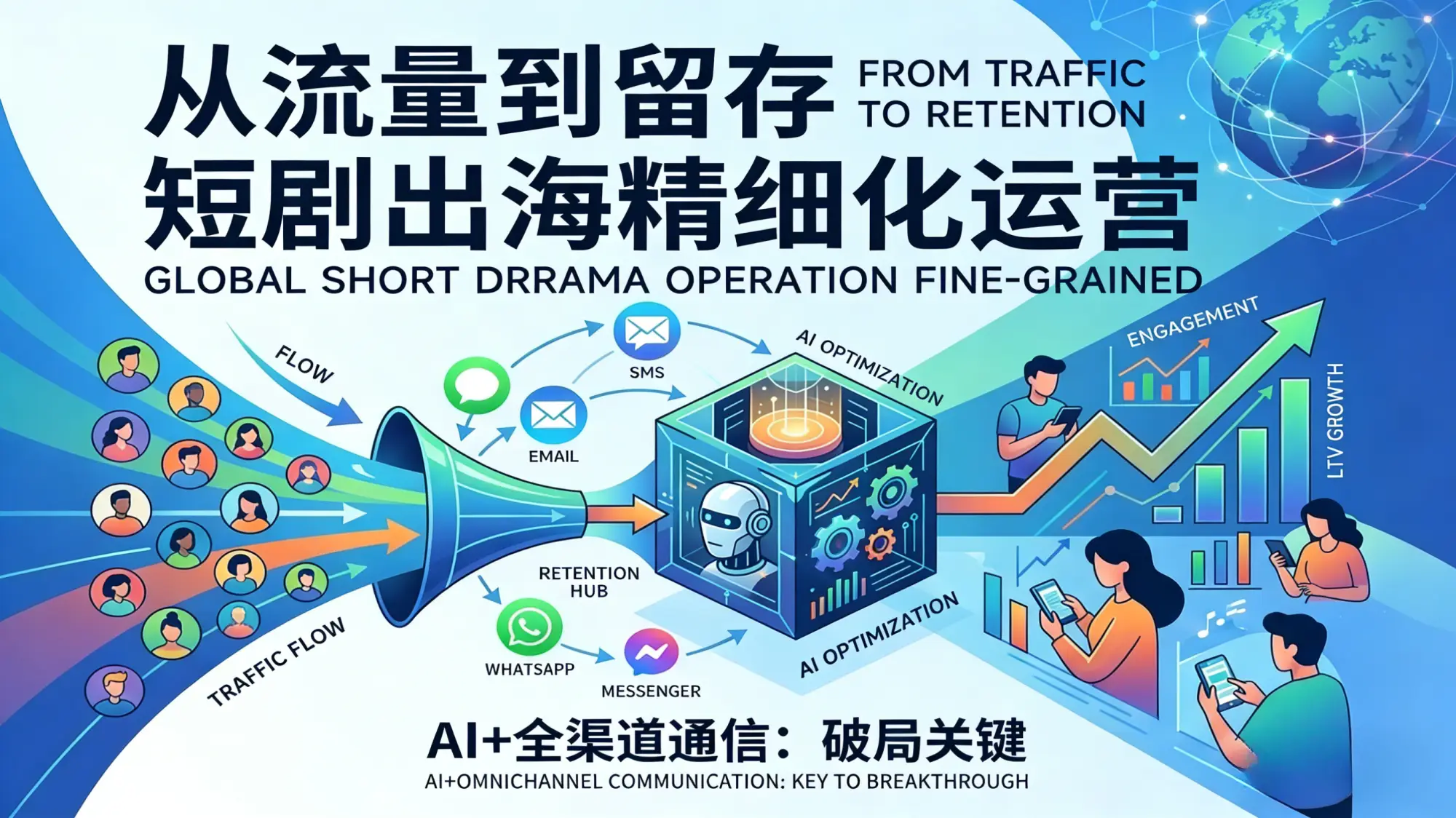
20.Can international SMS replace OTT channels like WhatsApp?
It cannot be completely replaced. The advantages of SMS include:
- No need to install apps
- Wide coverage
- High reach rate
But OTT (such as WhatsApp) is more suitable for rich media and long-term user operations, and it is usually recommended to use them in combination.
Summary
The core of international SMS lies in "delivery capability + compliance capability + scheduling capability". For overseas enterprises, choosing a cloud communication platform with global direct connection resources, intelligent routing systems, and local compliance experience is far more important than simply comparing prices.